Pile Repair for Timber, Steel & Concrete Piles, Even Underwater
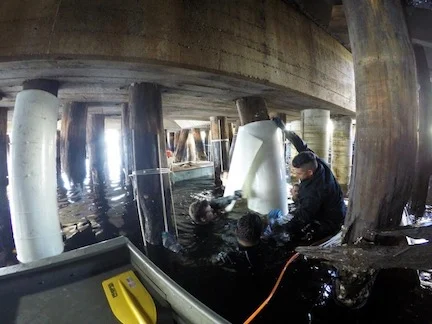
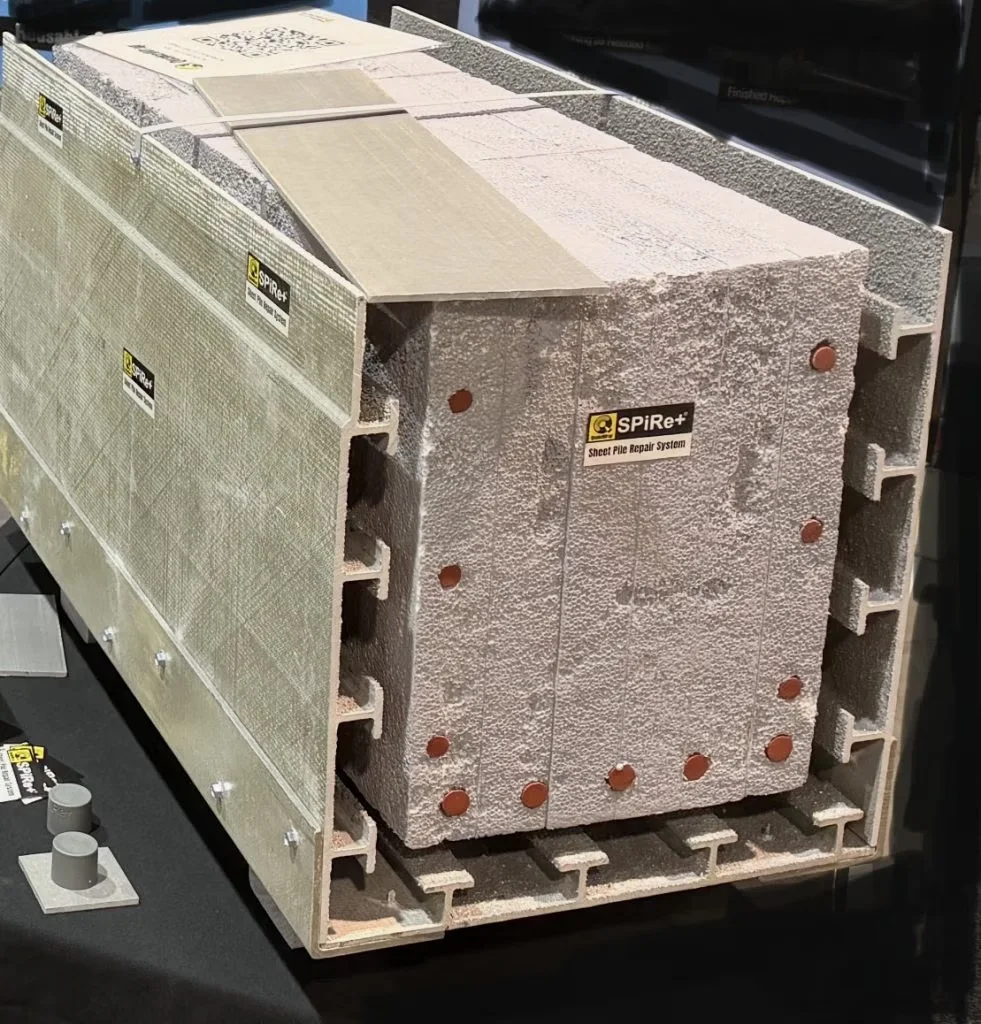
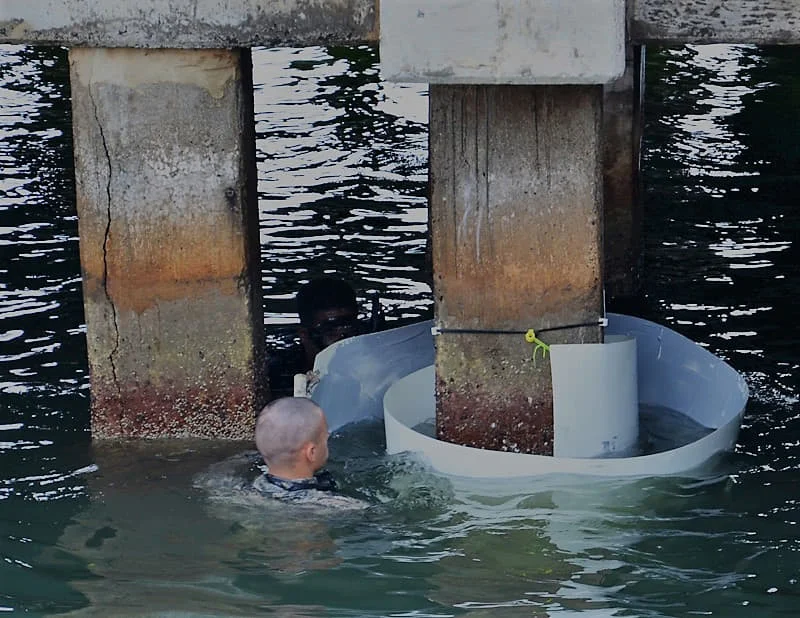
Restore full structural capacity of timber, steel and concrete piles, including underwater. PileMedic® and SPiRe®+ systems are designed for underwater installation, so submerged piles can often be repaired without cofferdams or dewatering.
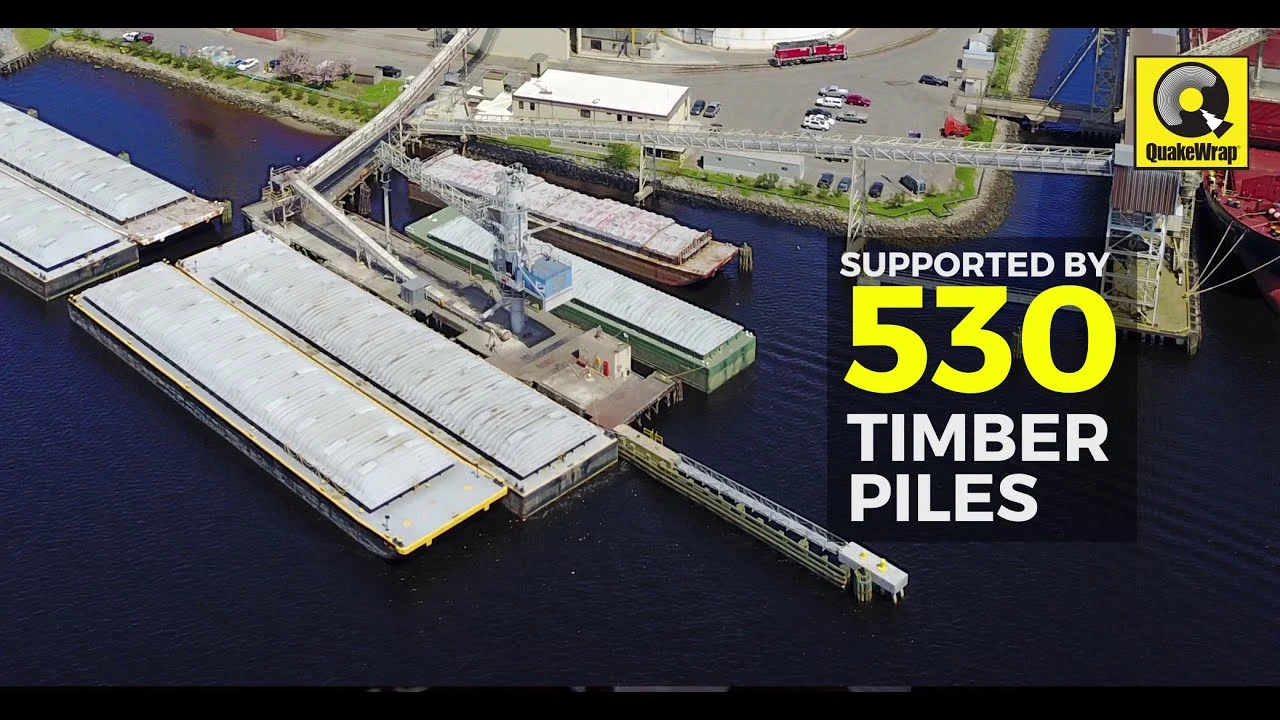
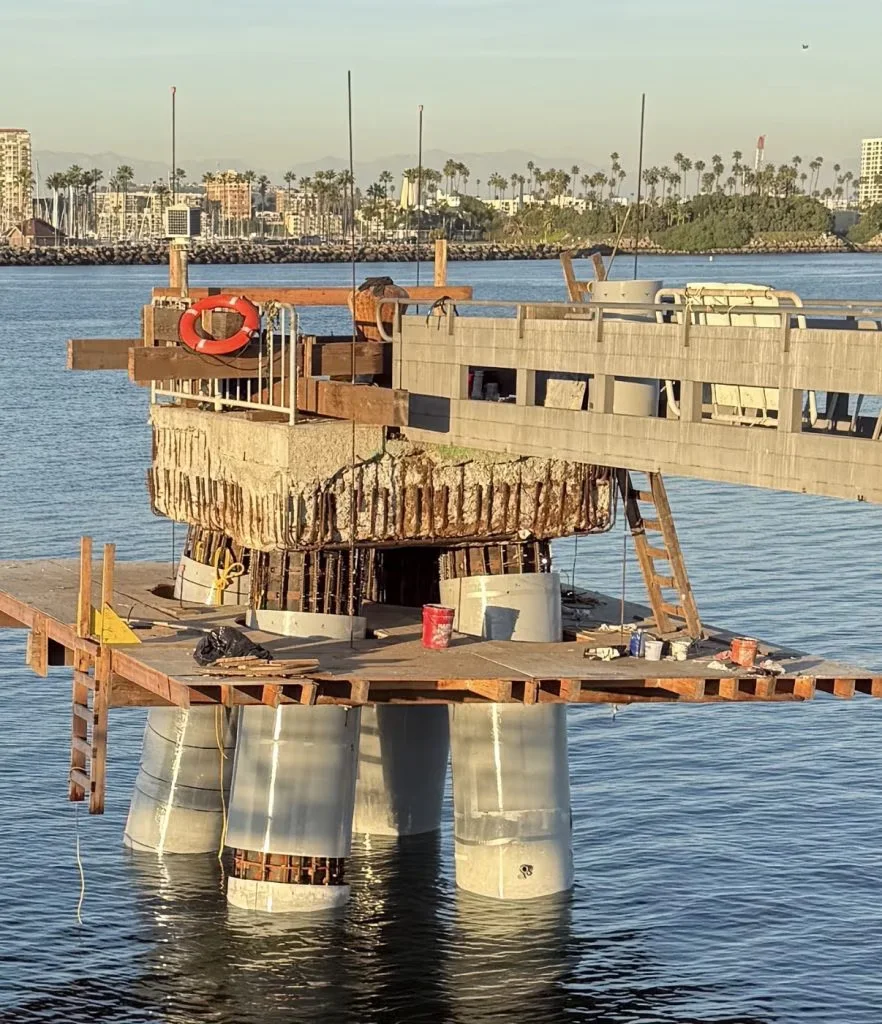
Piles that support bridges, piers, marine terminals and offshore structures sit in some of the harshest conditions in construction. Damage concentrates in the splash zone, where tidal wet and dry cycles repeat every day.
1
Marine borers and rot
Shipworms and other wood borers attack timber piles, and wet and dry cycles rot the wood.
2
Corrosion of steel
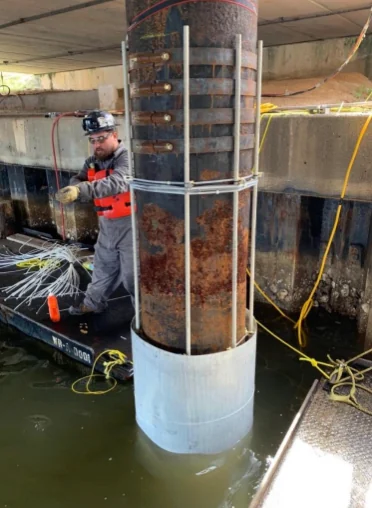
Steel H-piles and pipe piles lose section in the splash zone until capacity drops.
3
Chlorides in concrete
Chlorides reach the reinforcing steel, which corrodes, expands and spalls the concrete cover.
4
Impact and aging
Impact damage and decades of service reduce load capacity.
WHY CONVENTIONAL JACKETS FALL SHORT
Conventional Pile Jackets vs. PileMedic®
The most common repair to date has been a custom-sized fiberglass form, often two half shells joined around the pile and filled with grout or concrete.
Conventional half-shell jacket
PileMedic® laminate jacket
Seams
Vertical seams let moisture and oxygen reach the pile, so corrosion continues
Wrapped two or more turns into a seamless shell
Structural strength
Little or none; mainly a form
Confines the pile and can restore full capacity, even with 100% section loss
Sizing
Bulky and ordered to size in advance
Cut to fit from a roll, any pile shape or size
Installation
Two shells joined around the pile in the field
Wrapped at the waterline and slid down the pile, minimal to no divers
Corrosion protection
Limited by the seams
Impervious barrier against moisture and oxygen
Not sure which repair fits your piles?
Tell us the pile type, the damage and the water depth. Our team will recommend the right QuakeWrap® system.
Marine growth and loose material are removed. Spacers 1 to 2.5 in. long are fixed every 2 to 3 ft to set the annular space.
02
Add bars if needed
Non-corroding glass FRP bars are snapped into the spacers when the design calls for strengthening.
03
Wrap the laminate
4 ft wide PileMedic® laminates are epoxy coated and wrapped into a two-ply shell. Each new shell overlaps the last by 4 in.
04
Seal the bottom
The shell is embedded a few inches into the seabed, or sealed at any elevation with a ShearFlange or skirt pins.
05
Fill the annulus
Grout or concrete is placed by tremie or pumped through ports along the jacket height.
BY PILE TYPE
How Each Pile Type Is Repaired
The repair procedure is virtually the same for timber, concrete and steel piles. When strengthening is needed, a new shell of concrete reinforced with glass FRP bars is built around the pile and can be designed to carry all of the load, even if the original pile has 100% section loss.
Typical damage
Repair
Learn more
Timber piles
Marine borers, rot and hourglass section loss at the splash zone
PileMedic® jacket filled with grout, or a snug shell filled with low-viscosity resin
Tested by DOTs and the U.S. Army Corps of Engineers
Independent studies have tested PileMedic® on all three pile materials. In a Texas DOT study at the University of Houston and Texas Tech, FRP jackets restored capacity in 13 of 14 corroded steel H-piles. For the Nebraska Department of Roads, five full-scale timber piles with hourglass damage, repaired with PileMedic® glass laminates, failed at 5.3 to 9.9 times their design capacity. The U.S. Army Corps of Engineers ran a three-year program on expedient pile repair.
FRP also slows corrosion. In a long-term study published in the ACI Structural Journal, 22 one-third-scale prestressed piles cast with built-in chloride went through nearly 3 years of simulated tidal cycles. The carbon and glass FRP wrapped specimens had much lower metal losses than the unwrapped controls.
Many designs take a conservative approach and assume the steel, or the timber, will eventually be lost entirely. The new FRP-reinforced concrete shell is then designed to carry the loads on its own, so there is no concern about how long the original pile will last.
steel H-piles restored to capacity (Texas DOT)
13 of 14
the design capacity at failure, repaired timber piles (Nebraska DOR)
19 submerged timber piles, some with more than 75% of their volume gone and most under a building, repaired with PileMedic® PLG60.60 laminate in less than a week.
Corroded piers wrapped with carbon FRP from the pier cap to below low tide using an epoxy that cures underwater. No damage to the FRP was seen five years later.
18 timber piles under a truss bridge encapsulated in PileMedic® biaxial glass laminate shells from 5 ft below grade to the pile cap, with the voids filled with low-viscosity resin. The pile caps were wrapped with carbon fabric.
In 2017, about 40 prestressed piles with delayed ettringite formation (DEF) were repaired with PileMedic® jackets and QuakeBond™ underwater grout without interrupting port service.
The advantage was that the broken pile could be repaired and reinstated up to the required bearing capacity and strength value, and no additional piles needed to be installed. This reduced cost and timing in repair method.
JVJasper VerstreepenEngineering Manager, Head of Engineering Department, Hai Phong and Quang Ninh Provinces, Vietnam (Pile Buck, Vol. 36 No. 3, 2020)
Yes. PileMedic® and SPiRe®+ systems are designed for underwater installation, so submerged piles, seawalls and bulkheads can often be repaired without cofferdams or dewatering.
Can a pile be repaired if it has lost most of its section?
Yes. A new concrete shell reinforced with non-corroding glass FRP bars is built inside the PileMedic® jacket. It can be designed to carry all of the loads, even where the original pile has 100% section loss.
How is load transferred on a steel pile without welding?
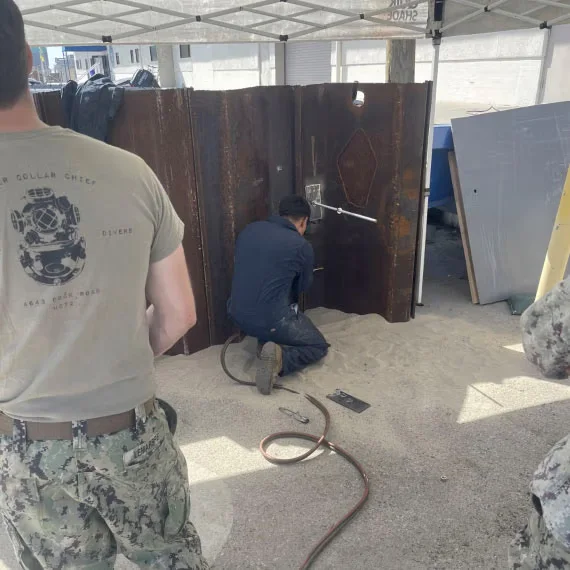
ShearWrap™ bands on round piles and ShearClamp units on H-piles transfer load from the steel pile into the new jacket and grout, so no underwater welding is needed.
Why not use a conventional fiberglass jacket?
Conventional jackets are usually two half shells joined in the field. They are bulky, must be ordered to size, add little strength, and their seams let moisture and oxygen reach the pile, so corrosion continues. PileMedic® laminates are wrapped into a seamless shell cut to fit on site.
How soon is a repaired pile back in service?
PileMedic® reaches full pile capacity within 24 hours of installation.
Can you provide specifications and design details for our engineer?
Yes. Our team will recommend the right QuakeWrap® system and provide product data sheets, specifications and sample design details for your engineer of record.