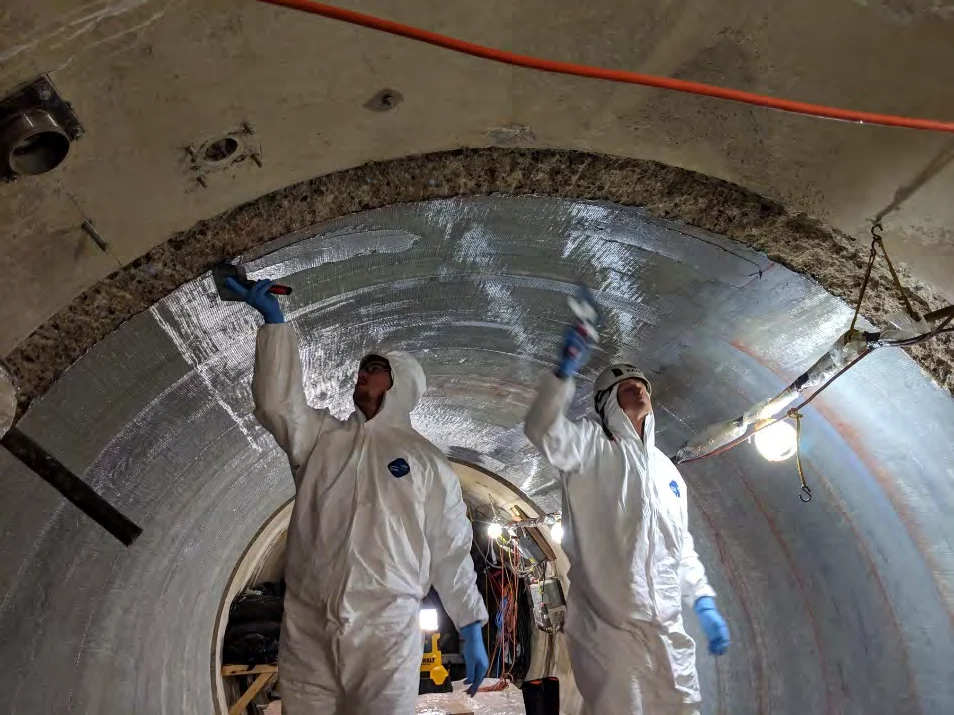
Utility tunnels run for miles under government, university and medical campuses, carrying water, steam, compressed air, gas, communication and fiber optic lines.
1
Groundwater
Water from the ground reaches the tunnel. At the University of Arizona, watering the grass above damaged about 1,000 ft of concrete tunnel.
2
Hot, humid air
Poor ventilation leaves a hot, humid space that corrodes the reinforcing steel. One steam tunnel ran above 115°F.
3
Corroded metal pipe
Corrugated metal pipe tunnels can corrode through the wall. When one failed at the University of Arizona, the sidewalk above partly caved in.
4
Hard to reach
Access is through a few manholes that can be hundreds of feet apart, and pipes on the walls leave little room for steel and concrete repairs.
How a Tunnel Is Repaired From the Inside
01
Protect & prepare
Pipes and cables are covered. Damaged concrete is removed and the surface is patched with gunite or shotcrete where needed.
02
Saturate outside
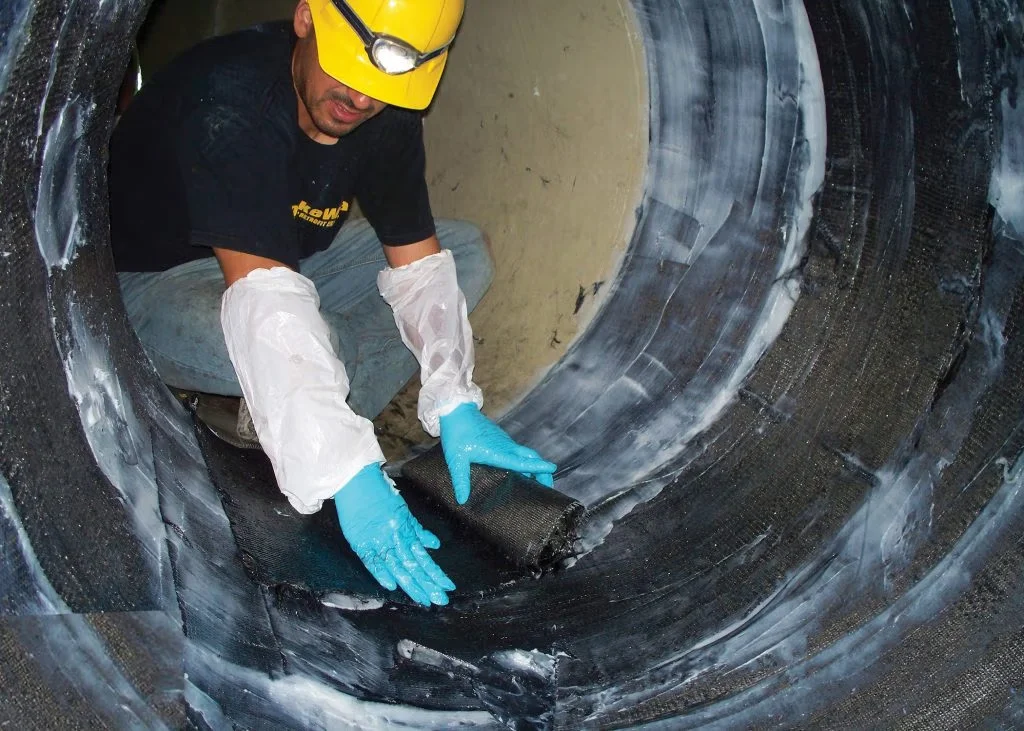
FRP fabric is saturated with resin at the access port, outside the tunnel.
03
Pass through & apply
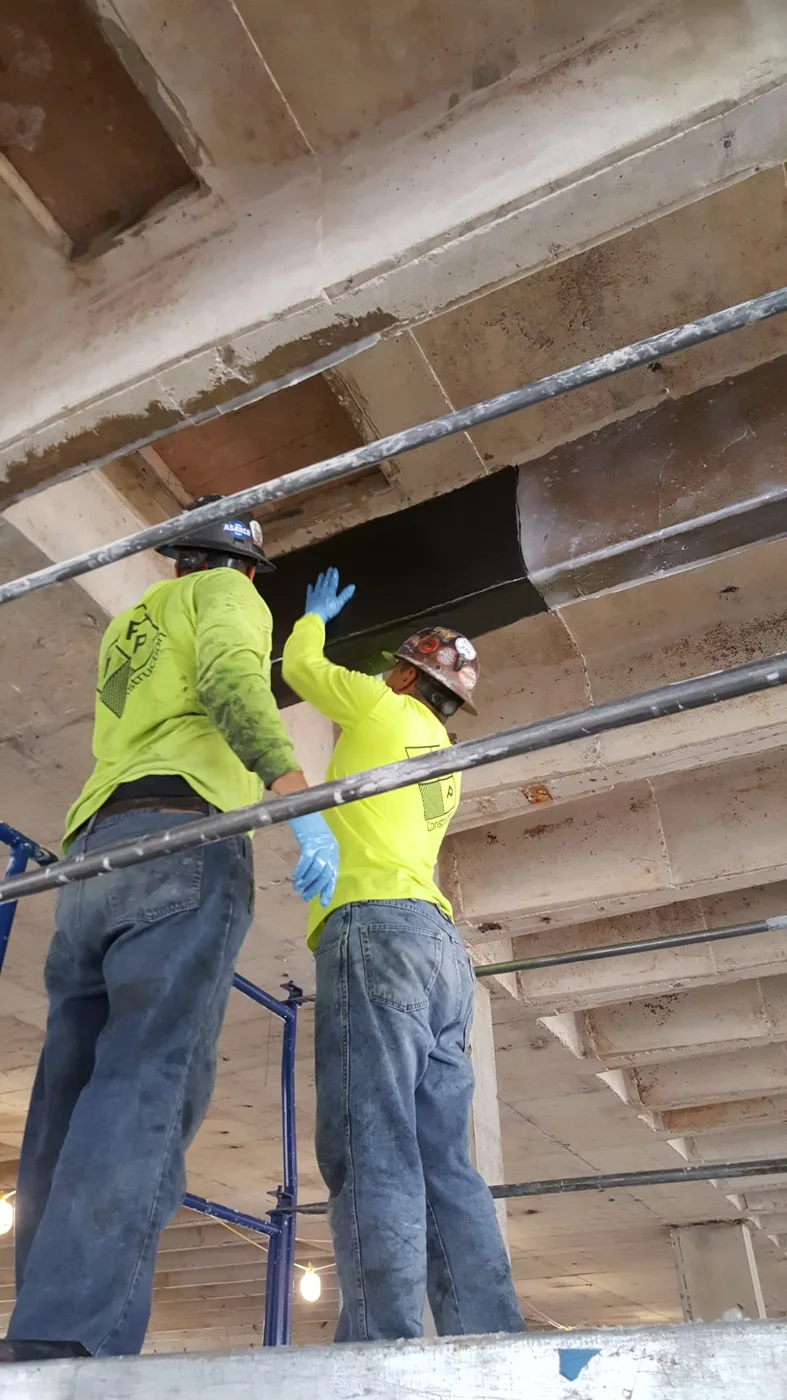
Crews inside apply the flexible fabric to the walls and ceiling, working around pipes and cables.
04
Cure & coat
The epoxy is tack-free in about 4 hours at 75°F and at full strength in 24 hours. A chemical-resistant top coat finishes the job.
ADVANTAGES
Advantages of FRP for Tunnel Repair
Trenchless
All repairs are made from inside, with zero excavation.
Stronger than original
Walls and ceiling can be strengthened above their original capacity.
Fits tight spaces
Flexible fabric passes through manholes and around pipes.
Thin
Typically about ¼ in. (5 mm) added to the wall.
Tunnel corroding or failing?
Tell us about the tunnel, its access and what it carries. Our team will recommend the right QuakeWrap® system and provide specifications for your engineer of record.
Emergency Repair of the Drama Tunnel, University of Arizona
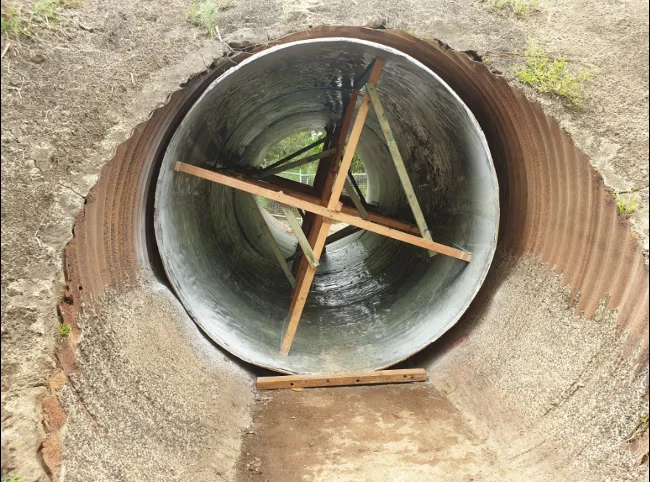
About a month before the Fall 2017 semester, part of a 96 in. corrugated metal pipe utility tunnel failed under a busy walkway, and the soil and sidewalk above partly caved in. The tunnel carries steam, so it was above 115°F inside. Two years earlier, QuakeWrap® carbon FRP had repaired a 1,000 ft section of concrete tunnel for the University, and an FRP liner could be finished before classes began.
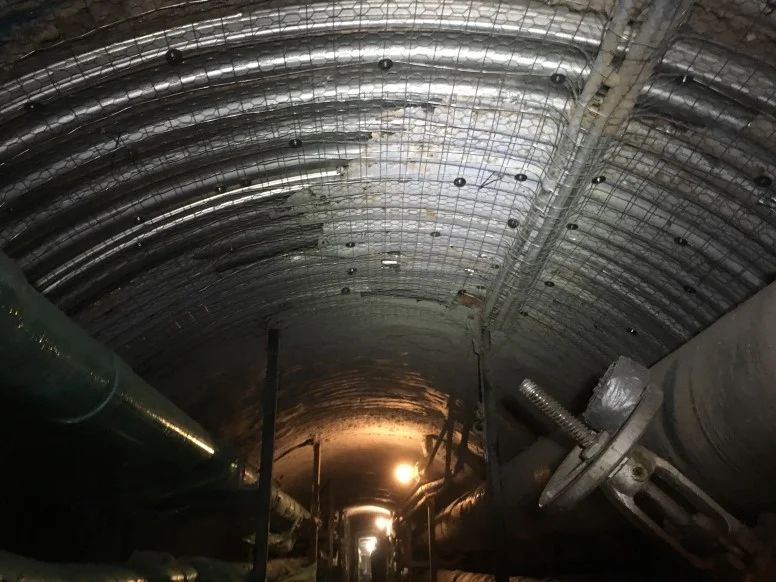
After a new pipe segment was bolted in at the corroded crown, crews attached steel wire mesh, sprayed a 3 in. layer of gunite, then applied 24 in. carbon bands at 48 in. on center along the tunnel and a full layer of carbon in the hoop direction. The liner was designed to carry soil and traffic loads on its own, independent of the old pipe.
A 35-ton air-conditioning unit made the tunnel workable, and extra shifts brought the schedule from six weeks to four. The 162 ft repair was finished in August 2017, within budget and without interrupting campus operations.
Can you provide specifications and design details for our engineer?
Yes. Our team will recommend the right QuakeWrap® system and provide product data sheets, specifications and sample design details for your engineer of record.
Does tunnel repair require excavation?
No. The FRP is applied from inside the tunnel, so the repair is trenchless. Saturated fabric is passed in through the access ports.
Do the pipes and cables have to be removed?
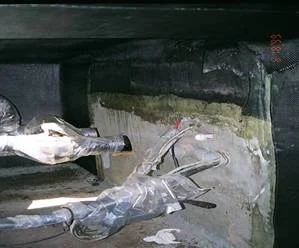
No. They are covered to protect them, and the flexible fabric is applied around them. At the Arizona State Hospital it was wrapped through the limited space between many cables and pipes.
How much space does the repair take up?
The FRP itself typically adds about ¼ in. (5 mm). Where a new structural liner is needed, a gunite layer may go on first, as the 3 in. layer did in the Drama Tunnel.
Can a collapsed or badly corroded tunnel be repaired?
Yes. The Drama Tunnel at the University of Arizona had partly collapsed. Its gunite and carbon FRP liner was designed to carry all soil and traffic loads independent of the old pipe.