
PIPEMEDIC® INTERNAL LINING
Internal Pipe Lining: Structural FRP Liners Installed Through a Manhole
Two FRP lining systems for pipes and culverts of any shape: wet layup and StifPipe®. No digging, with access through a standard manhole or manway.
- No-dig, through a standard manhole
- Pressure and gravity pipes
- NSF/ANSI 61 wet layup for drinking water

CHOOSE YOUR SYSTEM
Two Ways to Line a Pipe From the Inside
The right liner depends on what it has to carry. If the host pipe still carries the soil and traffic loads, a thin carbon lining sized for internal pressure is often enough. If the liner must stand alone, ring stiffness governs and StifPipe® is the efficient answer.
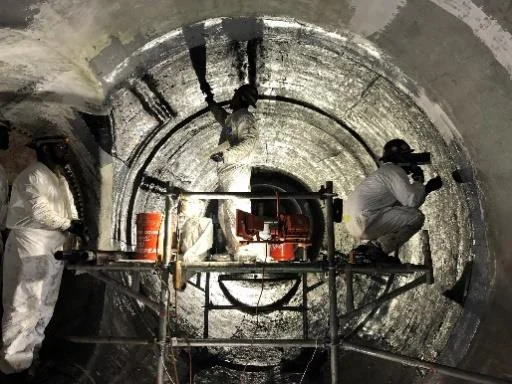
Wet Layup Lining
Carbon or glass fabric saturated with epoxy and bonded inside the pipe, by hand in person-entry pipes or with a packer in small ones.
- Two or three carbon layers often carry the internal pressure
- Spot repairs or full-length renewal
- NSF/ANSI 61 for drinking water pipes

StifPipe®
A lightweight sandwich-wall FRP pipe that carries soil and traffic loads on its own. Slip-lined in segments or built in place by wet layup.
- Slip-lined without bypassing the flow
- Essentially any size, circular or not
- Usually pushed in by hand, no jacking
Which Internal Liner Fits Your Pipe?
| Wet layup | StifPipe® | |
|---|---|---|
| Best for | Restoring pressure capacity, spot or full length | Liners that must carry all external loads alone |
| How it goes in | Saturated fabric applied by hand or packer | Slip-lined segments or wet layup |
| Access | Person entry, or packer for small pipe | Standard manhole; segments pushed in |
| Structural role | Composite pressure vessel bonded to the host | Fully structural, stand-alone pipe |
| Flow during work | Work area kept dry: flow stopped or bypassed | Can stay on with slip-lining |
Not sure which liner fits?
Send us the pipe size, material, pressure and condition. Our team will recommend the right QuakeWrap® system and provide specifications for your engineer.
WET LAYUP LINING
How a Wet Layup Liner Is Built
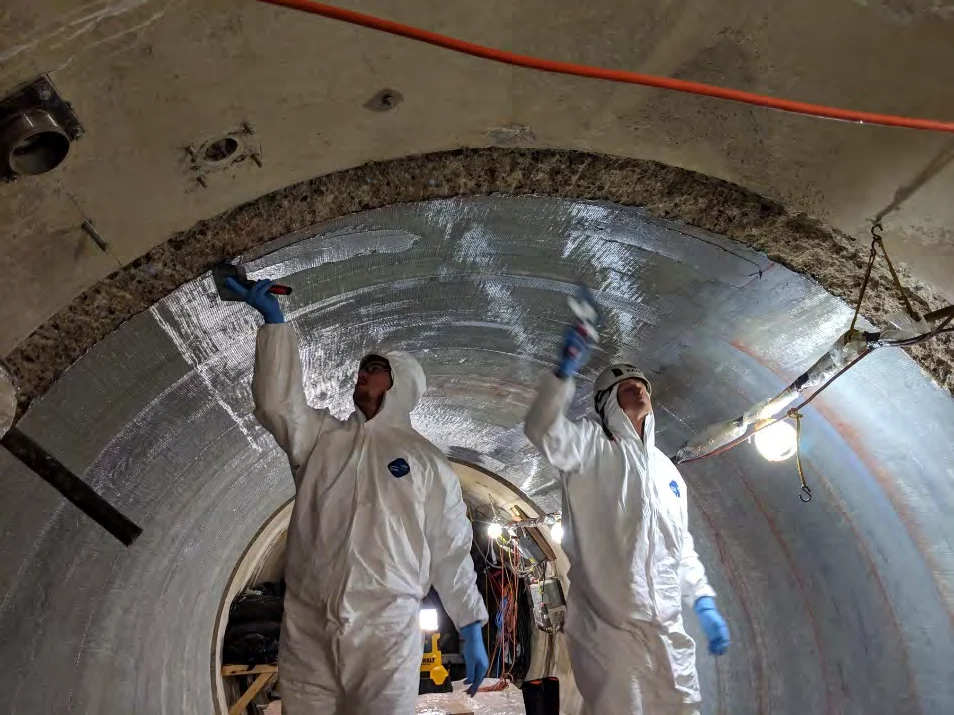
Sheets of carbon fabric, typically 2 to 4 ft (600 to 1,200 mm) wide, are saturated with epoxy and applied in the hoop and longitudinal directions. The ends of each sheet overlap to form a continuous loop. The bands also overlap along the pipe, so the flow passes from one band to the next like roof shingles.
The number of carbon layers and the overlap lengths are set in the design for each project, and our team provides specifications for your engineer.
Crews and equipment pass through manholes and reassemble inside the pipe. In some cases the fabric is saturated outside and the rolls are passed in. A final epoxy top coat protects the lining, chosen for abrasion and the chemistry of the water. The smooth, low-friction liner improves hydraulic capacity in most cases.
- Epoxy top coatAbrasion and chemical protection
- Carbon or glass FRPHoop and longitudinal layers per design
- Tack coat and primerHigh-adhesion epoxy bond
- Host pipeConcrete, PCCP, steel or other
Wet Layup Lining, Step by Step
Basic steps for an internal wet layup liner. Refer to the technical specification for details.
-
Isolate and prepare
Take the pipe out of service or bypass the flow. Remove sharp protrusions, then smooth or abrade the surface for bond.
-
Clean
Pressure wash away debris, sediment, dust, roots, oil and grease.
-
Prime and tack
Apply a primer, then a high-adhesion epoxy tack coat.
-
Apply the layers
Install resin-saturated fabric bands per the design, overlapping in the direction of flow.
-
Top coat and cure
Apply the final top coat and let it cure before returning the pipe to service.
Why Line a Pipe From the Inside
-
No digging
Access through a standard manhole or manway.
-
Minimal disruption
Ideal for pipelines in congested, populated areas.
-
Any shape
Pipes and culverts of any shape, including box sections.
-
Thin wall
Typically about ¼ in. (5 mm) added thickness.
-
Better flow
Smooth FRP improves hydraulic capacity in most cases.
-
Higher pressure rating
Can raise the pipe's pressure rating significantly.
-
Corrosion resistant
Resists sulfuric acid and other sewer chemicals.
-
Long life
Designed to last 50+ years for most site conditions.
CERTIFICATIONS & TESTING
Listed for Drinking Water. Tested Under Pressure.
-
NSF/ANSI 61
Wet layup listed by IAPMO R&T for drinking water pipes 6 in. and larger: Active, checked October 20, 2026 (N-11990, NSF/ANSI/CAN 61-2023).
-
IAPMO UES Evaluation Report ER-828
QuakeWrap® FRP systems evaluated under AC125 and AC178 (ER-828, valid through October 2026).
-
GTI hydrostatic tests
PipeMedic® laminates held 250 psig across a 24-in. gap.
-
TRI deflection test
46-in. StifPipe® tested by Texas Research Institute.
PROVEN RESULTS
Internal Lining Projects
-
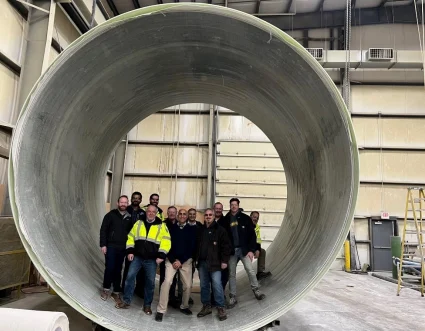
16-ft Sewer Interceptor, Detroit
A fully structural StifPipe® slipliner for one of the largest sewers serving metro Detroit.
Read the case study -
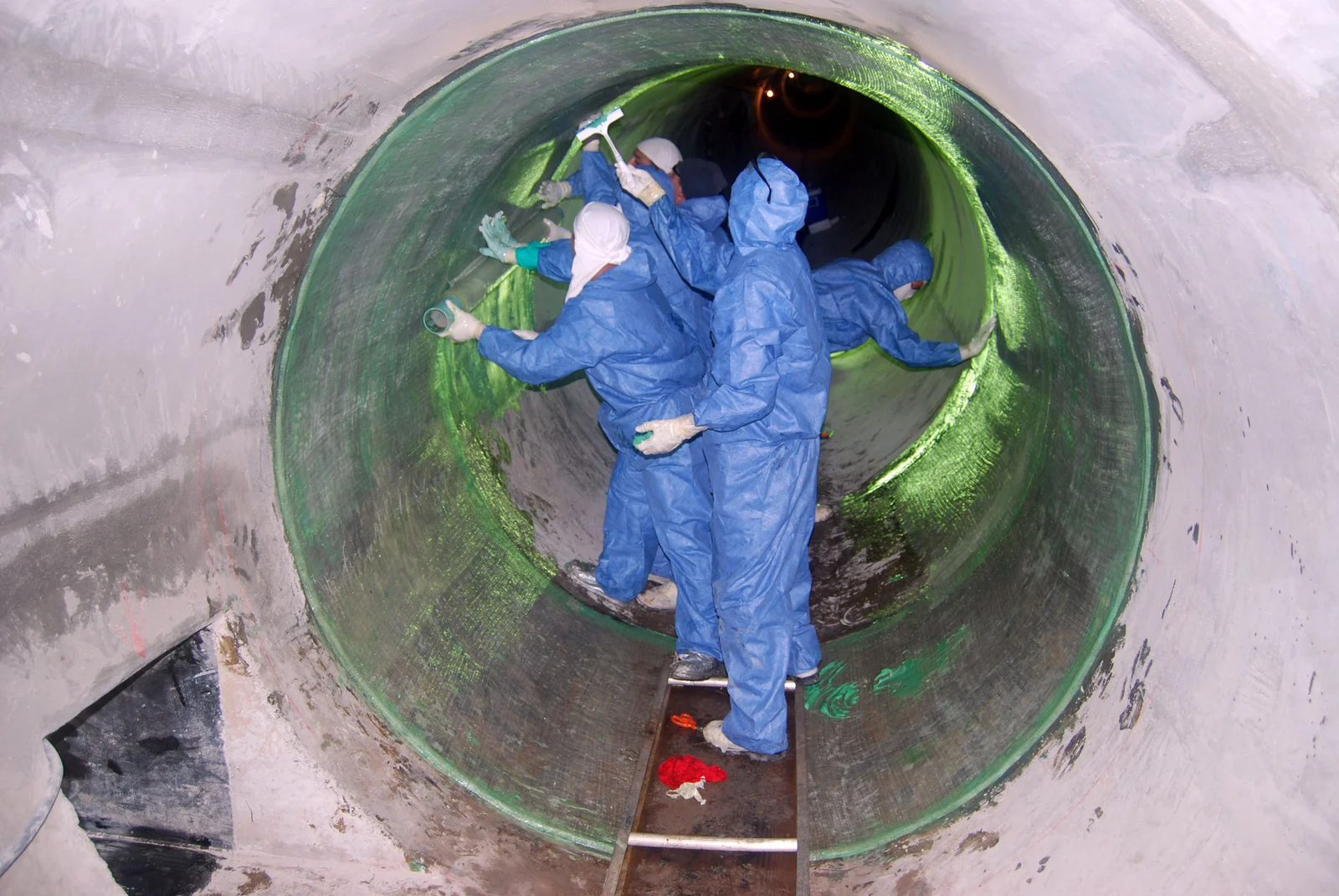
84-in. Penstock, Costa Rica
About 150,000 sq ft of glass FRP liner installed in 15 days in a leaking 5,742-ft concrete pipeline.
Read the case study -
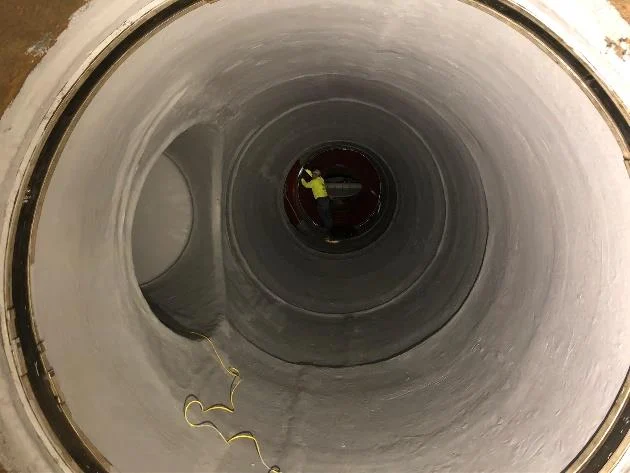
120-in. Penstock, Lake Lure
A fully structural carbon FRP liner for a riveted steel penstock with up to 80% wall loss.
Read the case study -
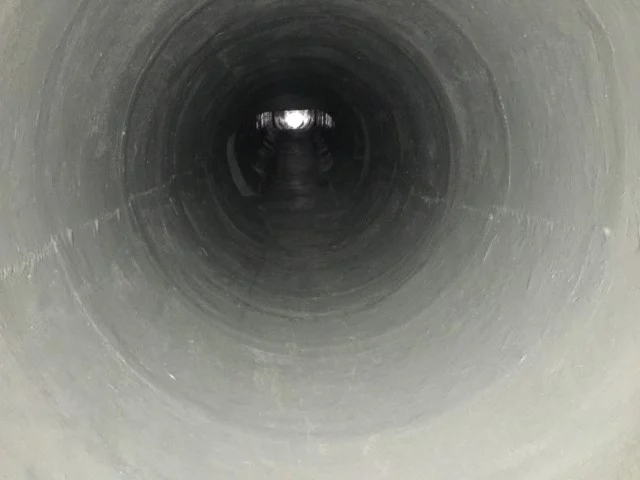
48-in. Culvert, Salt Lake City
A box and masonry culvert cleaned, patched and lined with FRP along its entire length.
Read the case study -
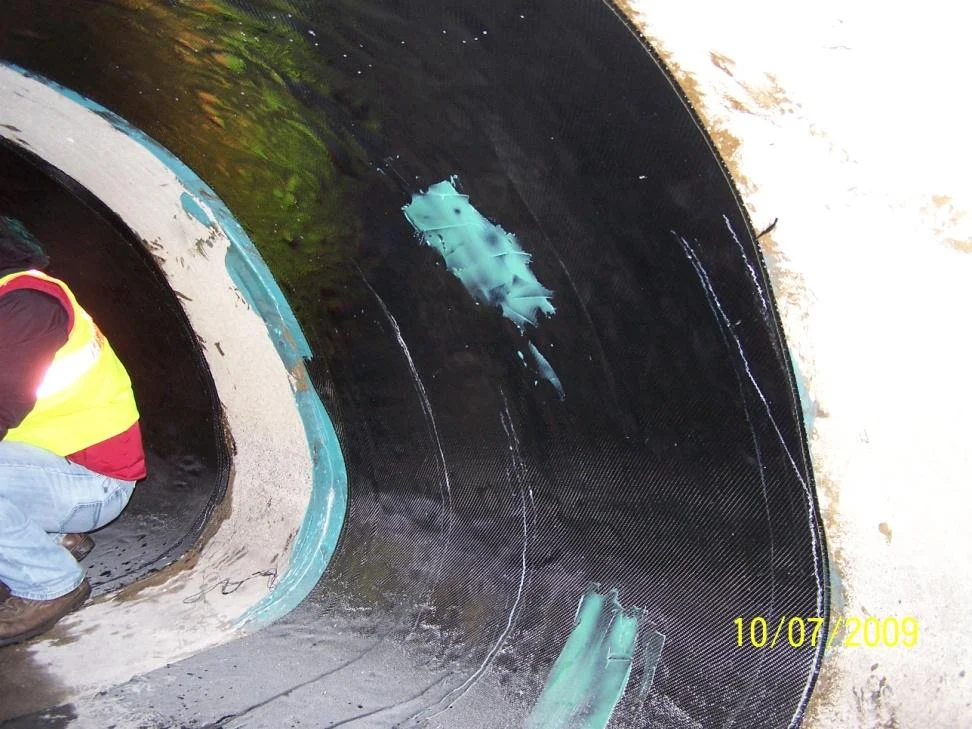
North Dakota DOT Culvert Study
Culvert joints lined with carbon and glass FRP were still sealed two years later.
Read the case study -
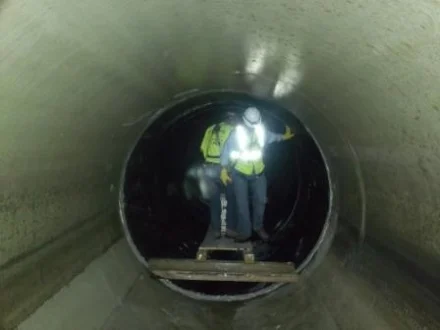
8-ft Fiberglass Sewer, DC Water
A 22-ft repair of a 96-in. fiberglass sewer pipe damaged during installation. The sewer was dammed and bypassed, then lined with biaxial carbon fabric in the hoop direction in 2 days (March 2012).
Project sheet (PDF)


Internal Pipe Lining FAQs
Can a pipe be lined without excavation?
Yes. Both systems go in through existing access, usually a standard manhole or manway, with no cutting or removing of soil.
Which internal liner should I use?
Wet layup restores pressure capacity when the host pipe still carries the external loads. StifPipe® is for liners that must carry soil and traffic loads on their own. Our team will recommend the right system for your pipe.
What pipe sizes can be lined?
Wet layup lines small pipes with a packer and person-entry pipes by hand. StifPipe® has been made up to 16 ft in diameter.
Does the liner reduce flow?
Usually not. The liner adds only a thin wall, typically about ¼ in. (5 mm), and its smooth surface improves hydraulic capacity in most cases.
Is internal lining safe for drinking water?
Yes. The QuakeWrap® wet layup system is listed by IAPMO R&T to NSF/ANSI/CAN 61 for drinking water pipes 6 in. and larger, and tanks: Active, checked October 20, 2026 (N-11990, NSF/ANSI/CAN 61-2023).
Does the flow have to be bypassed?
For wet layup, the work area must be dry, so the flow is stopped or bypassed. StifPipe® can be slip-lined without bypassing the flow.
Related Pipe Repair Systems and Applications
Have a Pipe to Line From the Inside?
Tell us about the pipe, its size, material, pressure and access. Our team will recommend the right PipeMedic® system and provide specifications for your engineer.