
CASE STUDY
Detroit Sewer Tunnel Rehabilitation With 16-ft StifPipe®
A 17.5-ft concrete sewer tunnel serving more than 800,000 residents was being eaten away by hydrogen sulfide. This sewer tunnel rehabilitation used fully structural 16-ft StifPipe® liners, made by QuakeWrap® near the job site as monolithic segments. They are likely the largest slipliners ever made.

Project Details
- OWNER
- Oakland-Macomb Interceptor Drain Drainage District (OMIDDD)
- LOCATION
- Detroit, Michigan
- STRUCTURE
- Northeast Interceptor, East Arm (NI-EA) of the Oakland-Macomb Interceptor Drain (OMID)
- HOST TUNNEL
- 17.5-ft diameter concrete, built in the 1970s, 40 to 75 ft deep
- LINER
- 16-ft StifPipe®, 14-ft monolithic segments, 1.95-in. wall, about 8,000 lb each
- ANNULUS
- 9 in., filled with low-strength cementitious grout
- PROJECT ENGINEER
- NTH Consultants
- PIPE DESIGN AND MATERIALS
- QuakeWrap, Inc.
- INSTALLER
- Marra Construction, Cleveland, Ohio
01 · THE CHALLENGE
Corrosion in One of Detroit's Largest Sewers
The Oakland-Macomb Interceptor Drain (OMID) is a 17.5-ft diameter concrete sewer tunnel built in the 1970s. It serves more than 800,000 residents in 23 communities in Oakland and Macomb counties. The rehabilitated stretch, the Northeast Interceptor East Arm downstream of the Northeast Sewage Pump Station (NESPS), runs 40 to 75 ft deep and is part of the largest pipeline in the system.
High concentrations of hydrogen sulfide gas had caused microbially induced corrosion of the concrete lining. Because of the corrosion and apparent structural defects, the owner sought a fully structural lining system for a stretch of approximately 1,500 ft, based on the analysis and recommendation of NTH Consultants.

02 · THE SOLUTION
Why StifPipe® Fit This Sewer Tunnel Rehabilitation
After a rigorous selection process based on responses to NTH Consultants' Request for Technical Qualifications, three lining systems were approved: a segmental fiberglass pipe by Channeline, a segmental polymer concrete pipe called P3 Polymer by Hard Rock, and StifPipe®. The two segmental systems are assembled piece by piece inside the sewer. StifPipe® was the only one delivered as monolithic 16-ft diameter segments, making it the only whole-piece (360°) liner on the project.
StifPipe® combines carbon and glass FRP with a core layer for high stiffness at low weight, and it does not corrode. Standard pipe design methods such as AWWA and ASTM do not cover pipes this large, so its structural performance was validated with 3D finite element analysis and full-scale tests on actual pipe segments. StifPipe® received the 2016 ASCE Innovation Award.
- Longest segments of the approved systems: 14 ft
- Thinnest wall: 1.95 in.
- Installed without bypassing the flow, by shutting off the NESPS pumps each day

APPROVED SYSTEMS
The Three Liners Approved for the Project
Table 1 of the project paper compares the three pipes approved for the Detroit sewer tunnel, as stated by the authors.
| StifPipe® | Channeline | P3 Polymer (Hard Rock) | |
|---|---|---|---|
| Monolithic or segment | Monolithic | Segment | Segment |
| Length (ft) | 14 | 7.2 | 6 |
| Wall thickness (in.) | 1.95 | 3.54 | 4 |
| Weight (lb/ft) | 570 | 1,800 | 3,080 |
| Installation speed (ft/month) | 200 | 102 | 46.5 |
Planning a large-diameter sewer liner?
Send us the host pipe size, depth, flow and condition. Our team will recommend the right QuakeWrap® system and provide specifications for your engineer.
03 · MANUFACTURING
Made Near the Job Site, Tested Before Delivery
StifPipe® is made from composite fabrics and core materials saturated with resin and wound around a rotating mandrel, so it does not need a large pipe plant or heavy transport. For Detroit, the pipes were made near the job site, which cut transportation costs. Once the resin cured, in about one day, the mandrel was collapsed and the finished pipe was pulled out, ready for installation.
Each segment was checked with a guided wave ultrasonic technique to assess its honeycomb core. Piezoelectric transducers send guided waves through the wall, and changes in time of flight, frequency and amplitude reveal internal anomalies. The method needs access to only one side of the pipe.
- Portable manufacturing near the site
- About one day to cure each pipe
- Non-destructive testing of every segment's core

INSTALLATION
How the 16-ft Liners Went In
Flow stayed in the sewer: the pumps at the Northeast Sewage Pump Station were shut off each day during the work instead of bypassing the flow.
-
Fabricate
Wind each 16-ft segment on a rotating mandrel near the site and cure it for about one day.
-
Inspect
Check each segment's core with guided wave ultrasonic testing.
-
Deliver
Truck the 14-ft long, roughly 8,000 lb segments to the site under several low-clearance bridges.
-
Lower and place
Lower each segment through a 30-ft diameter access shaft and move it along the tunnel with a custom pipe mover.
-
Grout
Fill the 9-in. annulus with low-strength cementitious grout to lock the liner in place and prevent flotation.
04 · THE RESULT
A Record-Breaking Slipliner Under Detroit
The StifPipe® made for this project is likely the largest slipliner ever made, in a record-breaking project addressing one of Detroit's most critical pieces of infrastructure.
With the annulus grouted, the liner restored the tunnel's structural integrity and protects it from further corrosion. Making the pipe near the site reduced transportation and heavy equipment, and the 14-ft lengths kept the number of joints down.
- slipliner diameter
- 16 ft
- whole-piece liner
- 360°
- segment length
- 14 ft
- annulus grouted
- 9 in.

Products & Applications Used


MORE PROJECTS
Related Projects
-
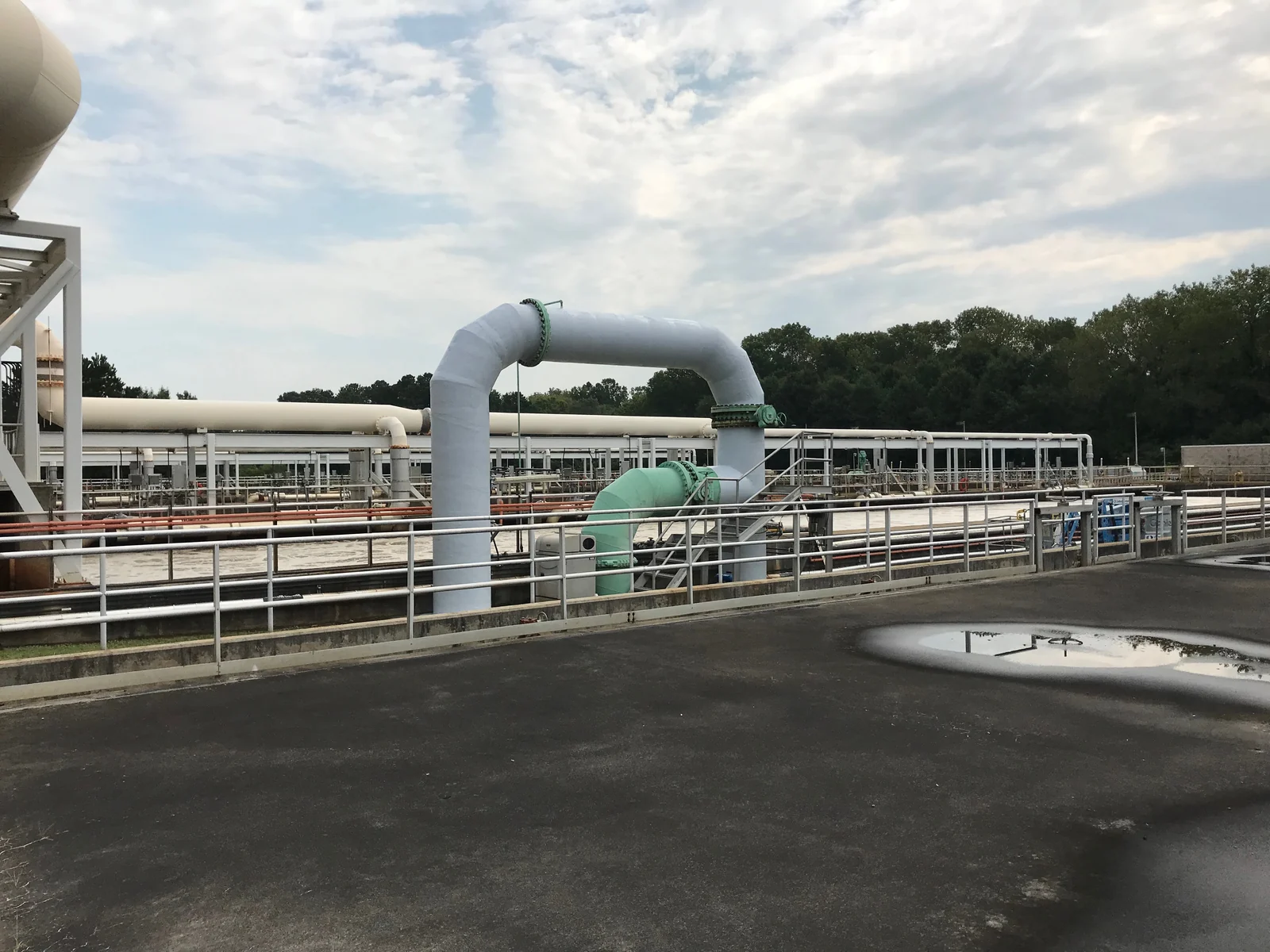
Cobb County, Georgia
54 ft of 36-in. steel process pipe strengthened from the outside for 65 psi.
View case study -
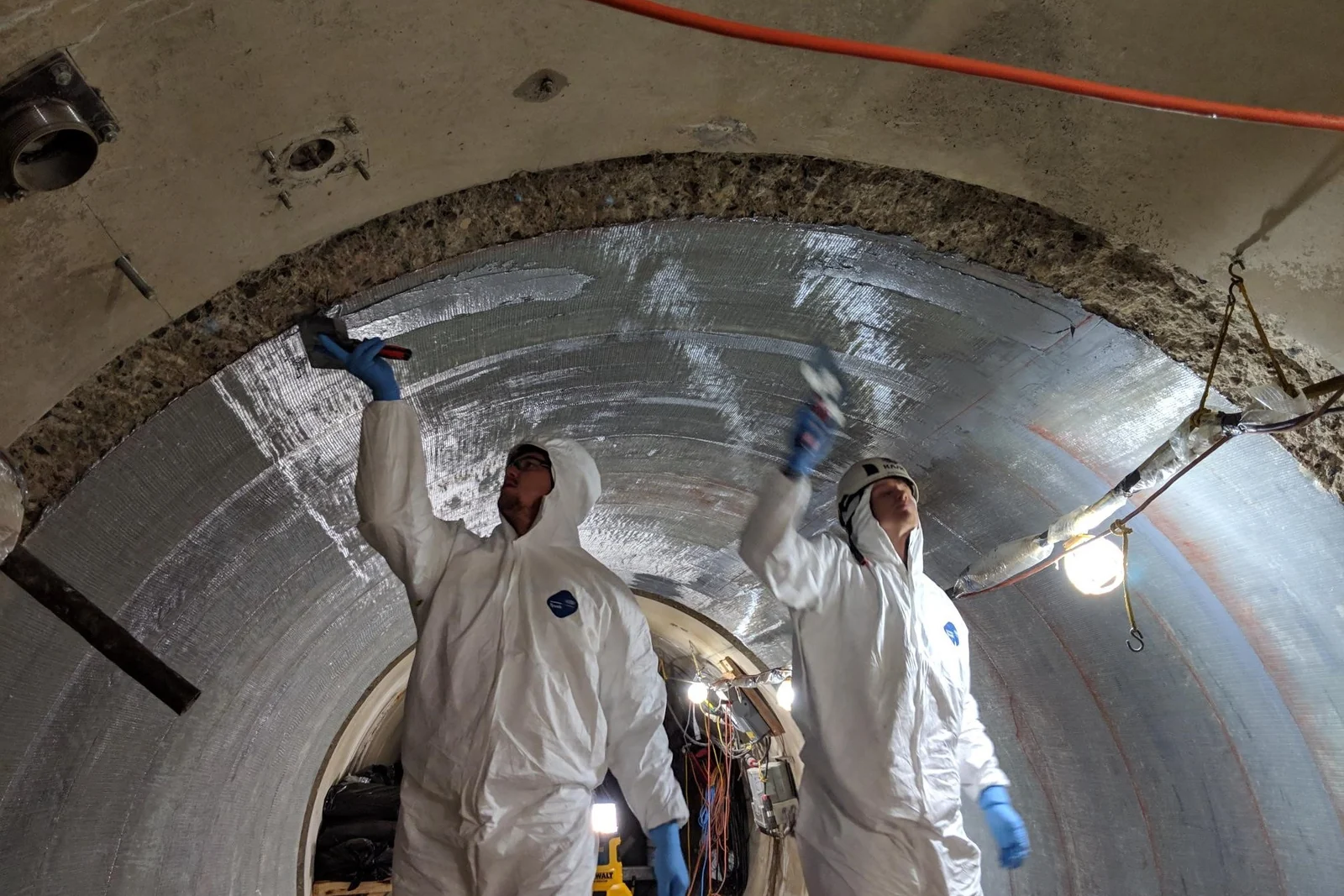
MnDOT I-35, Minneapolis
A 20-ft section of a 12-ft storm tunnel renewed with a wet-layup StifPipe® liner.
View case study -
El Encanto, Costa Rica
5,742 ft of 7-ft concrete pipeline lined with glass FRP in 15 days.
View case study


More Resources for Engineers
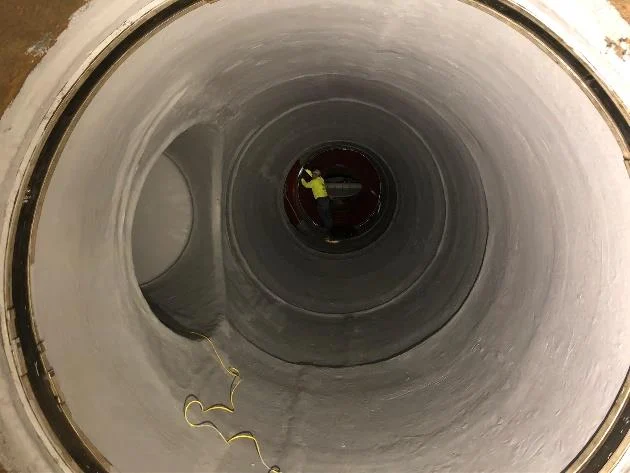
Have a Pipe That Needs Repair?
Tell us about the pipe, its pressure and condition. Our team will recommend the right QuakeWrap® system and provide specifications for your engineer.