
INDUSTRIAL & UTILITY
Storage Tank Repair With FRP
Repair storage tanks with minimal downtime. The QuakeWrap® wet layup system meets NSF/ANSI Standard 61 for drinking water pipes 6 in. and larger and for water storage tanks.
- NSF/ANSI 61 for drinking water
- Minimal downtime
- IAPMO/ICC certified

MATCHING PRODUCTS
QuakeWrap® Systems for Tanks
-
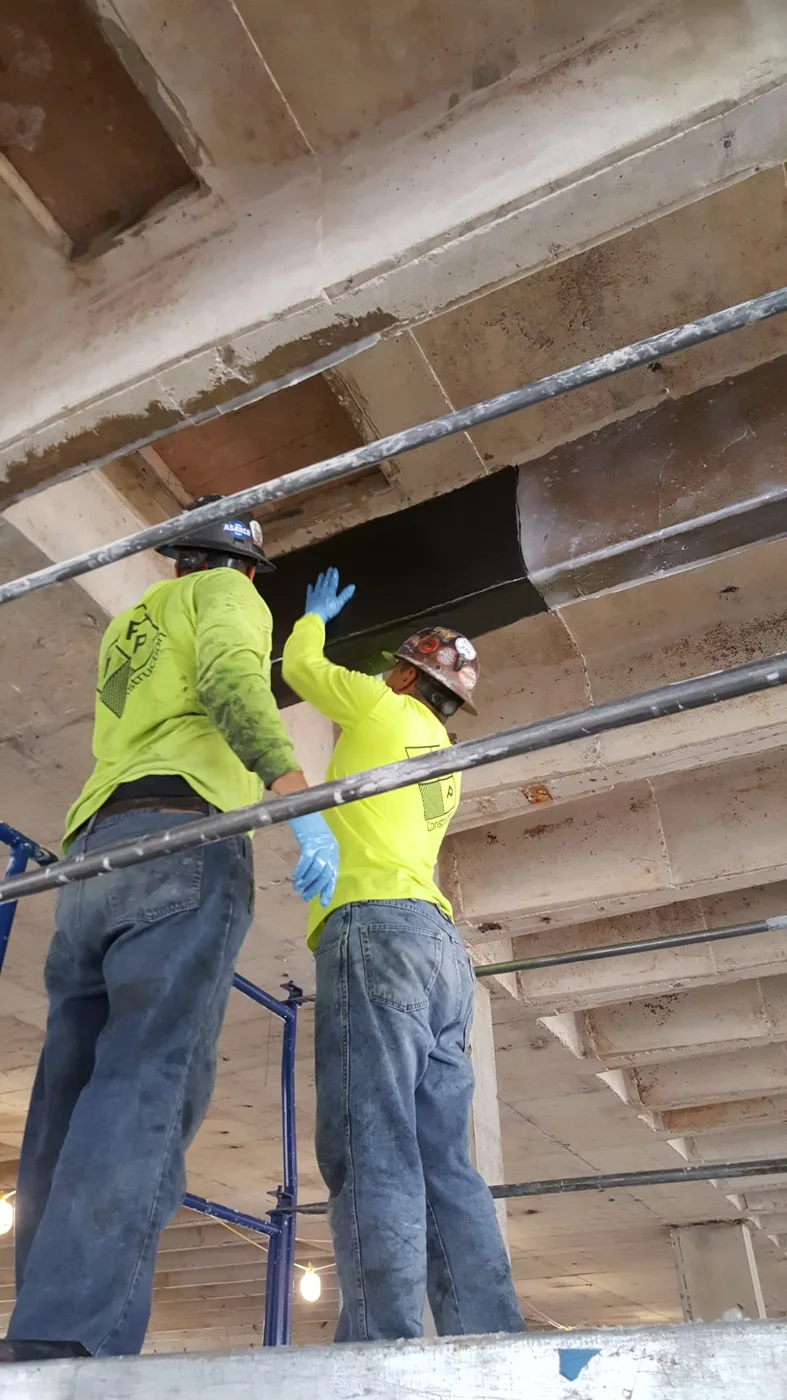
Wet & Dry Layup FRP
Carbon and glass fabric systems for beams, columns, slabs and walls.
Explore Wet & Dry Layup FRP -
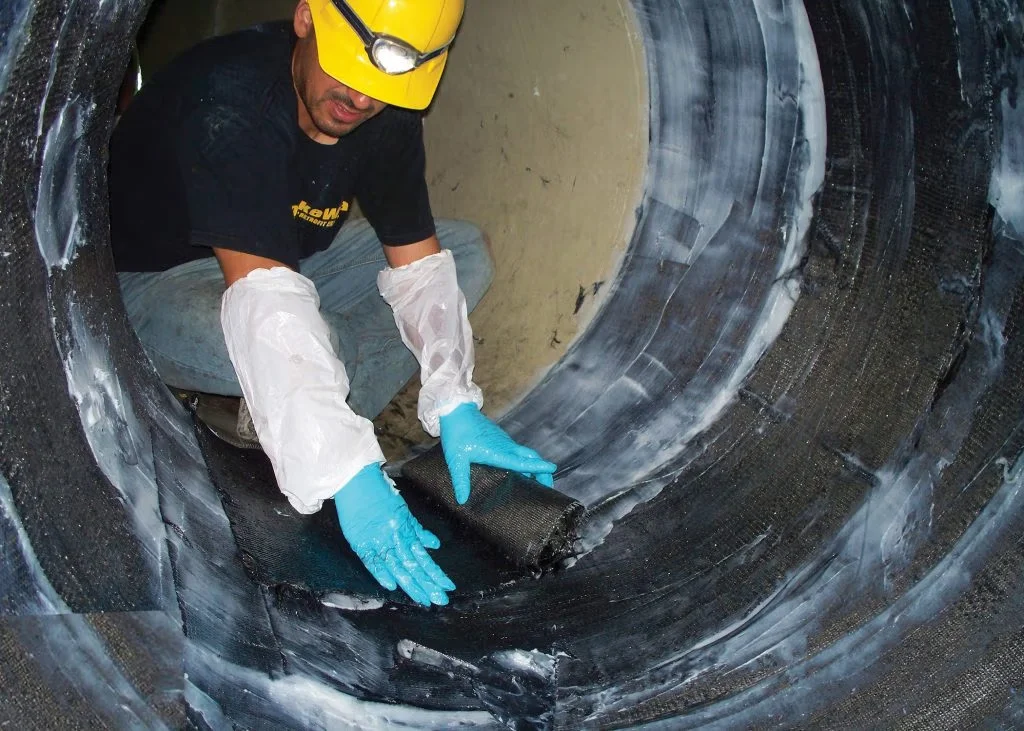
PipeMedic®
Structural FRP repair for pipes 4 in. to 180+ in.
Explore PipeMedic®


Not sure which system fits?
Tell us about the structure and conditions. Our team will recommend the right QuakeWrap® system.
WHY TANKS DETERIORATE
Why Storage Tanks Fail
Concrete, steel and fiberglass tanks hold water, sewage, oil and chemicals, and that service environment corrodes them fast.
-
Cracked concrete
Cracks let moisture and chemicals reach the reinforcing steel and speed up its corrosion.
-
Short-lived coatings
On steel tanks the coating lasts only a few years, then the bare metal begins to corrode rapidly.
-
Failed liners
Bolted or sheet liners crack and leak, letting acids and process fluids attack the concrete behind them.
-
Corroded hoop steel
Exterior steel hoops that hold a tank together corrode in aggressive plant environments.
HOW IT WORKS
How an FRP Lining Repairs a Tank
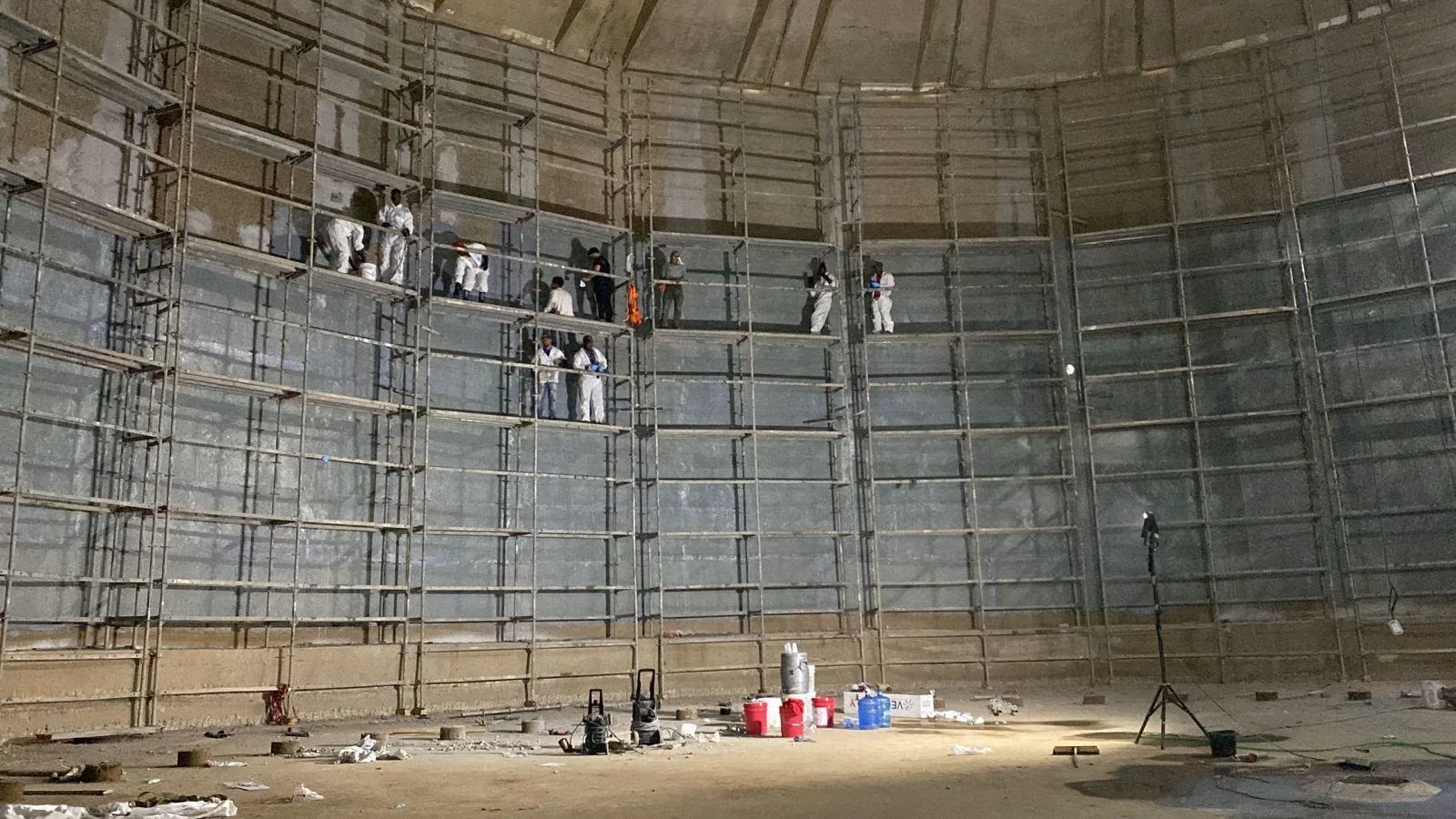
Carbon or glass fabric saturated with epoxy resin is applied to the inside or outside surface of the tank to strengthen it. Applied inside, the FRP also stops leaks and acts as a moisture barrier that keeps chemicals off the steel and greatly lowers the corrosion rate.
Tall tanks usually need more layers of FRP near the base, and the number of layers decreases toward the top, which lowers the cost of the repair. Your engineer of record sets the layers and fiber orientation for each tank. Our team recommends the right QuakeWrap® system and provides specifications.
Connecting pipes and fittings can often stay in place, and damaged areas can be repaired on their own. For drinking water, the QuakeWrap® wet layup system meets NSF/ANSI Standard 61.
- Inside or outside the tank
- Layers taper with height
- Leak-proof moisture barrier
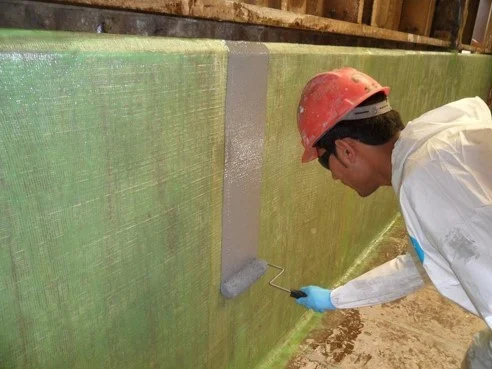
SEVERELY CORRODED STEEL TANKS
Building a New Tank Wall With PileMedic® Laminates
When the wall of a steel tank is severely corroded, a wet layup lining is not feasible. And when the roof bears on the tank wall, FRP fabric adds little to the wall's axial capacity.
Our patented system repairs these tanks like a very large pile. Optional vertical bars are anchored into the foundation and held along their height with spacers, with horizontal bars added if required. Sheets of PileMedic® laminate 9 ft wide are wrapped tightly around the tank in one or more layers, and the space between the laminate and the steel wall is filled with concrete. The next 9 ft of laminate goes on and is filled, until a new wall covers the full height of the tank.
The laminate provides hoop and axial strength that can be counted in the design, and it forms a durable, impervious layer that keeps moisture and oxygen away from the corroded wall.
- wide PileMedic® laminate sheets
- 9 ft
- strength from the laminate, usable in design
- Hoop + axial
ADVANTAGES
Advantages of FRP for Tank Repair
-
Inside or outside
Repairs can be done internally or externally.
-
Thin
Typically about ¼ in. (5 mm) added to the wall.
-
Tapered layers
Fewer layers toward the top lowers repair cost.
-
Minimal downtime
Repairs are fast.
-
Fittings stay
Connecting pipes and fittings can often remain in place.
-
Spot repair
Ideal for repairing only the damaged areas.
-
Moisture barrier
Protects the tank against future corrosion.
-
Drinking water
Wet layup system meets NSF/ANSI Standard 61.
Tank leaking or corroding?
Tell us about the tank, what it holds and the damage. Our team will recommend the right QuakeWrap® system and provide specifications for your engineer of record.
PROVEN RESULTS
Tank Repair Projects
Water, mining and process tanks lined or strengthened with QuakeWrap® FRP.
-
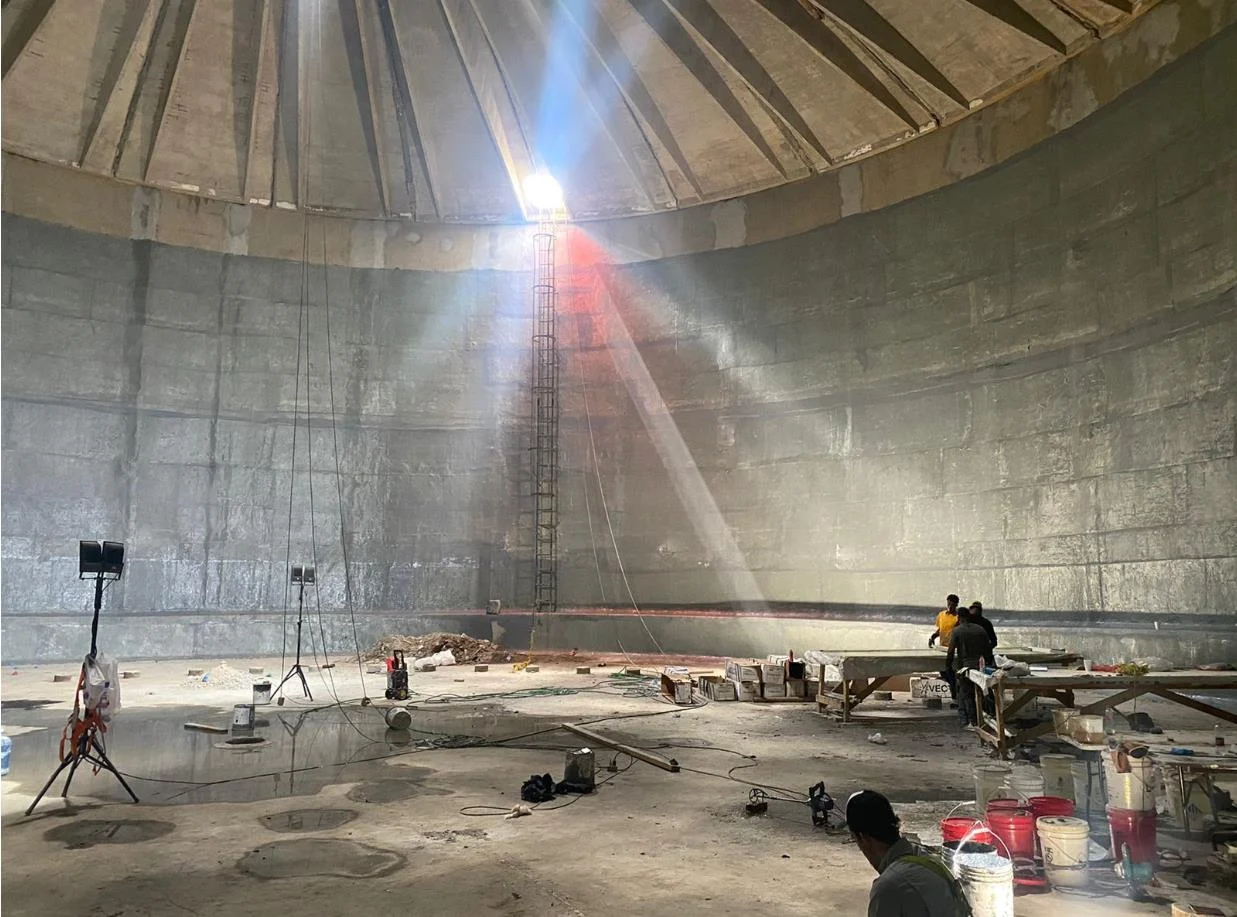
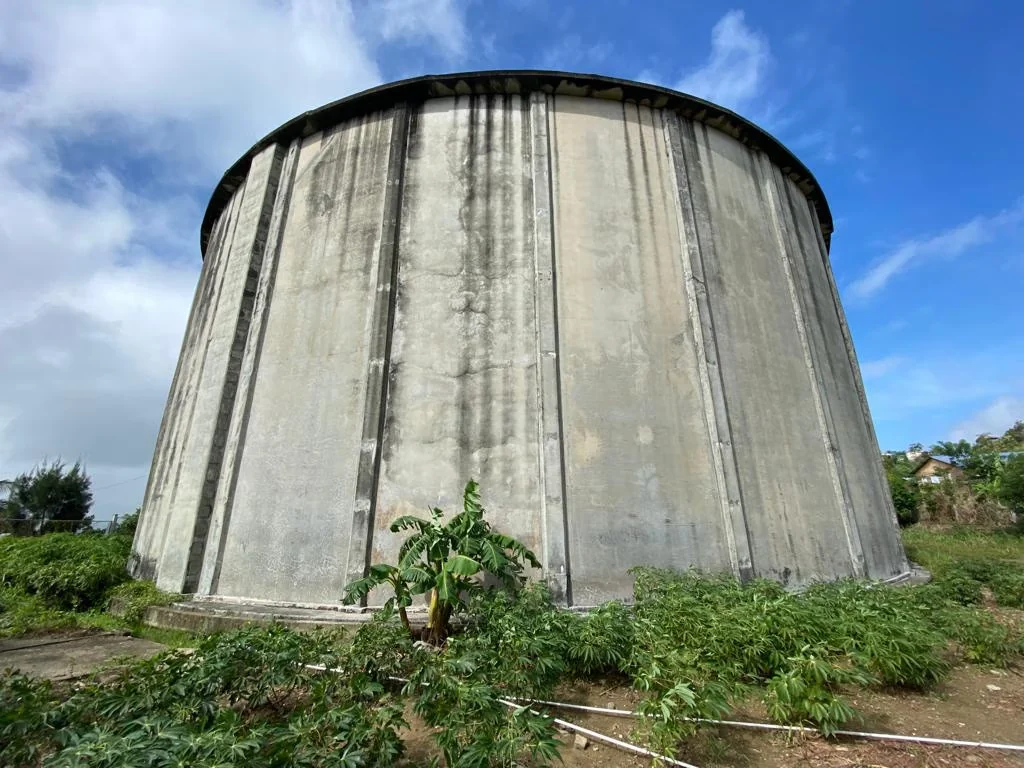
CORAASAN Water Tank, Santo Domingo, Dominican Republic
A leaking tank of about 2.5 million gal (10,000 m³) got an NSF 61 certified glass FRP liner instead of grout patching, at an estimated saving of more than $2 million over replacement.
Read the case study -
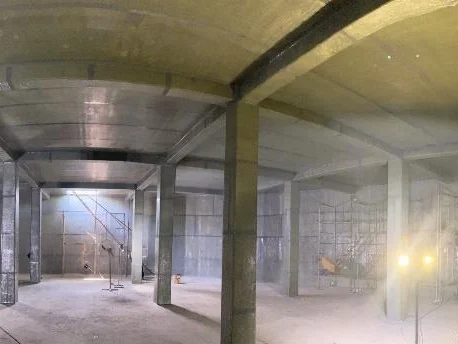
American Cemetery, Manila, Philippines
Two deteriorated 400,000 gal concrete irrigation tanks got a structural glass FRP lining, saving the American Battle Monuments Commission 75% over replacement.
Read the case study -
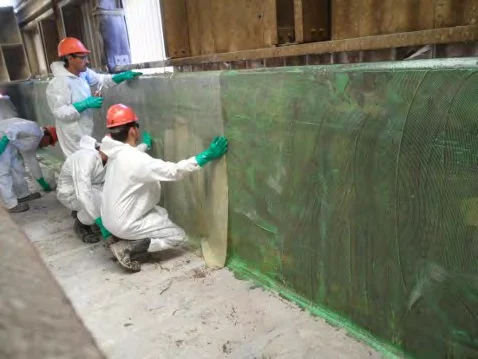
Copper Mine Settling Tanks, Northwest Mexico
About 8,200 sq ft of glass FRP liner went into each of three electrolytic settling tanks in less than a week per tank. They have run leak-free for over five years.
Project sheet (PDF) -
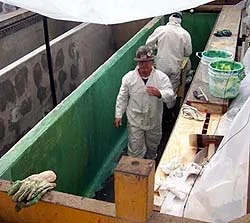
Tyrone Mines, Tyrone, New Mexico
Concrete tanks holding 15% sulfuric acid at 140°F were lined with glass FRP and a protective mat, leaving them stronger than their as-built condition.
Project sheet (PDF) -
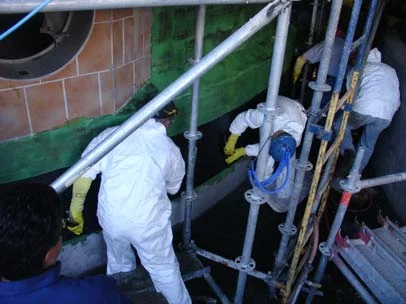
Buckeye Paper Mill, Memphis, Tennessee
One layer of carbon fabric, 17,400 sq ft in all, replaced the corroded exterior steel hoops of 32 ft diameter ceramic tile tanks.
Project sheet (PDF)

WATCH
Repair of a Leaking Concrete Water Storage Tank
A leaking concrete water storage tank lined from the inside with QuakeWrap® FRP fabric.
Plays from YouTube
Tanks FAQs
Is the system safe for drinking water?
Yes. The QuakeWrap® wet layup system meets NSF/ANSI Standard 61 for drinking water pipes 6 in. and larger and for water storage tanks, and is IAPMO/ICC certified under Acceptance Criteria AC125.
Can you provide specifications and design details for our engineer?
Yes. Our team will recommend the right QuakeWrap® system and provide product data sheets, specifications and sample design details for your engineer of record.
Is the FRP applied inside or outside the tank?
Either. Inside, it also stops leaks and acts as a moisture barrier. Outside, it can replace corroded hoop reinforcement, as at the Buckeye paper mill in Memphis.
Do pipes and fittings have to be removed?
Often not. Connecting pipes and fittings can usually stay in place during the repair.
How long is the tank out of service?
Repairs are fast. At a copper mine in Mexico, about 8,200 sq ft of liner went into each settling tank in less than a week.
What if the steel tank wall is too corroded for a lining?
A new wall can be built around it with PileMedic® laminates filled with concrete, with optional vertical bars anchored into the foundation. The laminate adds hoop and axial strength and seals out moisture and oxygen.
Related FRP Repair Applications
Have a Project That Needs Repair?
Tell us about your structure. Our team will recommend the right QuakeWrap® system and provide specifications for your engineer.