
STEEL PILE LOAD TRANSFER
ShearWrap™ & ShearClamp™: Steel Pile Repair Without Welding
New concrete or grout does not bond well to a steel pile. ShearWrap™ for round piles and ShearClamp™ for H-piles are patented, bolt-on steel devices that carry load from a corroded pile into the new PileMedic® shell and back, with no welding or drilling of the pile.
- No underwater welding or hot work
- Made for each project's pile size
- Fully encased once the repair is done

ShearWrap™ & ShearClamp™ at a Glance
- PATENT
- U.S. Patent 11,286,632, Shear Transfer Ring and Clamp
- MATERIAL
- Steel plates and ASTM-designated high-strength bolts
- SHEARWRAP™
- Circular steel piles and columns
- SHEARCLAMP™
- Steel H-piles and wide-flange columns
- HOW IT HOLDS
- Bolt tension creates friction on the pile; ShearClamp™ adds bearing
- MADE FOR
- Each project's pile size and load
- INSTALLATION
- Above or below water, by divers
- AFTER REPAIR
- Fully embedded in the concrete or grout shell
THE PROBLEM
Why a Steel Pile Repair Needs Its Own Load Path
On concrete and timber piles, the rough surface bonds well to the new concrete shell, so the pile and shell work together. Steel does not give enough bond. The AISC Specification (ANSI/AISC 360) does not allow direct bond between steel and concrete to carry load in encased composite members, and even for concrete-filled steel sections the 2010 edition set the nominal bond stress at just 60 psi (0.40 MPa).
The usual fix is to weld shear studs to the pile. Underwater welding is costly, and some projects forbid welding or hot work altogether. ShearWrap™ and ShearClamp™ give the same load path with bolts instead of welds. They are made for each project from steel plates and ASTM-designated high-strength bolts, and they end up fully embedded in the shell, away from water and the elements.
- No welding or drilling of the existing pile
- Part of the PileMedic® structural repair system for steel piles

SHEARWRAP™ FOR ROUND PILES
How ShearWrap™ Moves Load Around the Damage
Each ShearWrap™ is two half bands of steel joined by two high-strength bolts. The wrap goes on loose, slides to the right elevation, and the bolts are tightened to a set torque. That tension presses the wrap hard against the pile and builds friction, so each ShearWrap™ resists a designed shear force. Wings or flanges can be welded to the wrap itself to raise its capacity.
Groups of ShearWraps™ go above and below the corroded or missing length. Load coming down the pile passes into the shell at the upper group, travels through the shell past the damage, and returns to the pile at the lower group.
- Steel pileCarries the load down to the repair
- Upper ShearWraps™Transfer load into the shell by friction
- Concrete or grout shellCarries the load past the corroded zone
- Lower ShearWraps™Transfer load back into sound pile
- Steel pileCarries the load on to the foundation
WATCH HOW IT WORKS
ShearWrap™ for Load Transfer in Piles
The relatively smooth surface of a steel pile limits the transfer of stress between the pile and its new concrete encasement. This short video shows how ShearWrap™ and ShearClamp™ solve that without any welding (U.S. Patent 11,286,632).
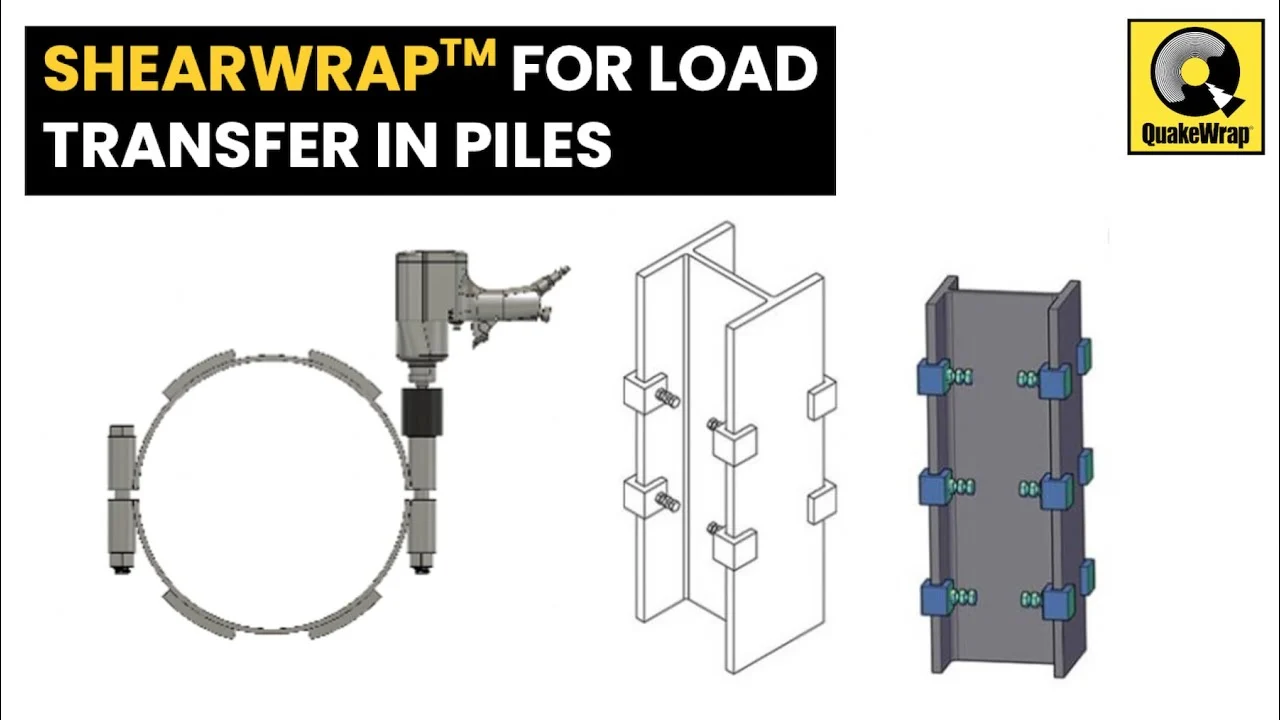
Plays from YouTube
THREE DEVICES
ShearWrap™, ShearClamp™ and ShearFlange™
-
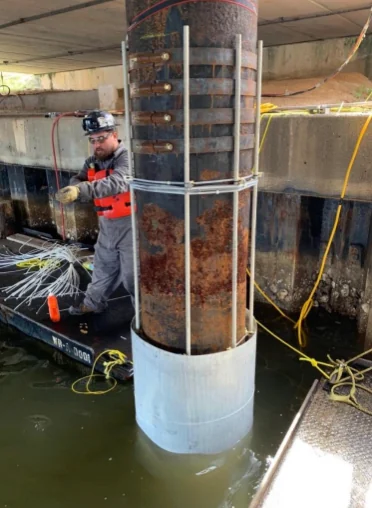
ShearWrap™
Two bolted half bands for circular steel piles and columns. Installed in groups above and below the damage.
-
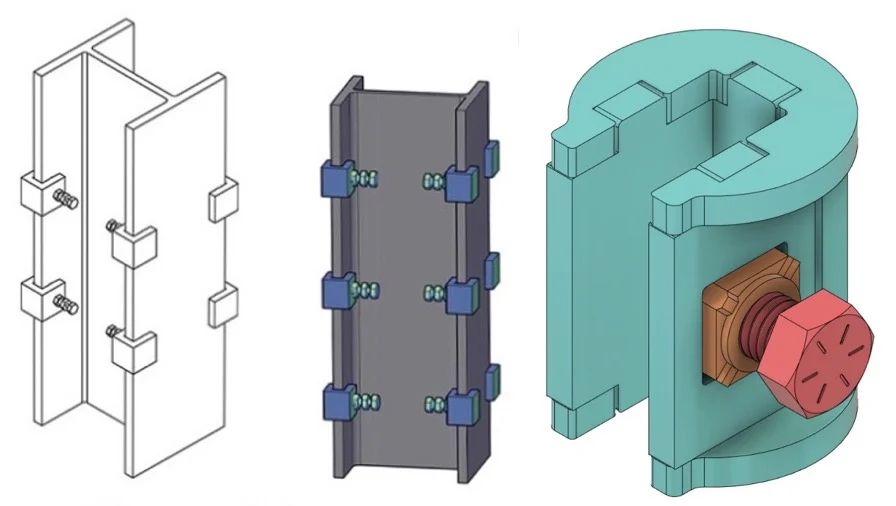
ShearClamp™
Units attached one by one to the flanges of steel H-piles or wide-flange columns and torqued. Capacity comes from bolt friction plus bearing on the unit's area in plan.
-
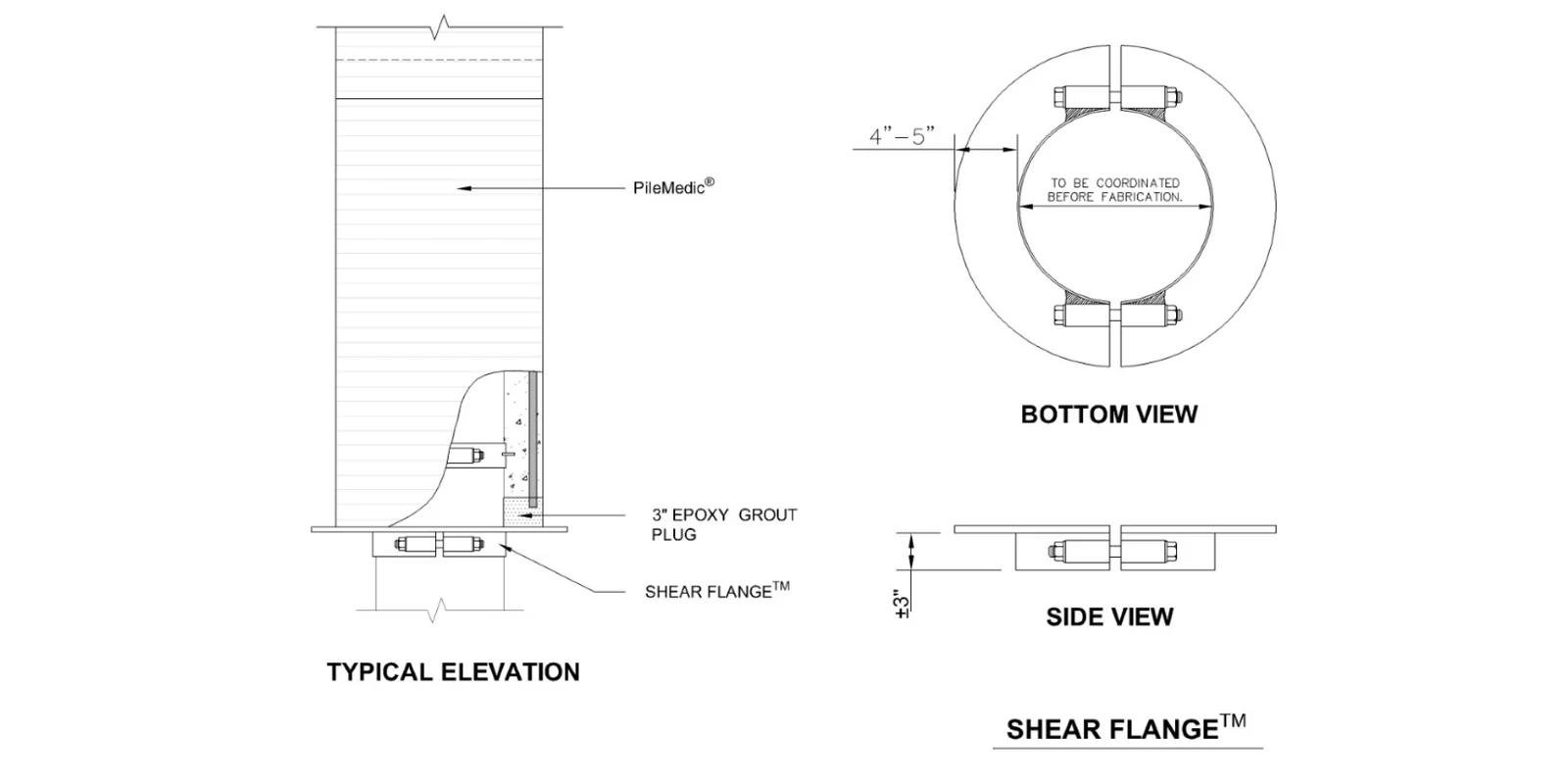
ShearFlange™
A ShearWrap™ with a wide ring on top. It supports the PileMedic® jacket and seals the bottom of the annular space, then comes off for reuse after the grout hardens.
Bottom seal options


INSTALLATION
How ShearWrap™ Is Installed
-
Place it loose
Fit the two halves around the corroded pile with the bolts loose so the wrap can slide.
-
Set the elevation
Slide each wrap to its prescribed location above or below the corroded zone.
-
Torque the bolts
Tighten the bolts to the prescribed torque value.
-
Add bars and jacket
Place spacers and GFRP bars, then wrap the assembly in PileMedic® jackets.
-
Seal and grout
Seal the bottom of the annular space and fill it with grout, fully encasing the wraps.
Advantages of ShearWrap™ and ShearClamp™
-
Direct load path
An engineered path from the pile to the shell and back.
-
Project specific
Made to the steel pile and column sizes on your project.
-
Weld-free
No welding or drilling of the existing member.
-
Above or below water
Simple for divers to install underwater.
-
Round or H-piles
ShearWrap™ for circular sections, ShearClamp™ for H-piles.
-
Built into PileMedic®
Designed to work inside the PileMedic® pile and column repair system.
Repairing corroded steel piles?
Send the pile sections, loads and extent of corrosion. Our team will recommend the device type, quantity and placement and provide specifications for your engineer.
ShearWrap™ & ShearClamp™ FAQs
Why not weld shear studs to the pile?
Welding underwater is costly, and some sites forbid welding or hot work. ShearWrap™ and ShearClamp™ bolt on and transfer load by friction, so the existing pile is not welded or drilled.
Which device do I need?
ShearWrap™ for circular steel piles and columns. ShearClamp™ for steel H-piles and wide-flange columns. ShearFlange™ is a temporary support and bottom seal for round piles during grouting.
How many devices go on a pile?
It depends on the load to transfer and the extent of damage. Each project gets its own set, made to the pile size. Our team will recommend the quantity and placement and provide specifications for your engineer of record.
Are the devices exposed after the repair?
No. ShearWrap™ and ShearClamp™ are fully embedded in the concrete or grout shell inside the PileMedic® jacket, so they are not exposed to water or the elements.
Can a ShearWrap™ carry more load?
Yes. Wings or flanges can be welded to the ShearWrap™ itself, not the pile, to raise its capacity.
PILEMEDIC® SYSTEM
More of the PileMedic® System

Have Corroded Steel Piles?
Tell us the pile type, loads and how far the corrosion goes. Our team will recommend the right PileMedic® system and provide specifications for your engineer.