
PIPEMEDIC® EXTERNAL REPAIR
External Pipe Wrapping: Carbon FRP for Corroded Pipe
Carbon and glass FRP bonded to the outside of the pipe restores its design capacity and adds corrosion protection. On land or underwater, for pipes carrying anything from drinking water to oil and gas.
- Restores original design capacity
- Fast-cure epoxies, including underwater
- Glass layer isolates carbon from steel

WHAT IT IS
A Thin FRP Skin That Restores Pressure Capacity
PipeMedic® external repair uses a wet layup system with epoxies that cure quickly, including underwater. Thin FRP sheets, about 0.05 in. (1.3 mm) thick, are saturated and bonded to the outside of the pipe much like wallpaper. They cure within a day and reach a tensile strength three times that of steel.
Pipes with corrosion, cracks and other defects can be restored to their original design capacity at low cost. The pipes can be on land or in water, under high internal pressure or large external loads.
The number and orientation of fibers in each layer are set by the design for each pipe. Our team will recommend the right QuakeWrap® system and provide specifications for your engineer.
- Water and wastewater treatment plants
- Oil and gas piping, onshore and subsea
- Power generation plants and mines
- Industrial facilities with large-diameter piping
THE SYSTEM
The External System, Layer by Layer
On steel pipe, a glass fabric layer goes on first. It keeps the carbon from touching the steel, which prevents galvanic corrosion, and it makes the system impermeable and adds strength in both directions.
Carbon fabric layers then carry the pressure. In the PERTAMINA test, two carbon layers ran in the hoop direction. The tack coat is a high-adhesion, fast-cure epoxy. In approval testing, a single tack coat held the weight of three layers of carbon fabric, which speeds up installation.
Top coats protect the FRP. Outdoors, a UV-resistant top coat may need to be renewed after an extended time in service.
- UV-resistant top coat20 mil at Cobb County
- Epoxy top coat40 mil at Cobb County
- Carbon FRPHoop layers per design
- Glass FRPDielectric barrier, impermeable
- Epoxy tack coatHigh-adhesion bond
- Steel pipeHost
How an External Wrap Is Installed
Basic steps are below. Refer to the technical specification for details.
-
Seal and patch
Stop leaks with a hydrophobic sealant for a Type B repair, and fill holes with a metal repair epoxy.
-
Prepare the surface
Remove sharp protrusions, then abrade by wire wheel or blasting and blow and wipe off the dust.
-
Tack coat
Apply a primer, then the high-adhesion epoxy tack coat.
-
Glass, then carbon
Wrap a saturated glass layer, then carbon layers in the hoop direction, with overlaps at the ends.
-
Top coat and cure
Apply the top coats, including a UV-resistant coat outdoors, and let the system cure.
Pressure Test: Corroded Steel Pipe Wrapped With QuakeWrap®
PERTAMINA Technical Services in Indonesia tested the external repair before approving it. The test was run at the Polymer Technology Center in Tangerang-Banten.
- PIPE
- 5-in. (127 mm) steel, 0.118 in. (3 mm) wall
- SIMULATED DAMAGE
- 20 mm (0.787 in.) hole drilled through the wall
- PREPARATION
- Sandblasted; hole patched with metal repair and QuakeBond™ epoxy with silica fume
- REPAIR
- 1 layer VU20G glass, then 2 layers VU18C carbon in the hoop direction
- RESIN
- QuakeBond™ J333SR underwater saturating resin
- CURE
- 72 hours at ambient temperature
- RESULT
- Held to 93.1 bar (1,351 psi), then a small leak at the hole
- APPROVAL
- Approved by PERTAMINA in 2013 for external repair of pressure pipes
- FIELD USE
- 4 pipeline projects since July 2013, onshore and subsea
WHERE IT WORKS
One System for the Whole Water and Utility Network
PipeMedic® can be applied to almost any conveyance structure, whatever its shape or the material it is built from.
-
Pipes
Any shape and any construction material.
-
Penstocks
-
Tunnels
-
Storage tanks
-
Manholes and vaults
-
Junction chambers
-
Pump stations
-
Lift stations
Have a corroded pipe you can reach from outside?
Send us the pipe size, material, pressure and condition. Our team will recommend the right QuakeWrap® system and provide specifications for your engineer.
PROVEN RESULTS
External Pipe Repair Projects
-
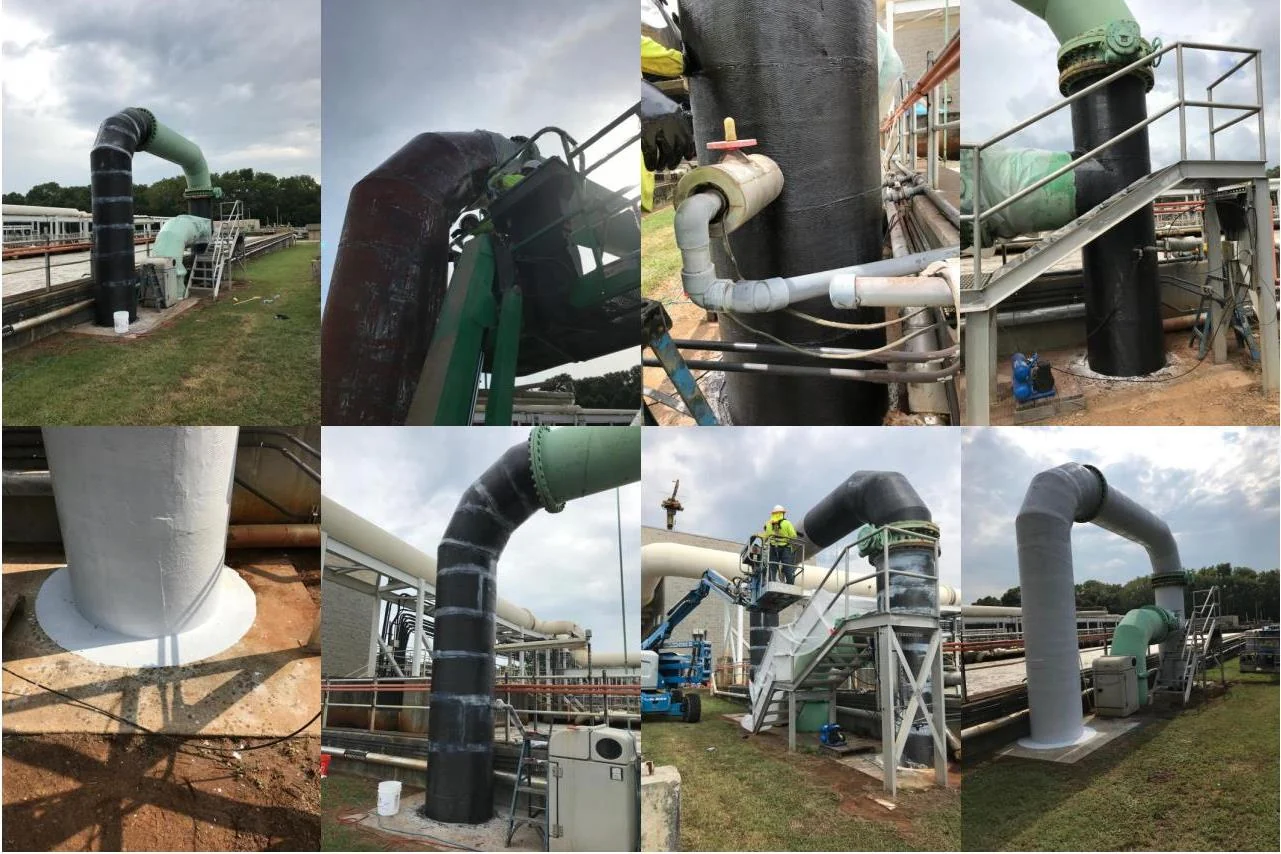
36-in. Steel Pipe, Cobb County, Georgia
54 ft of steel process piping wrapped with a fully structural carbon FRP system for 65 psi operating pressure.
Read the case study -
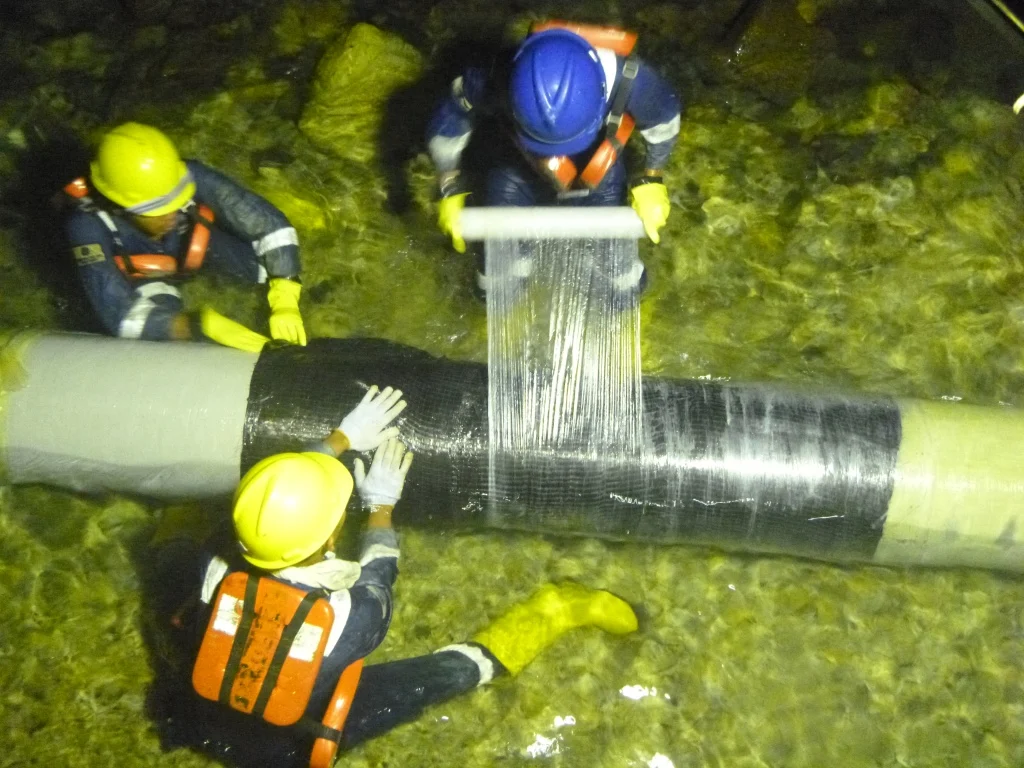
High-Pressure Steel Pipelines, Indonesia
Four corrosion-damaged steel pipelines, onshore and under the sea, repaired with QuakeWrap® carbon FRP since 2013.
-
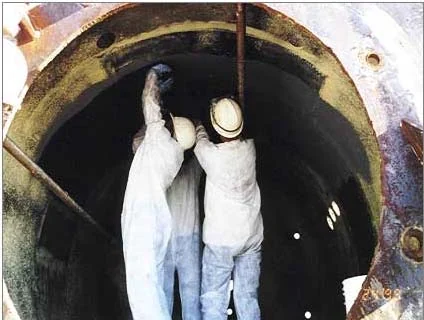
Largest U.S. Nuclear Power Plant
Steel strands in a new PCCP pipe were cut on purpose, then the pipe was wrapped with carbon FRP and pressurized past its original design strength. The plant's 9-ft PCCP was repaired with 11,500 sq ft of carbon fabric in 1999.
Project sheet (PDF)


External Pipe Wrapping FAQs
When is an external wrap the right repair?
When the outside of the pipe can be reached, for example exposed process piping at a treatment plant, piping at power plants and mines, or submerged pipe. Where the outside cannot be reached, internal lining is usually the better choice. Our team will recommend the right approach for your pipe.
Can an external wrap restore pressure capacity?
Yes. Pipes with corrosion, cracks and other defects can be restored to their original design capacity. At Cobb County, the system was designed for 65 psi operating pressure on 36-in. steel pipe, and in the PERTAMINA test a damaged 5-in. steel pipe held 1,351 psi after repair.
Can it be installed underwater?
Yes. The system uses epoxies that cure quickly, including in submerged applications. The PERTAMINA test used QuakeBond™ J333SR underwater saturating resin.
Why does a glass layer go on before the carbon?
Carbon in direct contact with steel can cause galvanic corrosion. The glass layer forms a dielectric barrier between them, makes the system impermeable and adds strength in the hoop and longitudinal directions.
Can a pipe be wrapped while it is leaking?
Yes. Leaks are first stopped with a hydrophobic sealant, which makes it a Type B repair under ASME PCC-2.
How long does an external wrap last?
The expected service life is more than 50 years. The UV-resistant top coat may need to be renewed after an extended time in service.
Related Pipe Repair Systems and Applications
Have a Corroded Pipe to Strengthen?
Tell us about the pipe, its size, material, pressure and condition. Our team will recommend the right PipeMedic® system and provide specifications for your engineer.