
MARINE & WATERFRONT
Bridge Pile Repair and Strengthening
Restore capacity of piles supporting bridges, piers and wharves. PileMedic® restores and strengthens submerged piles, bridge piles and columns with minimal disruption of service.
- Installs underwater, no cofferdams
- Minimal disruption of service
- Timber, steel & concrete piles

MATCHING PRODUCTS
QuakeWrap® Systems for Bridge Piling
-
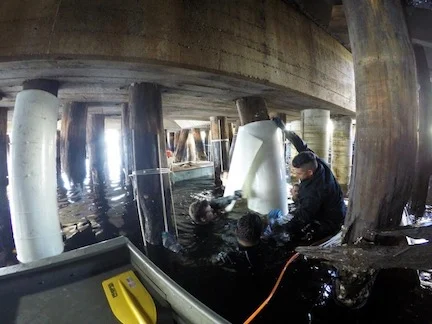
PileMedic®
Laminate jackets for piles and columns, even underwater.
Explore PileMedic® -
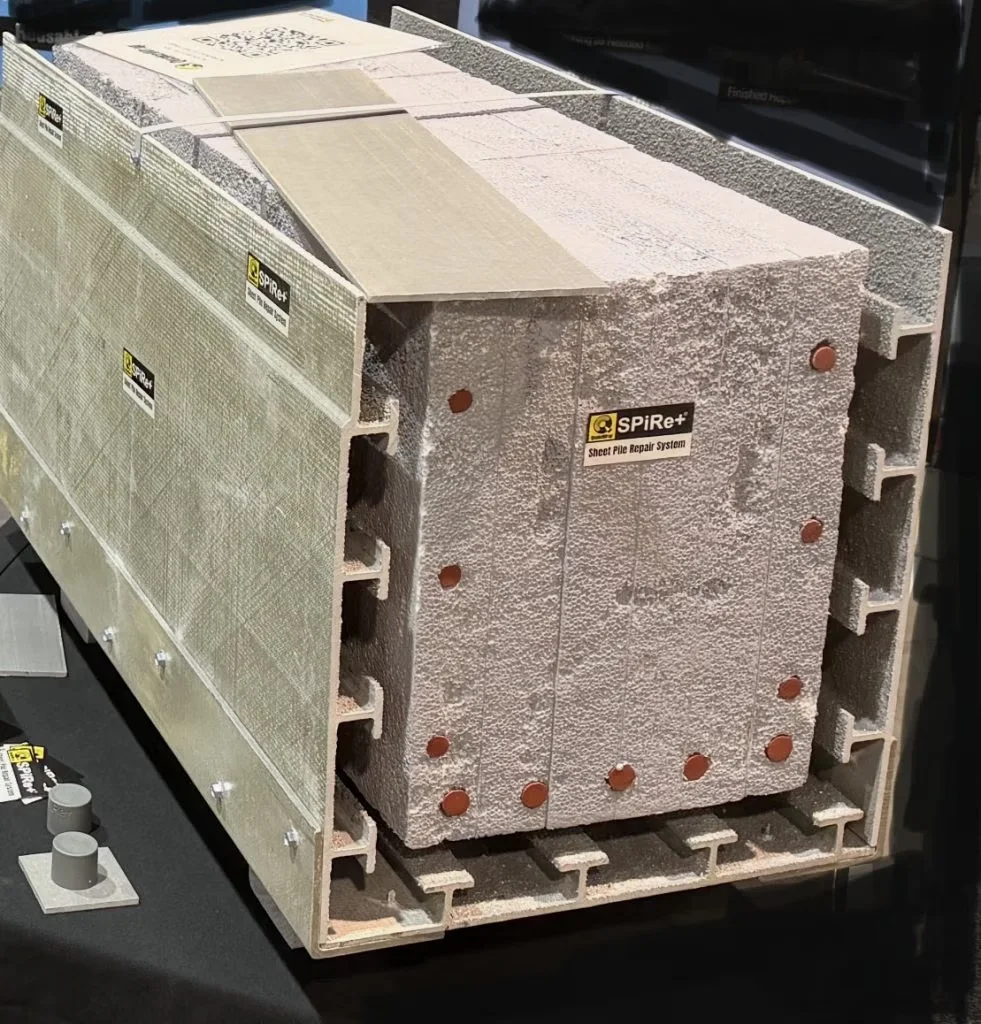
SPiRe®+
Stay-in-place FRP panels for seawalls, piles, beams and girders.
Explore SPiRe®+ -
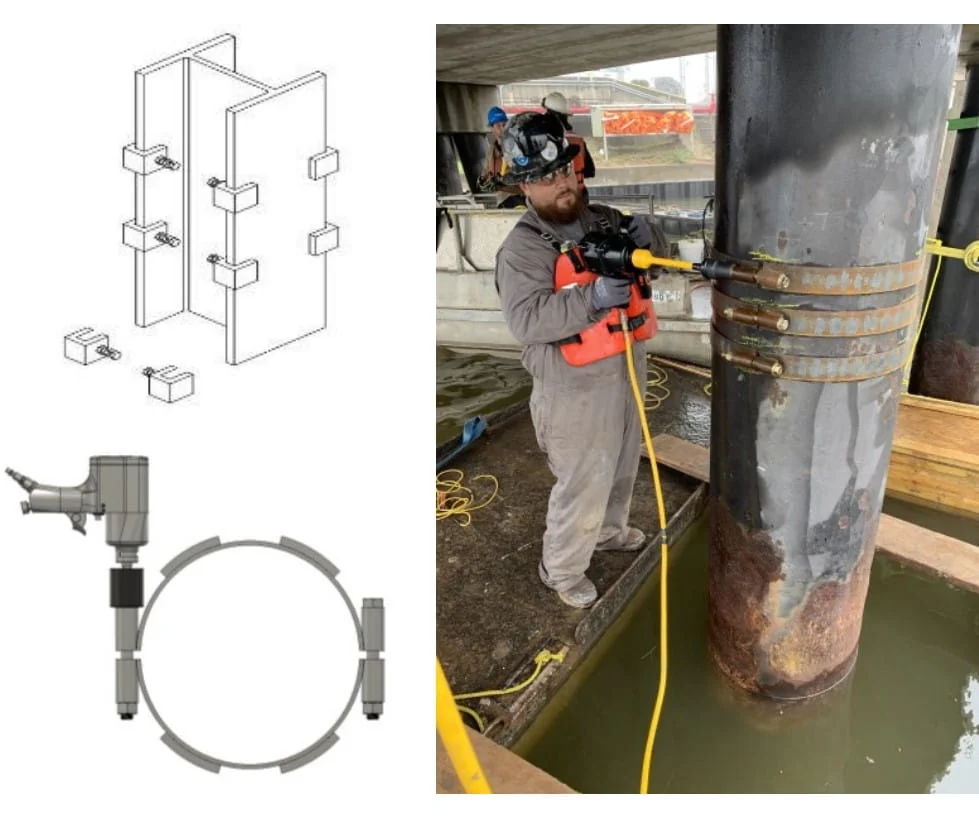
ShearWrap™ & ShearClamp
Load transfer in piles without welding.
Explore ShearWrap™ & ShearClamp


Not sure which system fits?
Tell us about the structure and conditions. Our team will recommend the right QuakeWrap® system.
WHY BRIDGE PILES FAIL
Why Bridge Piles Lose Capacity
Most bridge pile repairs start with one of these problems, and many of the piles sit in water, which makes the repair harder.
-
Splash zone corrosion
Tides wet and dry partially submerged piers several times a day. Concrete and steel deteriorate fastest at the splash line, and patching alone gives only a short-term fix.
-
Corroded steel H-piles
Steel piles lose flange and web section to corrosion until their axial capacity drops below what the bridge needs.
-
Timber decay and borers
Timber piles rot and are attacked by marine borers, often in hourglass shapes near the waterline.
-
ASR and earthquakes
Alkali-silica reaction cracks concrete piles from the inside, and earthquakes worldwide have shown how costly failed bridge piling can be.
HOW IT WORKS
How PileMedic® Restores a Bridge Pile
Conventional FRP fabrics have been used to repair concrete bridge piling, but they offer little help for timber or steel piles. Prof. Ehsani developed PileMedic® laminates for that gap. The laminates are made in the plant under heat and pressure, as thin as 0.03 in. (0.76 mm), and are cut to length in the field.
The laminate is wrapped around the deteriorated pile two or more turns to form a seamless shell, and the gap between shell and pile is filled with grout or resin. The shell confines the pile and keeps moisture away from it, which brings the corrosion process to a near halt. The jackets install underwater, so most bridge piles are repaired without cofferdams.
Large bridge piers are harder to retrofit because of their size and because they often sit in water. For those, FRP wet layup can be combined with prefabricated lightweight FRP panels. Our team will recommend the right QuakeWrap® system and provide specifications so your engineer of record can design the retrofit for the axial, flexural and shear capacity the pile needs.
- Steel, concrete and timber piles
- Full pile capacity within 24 hours of installation
- Minimal increase in pile dimensions
- Specifications for your engineer of record
- No cofferdam required
- No welding on site

DOT AND AGENCY TESTING
Bridge Pile Studies Behind PileMedic®
State transportation agencies have tested PileMedic® on all three pile materials. Each report is linked for your engineer.
| Pile type | Sponsor and researchers | What was tested | Finding | Report |
|---|---|---|---|---|
| Steel H-piles | Texas DOT and FHWA; University of Houston and Texas Tech | 14 corroded HP12x53 steel H-piles, two jacket systems | Axial capacity restored to the nominal uncorroded value in 13 of 14 piles; the other was built without the anchors its design called for | Final report (PDF) |
| Timber piles | Nebraska Department of Roads; Florida International University | Five full-scale timber piles with 1 to 2 in. deep hourglass damage, PileMedic® glass laminates | Failure loads of 5.3 to 9.9 times the design capacity | Draft final report (PDF) |
| Concrete bridge column | Caltrans and the National University Transportation Center at Missouri S&T | Earthquake-damaged oval RC column with buckled and fractured bars, thin carbon laminate jacket | Lateral strength and deformation capacity restored under cyclic load | Paper (PDF) |
Need the test data for a DOT submittal?
Tell us about the bridge, the pile type and the damage. Our team will recommend the right QuakeWrap® system and send the reports and specifications your engineer needs.
TEXAS DOT STUDY
Texas DOT Tests PileMedic® for H-Pile Repair Strength
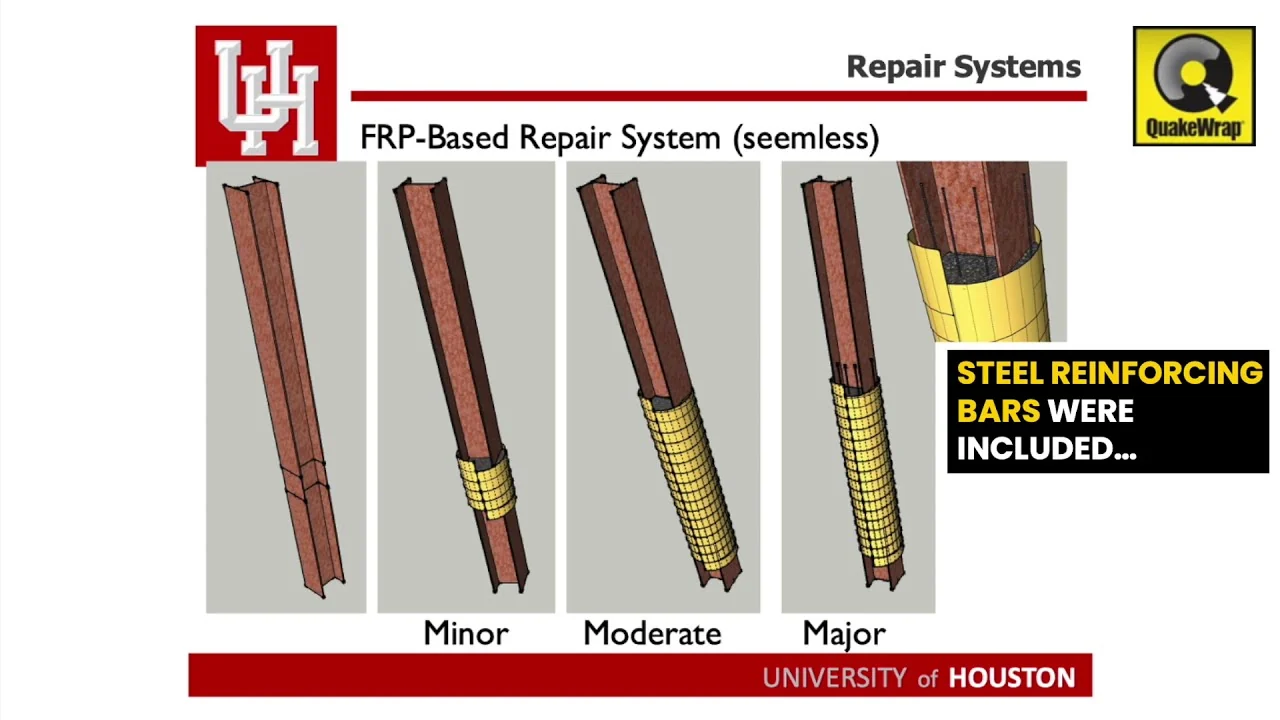
Plays from YouTube
TIMBER BRIDGE PILES
Caltrans Saves a Timber Bridge With PileMedic®
A California timber bridge was scheduled for demolition. After a single-pile demonstration repair, Caltrans decided to save the bridge and repair all of its piles. Crews cut 8 ft pieces from a 4 ft wide PileMedic® roll, wrapped each into a 2-ply shell, injected the annular space with QuakeBond™ 320LV low-viscosity resin and repeated the 4 ft jackets up the pile.

Plays from YouTube
PROVEN RESULTS
Bridge Piling Projects
-
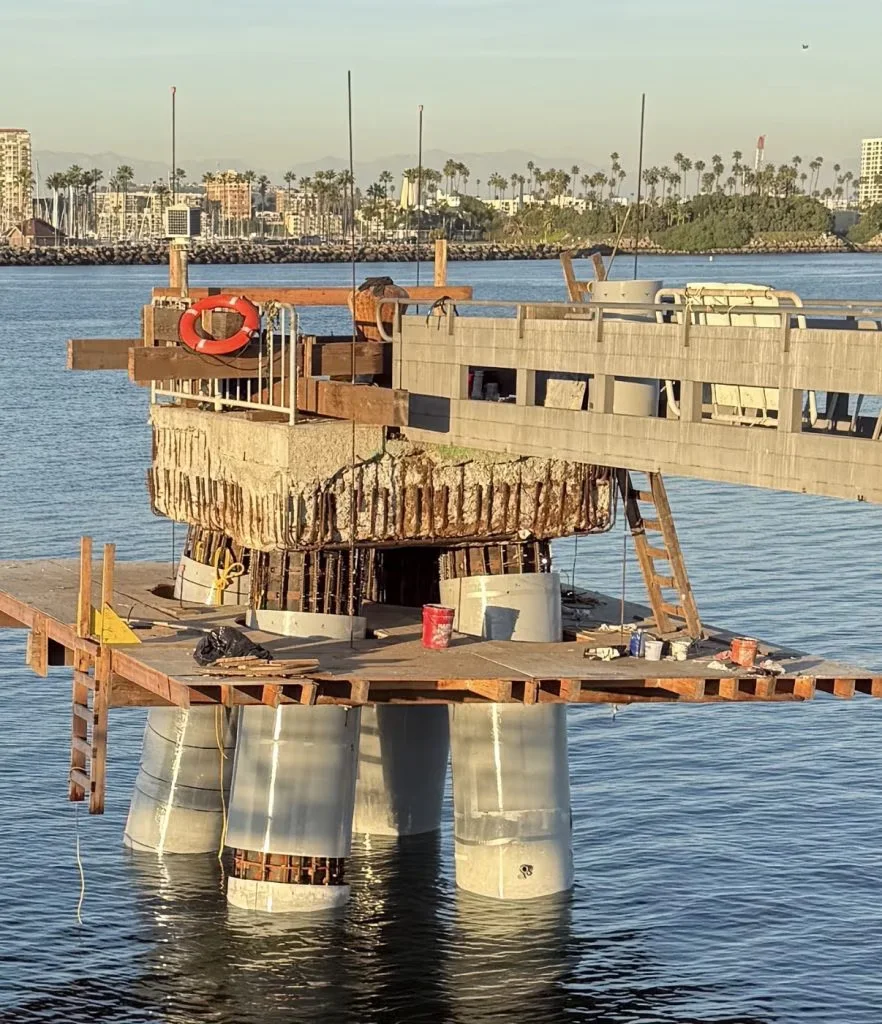
Port of Long Beach, California
Steel pipe piles and pile cap reinforced with an FRP jacket and panel.
View the project -
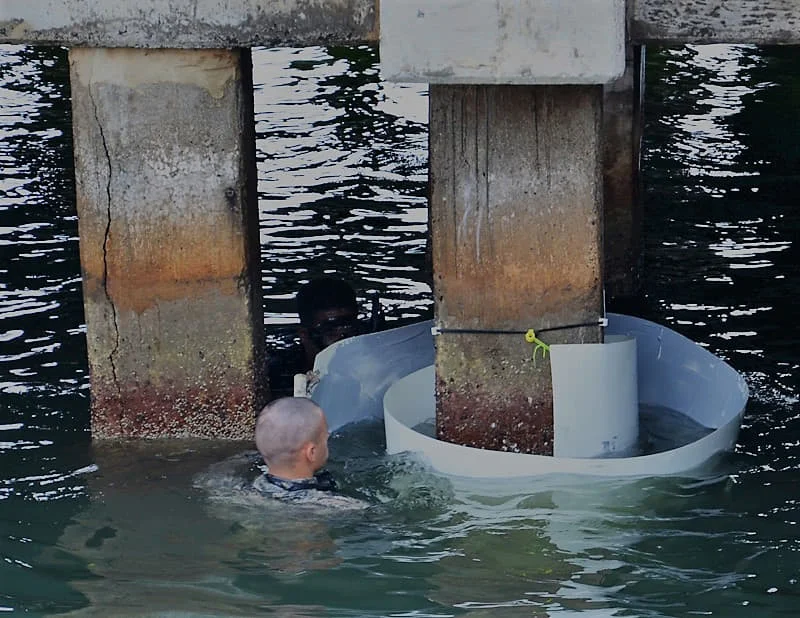
Pearl Harbor Pier Piles
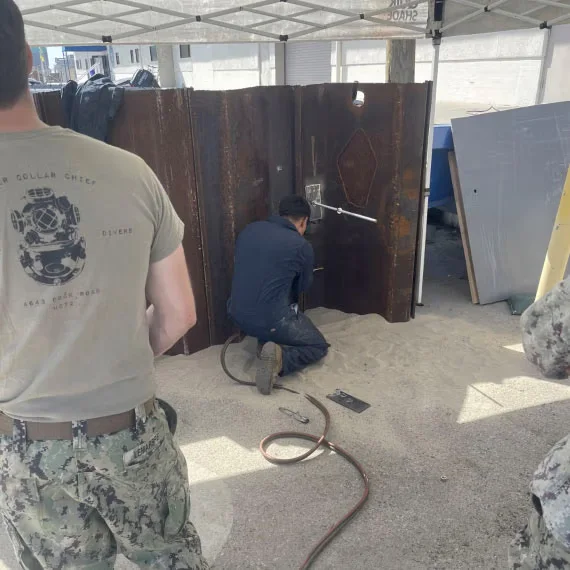
U.S. Army and Navy divers repaired pier piles with PileMedic® during a U.S. Army Corps of Engineers demonstration at Joint Base Pearl Harbor-Hickam, Hawaii.
Watch the video -
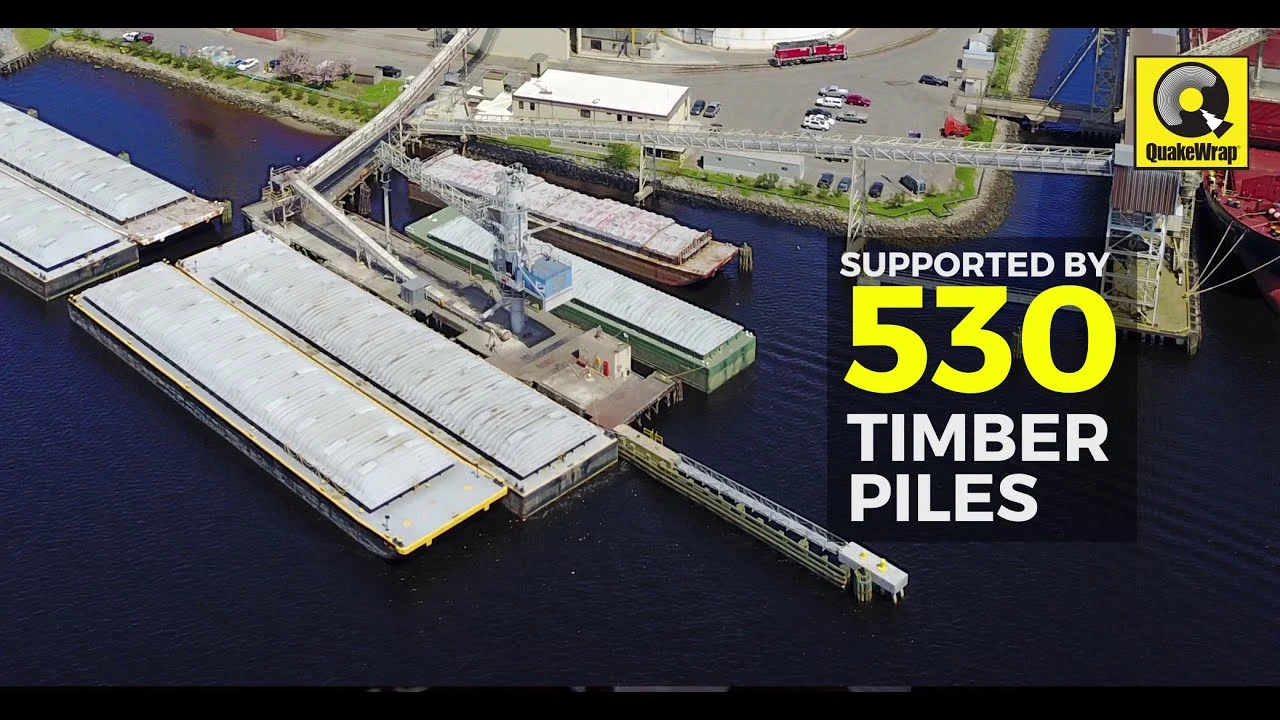
Agricultural Port Dock
Hundreds of timber piles restored while the dock stayed in service.
View the project -
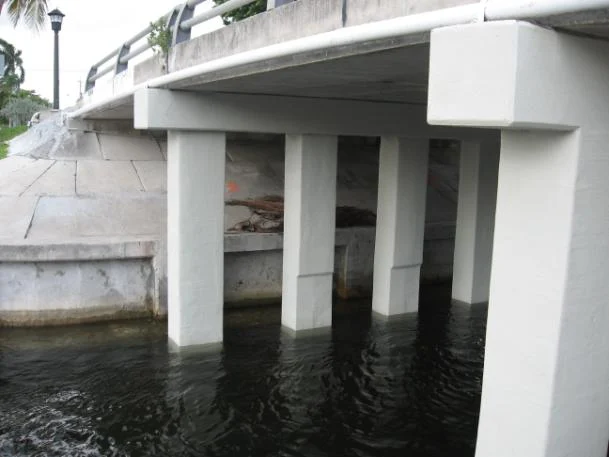
Bay View Bridge, Fort Lauderdale, Florida
Splash zone corrosion kept returning after patching. Carbon FRP was bonded from the pier caps to below low tide with a resin that cures underwater. Five years later, no damage to the FRP was found.
Project sheet (PDF) -
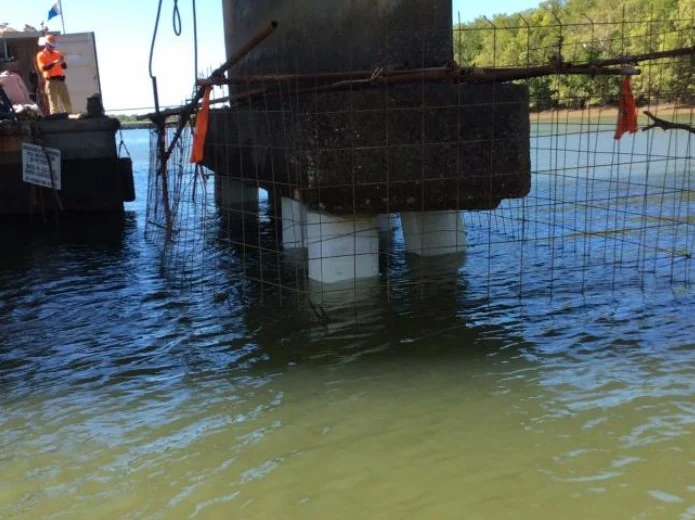
Barron River Bridge, Cairns, Australia
All 40 piles of this bridge were damaged by ASR. Queensland Main Roads selected PileMedic® to encase them underwater, in a crocodile-infested river.
Read the case study -
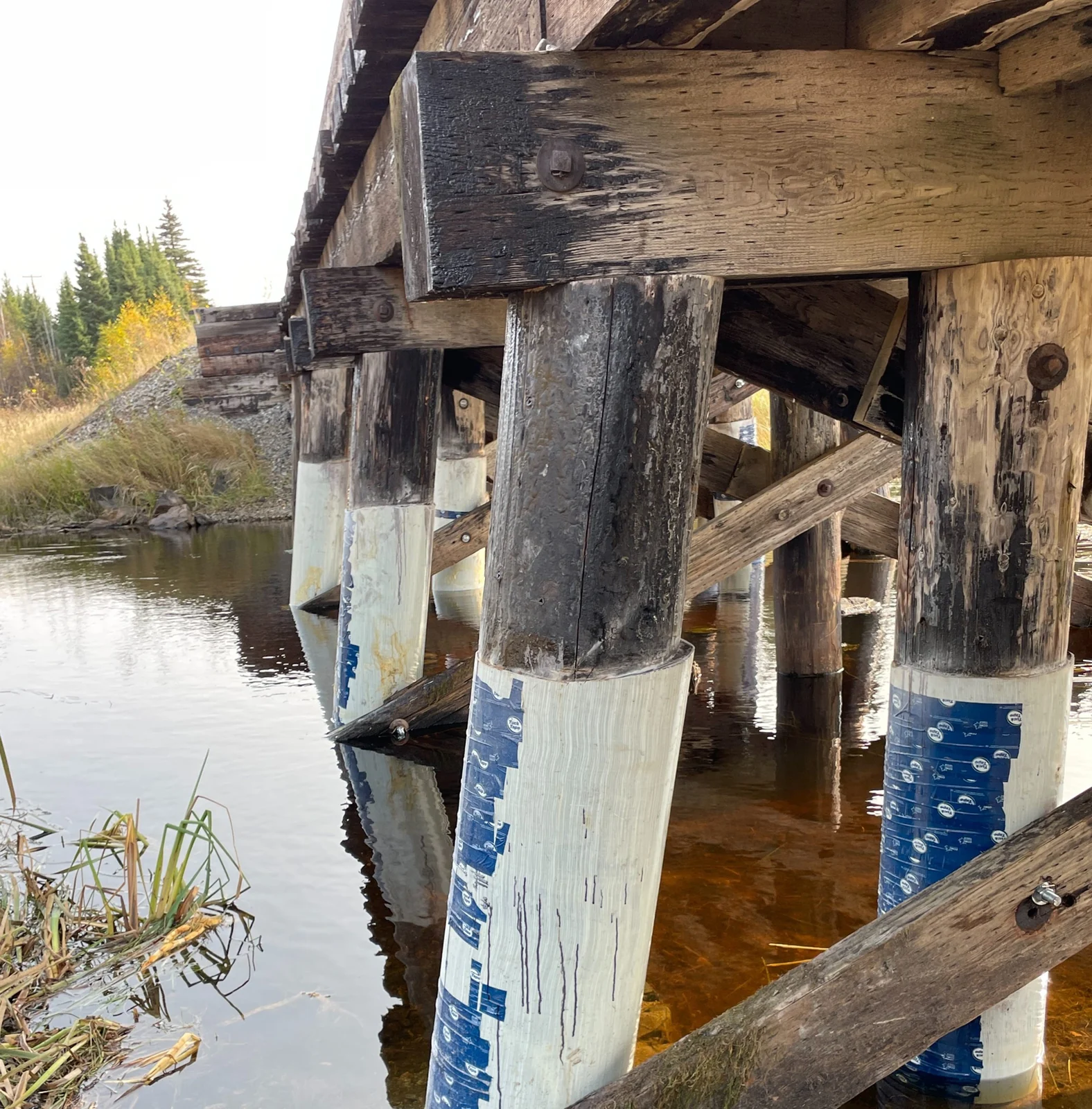
Canadian Rail Timber Bridges
About 300 decayed timber piles on remote rail bridges restored with PileMedic® shells and low-viscosity resin.
Read the case study


More bridge pile projects
Missouri DOT overpasses in St. Louis (some 50 steel bridge piles), Henderson Bayou Road Bridge (42 timber piles, 24 in. diameter by 15 ft tall, 2019), Russell Street Bridge (34 timber piles, 2019) and rail bridges in Canada and Australia. Tell us about your bridge and we will share the closest match.
Bridge Piling FAQs
Can piles and seawalls be repaired underwater?
Yes. PileMedic® and SPiRe®+ systems are designed for underwater installation, so submerged piles, seawalls and bulkheads can often be repaired without cofferdams or dewatering.
Can PileMedic® repair corroded steel H-piles on a bridge?
Yes. In a Texas DOT and FHWA study, FRP jackets patented by Prof. Ehsani restored the axial capacity of corroded steel H-piles to the nominal uncorroded value in 13 of 14 piles. The one exception was built without the anchors its design called for.
Does the bridge have to close during pile repair?
Usually not. PileMedic® jackets are installed around the pile from the water or a work float, so traffic on the deck can keep moving. The jackets reach full pile capacity within 24 hours of installation.
Can large bridge piers and pier walls be repaired?
Yes. Large piers can be repaired with FRP wet layup combined with prefabricated FRP panels. In one of the first applications of SPiRe®+, a deteriorated concrete bridge pier wall in Dickinson, North Dakota was repaired in November 2024; the contractor completed the repair in two days.
Can you provide specifications and design details for our engineer?
Yes. Our team will recommend the right QuakeWrap® system and provide product data sheets, specifications and sample design details for your engineer of record.
Related FRP Repair Applications
Have a Project That Needs Repair?
Tell us about your structure. Our team will recommend the right QuakeWrap® system and provide specifications for your engineer.