
INDUSTRIAL & UTILITY
Cooling Tower Repair With FRP
The constant wet and dry cycle inside a cooling tower corrodes its concrete beams, columns and supports. QuakeWrap® FRP restores lost strength and seals the members against future corrosion, often during a scheduled shutdown.
- Typically ½ in. added size
- Often done in scheduled shutdowns
- Moisture barrier slows corrosion

MATCHING PRODUCTS
QuakeWrap® Systems for Cooling Towers
-
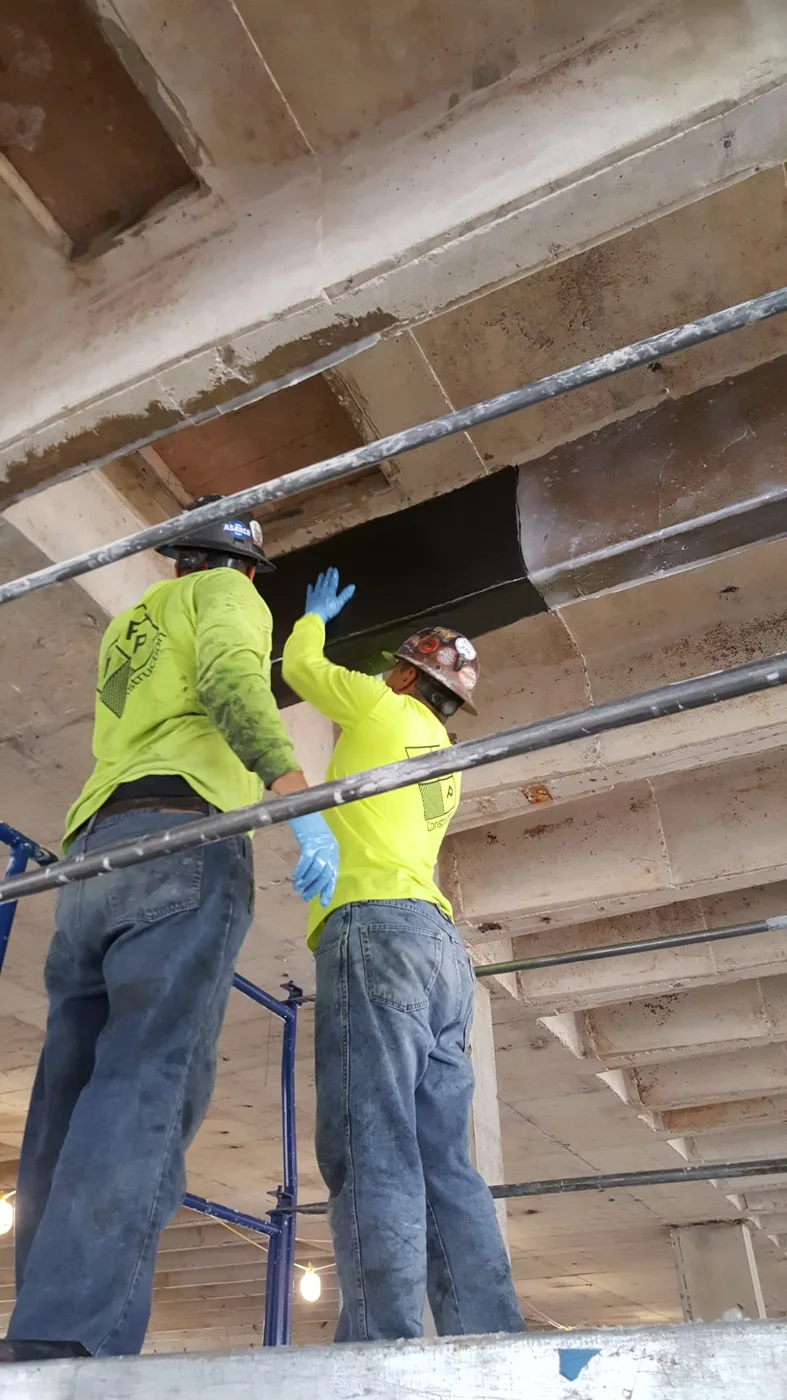
Wet & Dry Layup FRP
Carbon and glass fabric systems for beams, columns, slabs and walls.
Explore Wet & Dry Layup FRP -
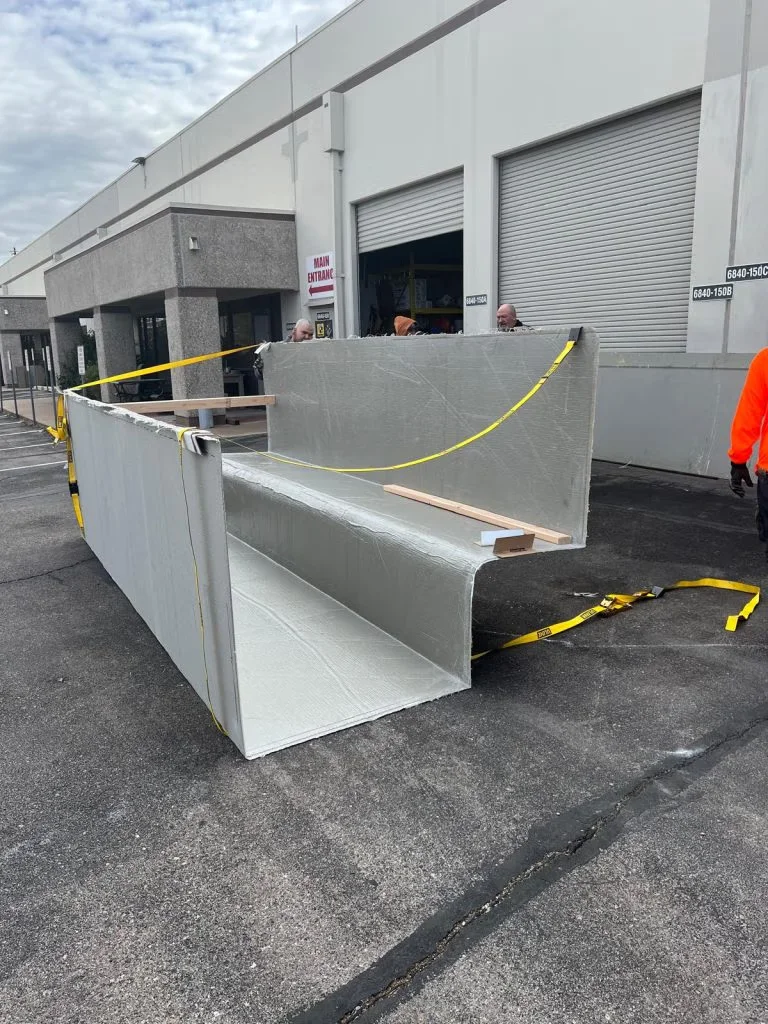
Custom FRP Shapes
Shells, forms and components built to fit.
Explore Custom FRP Shapes


Not sure which system fits?
Tell us about the structure and conditions. Our team will recommend the right QuakeWrap® system.
WHY COOLING TOWERS CORRODE
Why Cooling Tower Structures Deteriorate
-
Wet and dry cycles
The dry/wet loading cycle in a cooling tower is an ideal environment for corrosion, and reinforcing steel in concrete towers corrodes after a short service life.
-
Interior beams and columns
Larger towers, such as those in the nuclear power industry, have concrete beams and columns inside the tower that corrode rapidly.
-
Leaks onto supports
Water leaking from a rooftop tower can corrode the concrete pedestals that carry it.
HOW IT WORKS
How FRP Repairs a Cooling Tower
A cooling tower repair has two jobs: replace the steel area lost to corrosion, and slow the corrosion that comes next. FRP fabrics and PileMedic® laminates do both.
The number of layers and the fiber orientation for each member are set to restore its original strength or add strength beyond it. The same fabric or laminate also serves as a moisture barrier that blocks moisture and oxygen, and oxygen is the fuel of the corrosion process. With that inflow cut off, corrosion is brought to a virtual halt.
Our team will recommend the right QuakeWrap® system and provide specifications for your engineer of record.
- Beams and columns repaired with FRP
- Spot repair of only the damaged areas
- Finished repair can be painted
- typical increase in member size (12 mm)
- ½ in.
- to encase four corroded tower pedestals
- 1 day
- later, those pedestals were in perfect condition
- 7 years
ADVANTAGES
Advantages of FRP for Cooling Tower Repair
-
Fits a shutdown
Repairs are fast and often completed during scheduled shutdowns.
-
Minimal added size
Members typically grow about ½ in. (12 mm).
-
Spot repairs
Only the damaged members or areas need to be repaired.
-
Moisture barrier
The FRP protects beams and columns against future corrosion.
-
Strength restored or added
Layers are set to restore or exceed the original strength.
-
Hardly visible
The finished installation can be painted.
Have a shutdown coming up?
Tell us about the tower, the damaged members and your outage window. Our team will recommend the right QuakeWrap® system and provide specifications for your engineer.
CASE STUDY
Corroded Cooling Tower Pedestals: Tucson Main Library, Arizona
Water leaking from the rooftop cooling tower had badly corroded the four concrete pedestals that supported it. When the tower was replaced, the pedestals had to be repaired and protected from the same water.
All deteriorated concrete was removed and the pedestals were rebuilt with a polymer-modified concrete. QuakeWrap® glass fabric then fully encased them, sealing them from contact with the cooling tower water. The repair took one day and was completed in June 2005.
The site was revisited on March 7, 2012, nearly 7 years later, and the repaired pedestals were in perfect condition.
- Four pedestals encased in glass FRP
- Completed in one day
- Inspected in perfect condition 7 years later
- corroded concrete pedestals
- 4
- repair with glass fabric
- 1 day
PROJECT VIDEO
Cooling Tower Repair Halts Weakening of the Supporting Structure
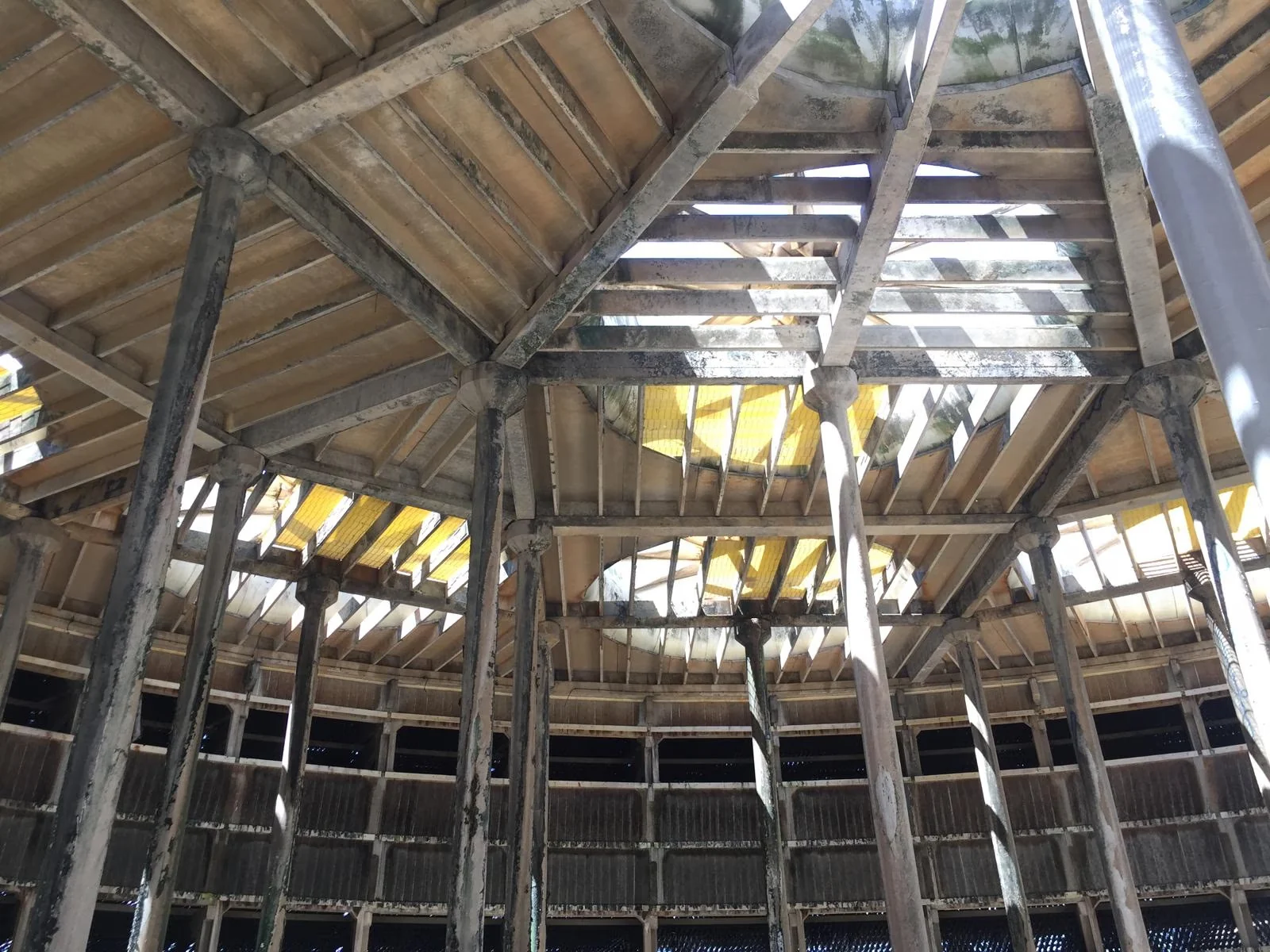
Plays from YouTube
Cooling Towers FAQs
Can cooling tower repairs be done during a scheduled shutdown?
Often, yes. FRP repairs are fast, and the Tucson Main Library pedestals were encased in a single day.
Will FRP stop corrosion in a cooling tower?
It slows it dramatically. The FRP fabric or laminate acts as a moisture barrier that blocks moisture and oxygen, the fuel of the corrosion process, which brings corrosion to a virtual halt.
Do we have to repair every member?
No. FRP is well suited to spot repair of only the damaged beams, columns or areas.
Can you provide specifications and design details for our engineer?
Yes. Our team will recommend the right QuakeWrap® system and provide product data sheets, specifications and sample design details for your engineer of record.
Related FRP Repair Applications
Have a Project That Needs Repair?
Tell us about your structure. Our team will recommend the right QuakeWrap® system and provide specifications for your engineer.