
INDUSTRIAL & UTILITY
Silo Repair and Strengthening With FRP
QuakeWrap® wet and dry layup FRP strengthens silos. Dry layup is faster on large and vertical structures.
MATCHING PRODUCTS
QuakeWrap® Systems for Silos
-
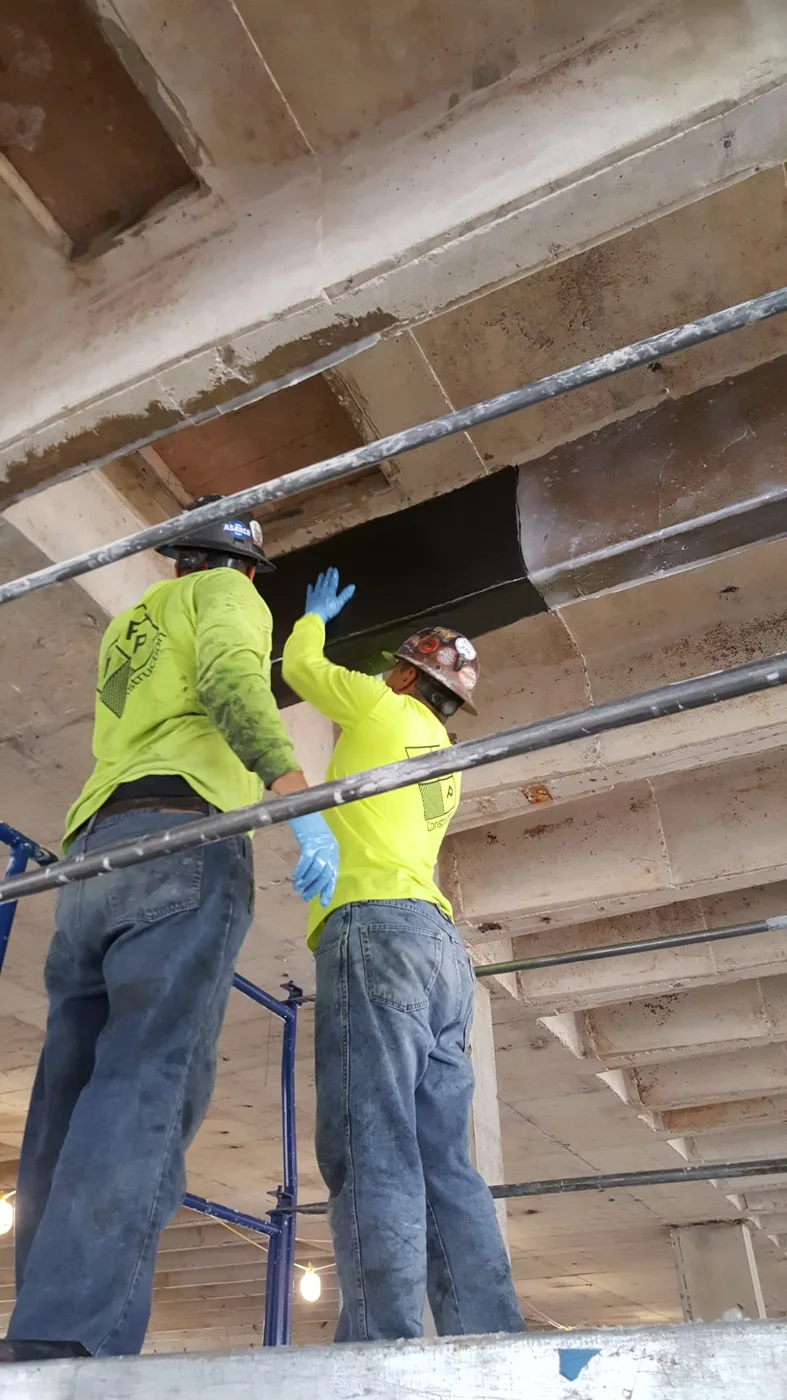
Wet & Dry Layup FRP
Carbon and glass fabric systems for beams, columns, slabs and walls.
Explore Wet & Dry Layup FRP -
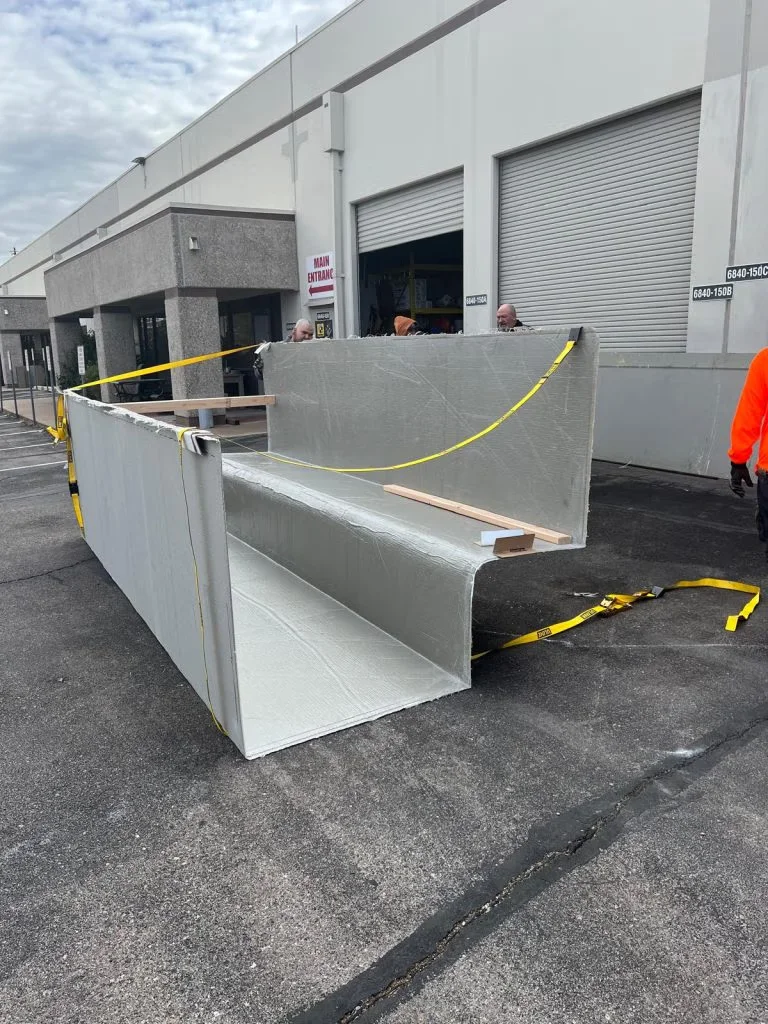
Custom FRP Shapes
Shells, forms and components built to fit.
Explore Custom FRP Shapes


Not sure which system fits?
Tell us about the structure and conditions. Our team will recommend the right QuakeWrap® system.
WHY SILOS NEED REPAIR
Why Silos Need Repair
Silos face a harsh mix of loading and weather, and the usual fixes leave problems behind.
-
Corroding reinforcing steel
Environmental conditions, including dry and wet loading cycles, corrode the reinforcing steel and crack the concrete walls of grain silos.
-
Weathered masonry
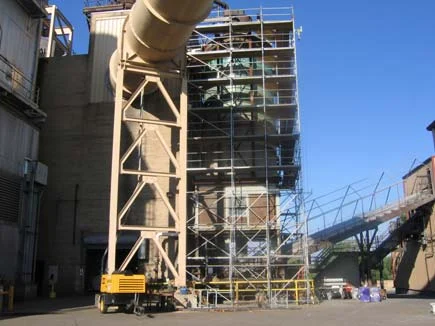
Masonry silos lose their surface to weathering, as the fly ash silo at the Elk River power plant did.
-
Crack injection alone
Cracks can be injected and filled with epoxy, but that does not restore the strength lost to corroded reinforcement.
-
Steel plates
Plates bolted to the outside look unsightly, must be maintained so they do not corrode, and connect at only a few points, which makes load transfer hard to design.
HOW IT WORKS
How FRP Strengthens a Silo
Thin layers of carbon FRP, about 0.05 in. (1.3 mm) each, are bonded to the surface of the silo. Unlike plates attached at a few points, the FRP transfers load over a large area, so there are no stress concentration points.
The FRP also forms an impervious layer that protects the concrete and its reinforcing steel from future corrosion. The finished surface can be painted so the repair is hardly visible.
Repairs can be made inside or outside the silo, often while it stays in service, and can be limited to the damaged areas. Our team will recommend the right QuakeWrap® system and provide specifications for your engineer of record.
- Inside or outside the silo
- Spot repair of damaged areas only
- Moisture barrier against future corrosion
- typical FRP layer (1.3 mm)
- 0.05 in.
- typical added wall thickness (5 mm)
- ¼ in.

ADVANTAGES
Advantages of FRP for Silo Repair
-
Inside or outside
Repairs can be done internally or externally.
-
Thin
Typically about ¼ in. (5 mm) added to the wall.
-
Fast
Often performed while the silo stays in service.
-
Spot repair
Ideal for repairing only the damaged areas.
-
Moisture barrier
Protects the silo against future corrosion.
-
Hardly visible
The finished installation can be painted.
Silo cracking or corroding?
Tell us about the silo, its material and the damage. Our team will recommend the right QuakeWrap® system and provide specifications for your engineer of record.
CASE STUDY
Protecting a Fly Ash Silo: Elk River Power Plant, Minnesota
A 25 ft high masonry fly ash silo at the Elk River power plant had extensive weathering damage to its surface. A gunite repair on the lower part of the silo had cracked excessively, so the owner wanted a different option.
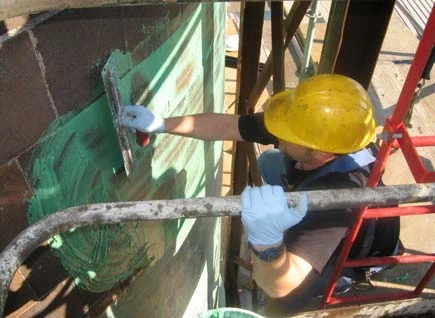
Biaxial QuakeWrap® glass fabric was installed over the masonry to form a maintenance-free protective shell that does not crack or corrode. A 3-person crew installed 1,100 sq ft of FRP in 3 days, completing the work in August 2008.
- 25 ft masonry fly ash silo
- Biaxial glass fabric shell
- 1,100 sq ft in 3 days
Silos FAQs
Can you provide specifications and design details for our engineer?
Yes. Our team will recommend the right QuakeWrap® system and provide product data sheets, specifications and sample design details for your engineer of record.
Can the silo stay in service during the repair?
Often, yes. FRP repairs are fast and can be done from inside or outside the silo, limited to the damaged areas.
Is epoxy crack injection enough?
Not when the reinforcing steel has corroded. Injection fills the cracks but does not restore the lost strength. Bonded FRP adds strength and seals the surface against moisture.
Why not bolt steel plates to the silo?
Plates are unsightly, need maintenance to keep them from corroding and connect at only a few points, which concentrates stress. FRP spreads the load over a large area.
Has FRP been used on masonry silos?
Yes. At the Elk River power plant in Minnesota, biaxial glass fabric protected a weathered 25 ft masonry fly ash silo after an earlier gunite repair cracked.
Related FRP Repair Applications
Have a Project That Needs Repair?
Tell us about your structure. Our team will recommend the right QuakeWrap® system and provide specifications for your engineer.