
STRUCTURAL STRENGTHENING
Wet & Dry Layup FRP: Carbon and Glass Fabric Systems
QuakeWrap® carbon and glass fabrics, saturated with QuakeBond™ epoxy and bonded to beams, columns, slabs, walls, pipes and tanks like wallpaper. Once cured, they add strength with almost no added thickness.
- Flexural, shear and confinement strengthening
- Typically less than ½ in. added size
- NSF/ANSI/CAN 61 listed for drinking water

TWO METHODS
Wet Layup and Dry Layup
Both methods use the same QuakeWrap® fabrics and QuakeBond™ resins. The fibers carry the load; the resin binds them, transfers stress between fibers and bonds the system to the structure. The difference is when the fabric is saturated.
-
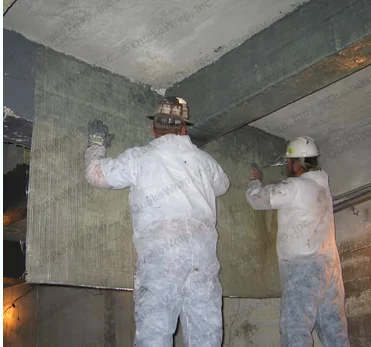
Wet Layup
An epoxy tack coat is troweled onto the prepared surface. The fabric is saturated with resin, often in a saturating machine on large jobs, placed on the surface and rolled to remove air bubbles. The original method, used for decades.
Beam strengthening -
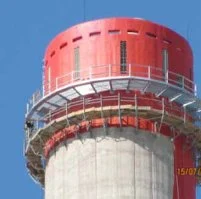
Dry Layup
A low-viscosity tack coat is rolled on, dry fabric is placed directly on it, and saturating resin is rolled over the fabric to impregnate it in place. Developed by QuakeWrap®. Faster on large structures and vertical surfaces, including chimneys over 500 ft tall.
Chimneys & smokestacks
SIDE BY SIDE
Wet Layup vs. Dry Layup
| Wet Layup | Dry Layup | |
|---|---|---|
| Tack coat | Epoxy paste, applied with a trowel | Low-viscosity tack coat, applied with rollers |
| Fabric saturation | Before placing, by saturating machine or by hand | In place, with rollers and squeegees |
| Speed and labor | More labor-intensive and slower | Much faster, with less labor and equipment |
| Control | Excellent control over fiber impregnation | Cleaner, more controlled field application |
| Track record | Proven performance over decades | Used on chimneys over 500 ft tall |
HOW IT WORKS
How FRP Strengthens a Structure
-
Flexural strengthening
FRP bonded to the tension face of beams and slabs adds bending capacity.
-
Shear strengthening
Wraps and U-wraps on the sides of members resist diagonal cracking.
-
Confinement
Fully wrapping columns increases axial capacity and ductility.
CHOOSE THE FIBER
Carbon FRP vs. Glass FRP
Carbon (CFRP) and glass (GFRP) are the two fibers in QuakeWrap® fabrics. Many designs use both, choosing the fiber that best fits each member. The ranges below come from the fabrics in the table above.
| Carbon FRP (CFRP) | Glass FRP (GFRP) | |
|---|---|---|
| Laminate tensile strength | 129 to 179 ksi | 24.3 to 70.9 ksi |
| Laminate tensile modulus | 7,700 to 14,530 ksi | 1,702 to 4,300 ksi |
| Material cost | Higher | Lower |
| Electrical conductivity | Conductive | Non-conductive |
| Waterproofing fabrics | None listed | B2610G and B2408G add a stitched glass mat for waterproofing |
| Common uses | Flexural and shear strengthening of beams, slabs and girders; added live load capacity | Column confinement, masonry walls, blast and seismic retrofit, pipe and culvert lining |
FABRIC SPECIFICATIONS
QuakeWrap® Fabrics: Laminate Properties
Properties of one ply of fabric saturated with QuakeBond™ 300SR, from each fabric's Product Data Sheet. For biaxial fabrics, values are given for the 0° and 90° directions. Check the current PDS before design. [Confirm with QuakeWrap which values to publish: IAPMO UES ER-828 (revised 12/23/2025, valid through 10/31/2026) lists U27C at 159 ksi, 15,800 ksi and 0.9%, and B20C at 0.019 in., which differ from the PDS]
| Fabric | Fiber | Tensile strength | Tensile modulus | Elongation | Ply thickness |
|---|---|---|---|---|---|
| QW U20C | Carbon, unidirectional | 146.9 ksi (1,013 MPa) | 13,800 ksi (95.1 GPa) | 0.94% | 0.040 in. (0.99 mm) |
| QW U27C | Carbon, unidirectional | 179.0 ksi (1,234 MPa) | 14,000 ksi (96.5 GPa) | 0.92% | 0.047 in. (1.19 mm) |
| QW U41C | Carbon, unidirectional | 153 ksi (1,055 MPa) | 14,530 ksi (100.1 GPa) | 0.99% | 0.067 in. (1.7 mm) |
| QW B20C | Carbon, biaxial 0°/90° | 145 / 129 ksi | 9,200 / 7,700 ksi | 1.47 / 1.57% | 0.038 in. (0.96 mm) per direction |
| QW U27G | Glass, unidirectional | 70.9 ksi (489 MPa) | 3,630 ksi (25.0 GPa) | 1.8% | 0.04 in. (1.1 mm) |
| QW B26G | Glass, biaxial 0°/90° | 64.8 / 68.3 ksi | 4,090 / 4,300 ksi | 1.44 / 1.42% | 0.022 in. (0.56 mm) per direction, 0.044 in. total |
| QW B2610G | Glass, biaxial with stitched waterproofing mat | 46.8 / 34.7 ksi | 2,599 / 3,682 ksi | 1.8 / 0.94% | 0.080 in. (2.03 mm); 0.04 in. for strength design |
| QW B2408G | Glass, biaxial with stitched waterproofing mat | 25.7 / 24.3 ksi | 1,744 / 1,702 ksi | Under 2% | 0.056 in. |
Need help choosing a fabric?
Tell us what you are strengthening and the loads involved. Our team will recommend the right QuakeWrap® fabric and resin and provide specifications for your engineer.
ORDERING
Fabric Weights, Rolls and Resin Coverage
| Fabric | Fabric weight | Roll size | Coverage per gallon of 300SR |
|---|---|---|---|
| QW U20C | 20 oz/yd² (678 g/m²) | 24 in. x 100 yd (610 mm x 91 m) | 65 ft² (1.6 m² per liter) |
| QW U27C | 27.8 oz/yd² (943 g/m²) | 24 in. x 75 yd (610 mm x 68 m) | 45 ft² (1.22 m² per liter) |
| QW U41C | 41 oz/yd² (1,390 g/m²) | 24 in. x 50 yd (610 mm x 45 m) | 30 ft² (0.7 m² per liter) |
| QW B20C | 20 oz/yd² (678 g/m²) | 50 in. x 100 yd (1.27 m x 91 m) | 65 ft² (1.6 m² per liter) |
| QW U27G | 27 oz/yd² (915 g/m²) | 24 in. x 75 yd (0.60 m x 68 m) | 45 ft² (1.1 m² per liter) |
| QW B26G | 26 oz/yd² (881 g/m²) | 50 in. x 80 yd (1.27 m x 76 m) | 40 ft² (0.98 m² per liter) |
| QW B2610G | 36 oz/yd² (1,020 g/m²) | 50 in. x 82 yd (1.27 m x 75 m) | 35 ft² |
| QW B2408G | 20 oz/yd² (678 g/m²) | 50 in. x 70 yd | 40 ft² |
RESINS AND FINISHES
QuakeBond™ Resins Used with Layup Systems
| Product | Type | Role in a layup system |
|---|---|---|
| QuakeBond™ 300SR | Two-component, low-viscosity epoxy saturating resin, 2:1 mix by volume, 100% solids | Saturates carbon and glass fabrics: by saturating machine in wet layup, by roller and squeegee in dry layup |
| QuakeBond™ 220UR | Two-component structural epoxy adhesive with high tack, cures in ambient and underwater conditions | Tack coat troweled on at about 40 mil before the fabric goes on; also used to feather fabric edges |
| QuakeBond™ 220TC | Structural epoxy tack coat with a 130-minute pot life | Tack coat where longer working time is needed |
| QuakeBond™ 220UR-SC | Slow-cure underwater epoxy with a 90-minute pot life | Underwater bonding where extended working time is needed |
| QuakeBond™ 401HCR | Epoxy novolac coating with chemical resistance, 100% solids | Tank linings and chemical-resistant top coats; can also saturate fabrics |
| QuakeBond™ 401HCAR | Epoxy novolac coating with chemical and abrasion resistance | Top coat for pipelines, channels and tank linings |
| QuakeBond™ UVC | Waterborne acrylic coating | UV-resistant finish coat over wet layup FRP |
Installation Requirements from the Data Sheets
- SUBSTRATE
- Clean and sound; dry or damp, with no standing water or frost
- BOND STRENGTH
- Pull-off test (ACI 503R) of at least 200 psi (1.4 MPa) with substrate failure for bond-critical work
- UNEVEN SURFACES
- Filled with a suitable repair mortar
- CORNERS
- Sharp edges ground flush and rounded to at least ¾ in. (19 mm) radius
- CONCRETE PROFILE
- ICRI CSP 2 minimum for bond-critical work
- STEEL
- SSPC-SP10 with 3.0 mil profile for immersion; SSPC-SP6 with 2.0 mil profile otherwise
- INSTALLERS
- Specially trained and approved contractors only
- DESIGN
- Calculations made and certified by an independent licensed professional engineer
- LIMITATION
- The system is a vapor barrier; do not encapsulate concrete in freeze/thaw areas
- STORAGE
- Fabrics: unlimited shelf life, dry, 45 to 95°F (7 to 35°C)
COMPARED WITH TRADITIONAL REPAIRS
FRP vs. Steel and Concrete Repairs
Traditional strengthening adds bulk, weight and downtime. FRP is applied like wallpaper, so structures stay close to their original size and can often remain in service.
| FRP | Steel plates & jackets | Concrete jacketing | |
|---|---|---|---|
| Added size | Typically less than ½ in. | Moderate | Several inches |
| Added weight | Very little | Significant | Significant |
| Corrosion | Does not rust | Needs ongoing protection | New rebar can corrode |
| Installation | Hand-applied, light equipment | Lifting, welding or bolting | Formwork and curing time |
| Appearance | Can be painted, nearly invisible | Visible | Changes member profile |
Is FRP right for your structure?
Tell us what you are repairing. Our team will recommend the right QuakeWrap® system.
KNOW THE LIMITS
When Layup FRP Is Not the Right Fit
Wet and dry layup need a sound substrate, a prepared surface and dry working conditions. The fabric must bond directly to the surface, so it cannot follow the sharp corners of a steel H-pile, and a corroded beam or slab must first be patched and flattened.
They are not suited to members with severe section loss or to underwater work unless cofferdams are built. For those cases QuakeWrap® developed PileMedic® laminates for piles and columns, SPiRe®+ panels for walls, beams and slabs, and StifPipe® for structural pipe rehabilitation.
- Severe section loss in piles: PileMedic®
- Wet walls, beams and slabs: SPiRe®+
- Stand-alone pipe liners: StifPipe®

ALSO USED FOR
Where Wet & Dry Layup FRP Is Used
-
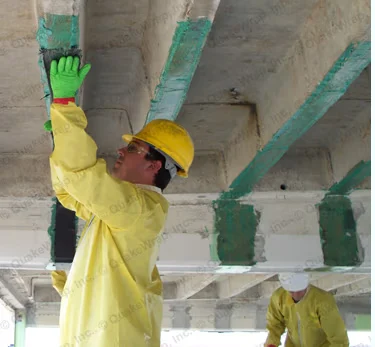
Beams, Slabs & Walls
Strengthen beams, columns, slabs and walls with lightweight FRP.
Beams & girders -
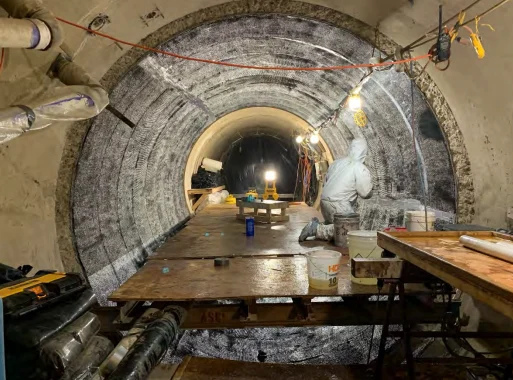
Pipes, Tanks & Culverts
Internal or external lining of pressure and gravity pipes, often through manholes with no excavation.
PipeMedic® -
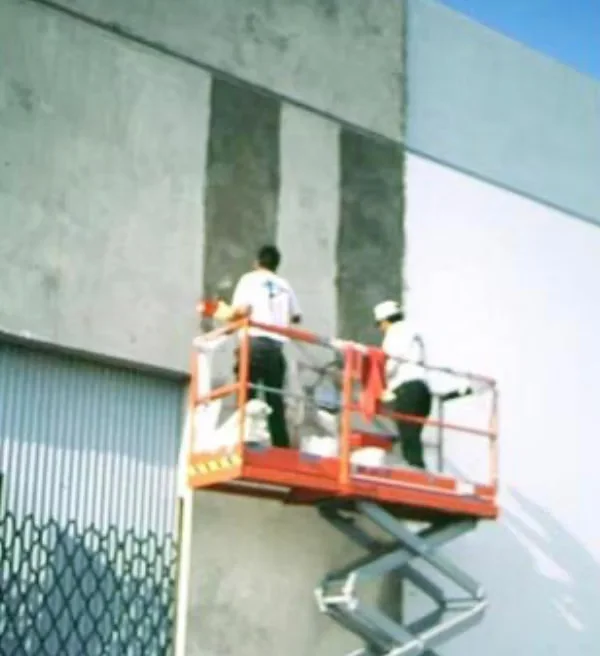
Seismic & Blast
Seismic retrofit of columns, masonry and shear walls, and hardening against blast loads.
Seismic retrofit -
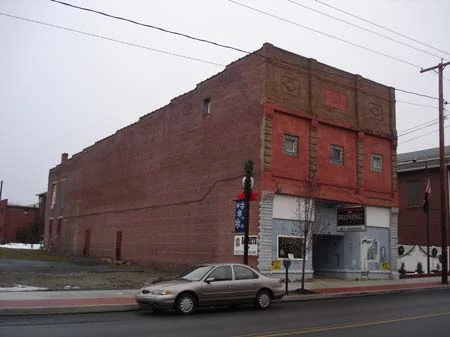
Historic Preservation
FRP that can be painted or coated, so repairs stay out of sight.
Historic preservation

CERTIFICATIONS
Certified for Drinking Water and Code Compliance
QuakeWrap® fabrics saturated with QuakeBond™ 300SR are listed for drinking water contact and evaluated for concrete strengthening under the building codes.
-
NSF/ANSI/CAN 61
IAPMO R&T listing N-11990 (NSF/ANSI/CAN 61-2023), active and valid through January 29, 2030, for drinking water pipes 6 in. and larger and tanks of 3,000 gallons or more.
-
IAPMO UES ER-828
QuakeWrap® FRP systems evaluated under the 2021, 2018 and 2015 IBC and IRC for strengthening concrete, with data per AC125 and special inspection per AC178. Revised 12/23/2025 and valid through 10/31/2026.
-
3,000-hour test report
Evaluation report on QuakeWrap® FRP systems by the Structures and Materials Laboratory, University of Miami.
PROVEN RESULTS
Wet & Dry Layup Projects
-
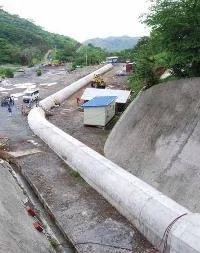
84-in. Penstock, Costa Rica
5,742 ft of 7-ft concrete pipeline lined with glass FRP in 15 days.
Read the case study -
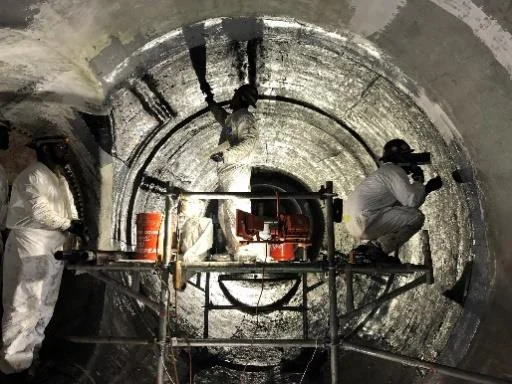
Lake Lure 120-in. Penstock
A riveted steel penstock with up to 80% wall loss lined with carbon and glass FRP (QW B20C, QW B2610G) in two weeks.
Read the case study -
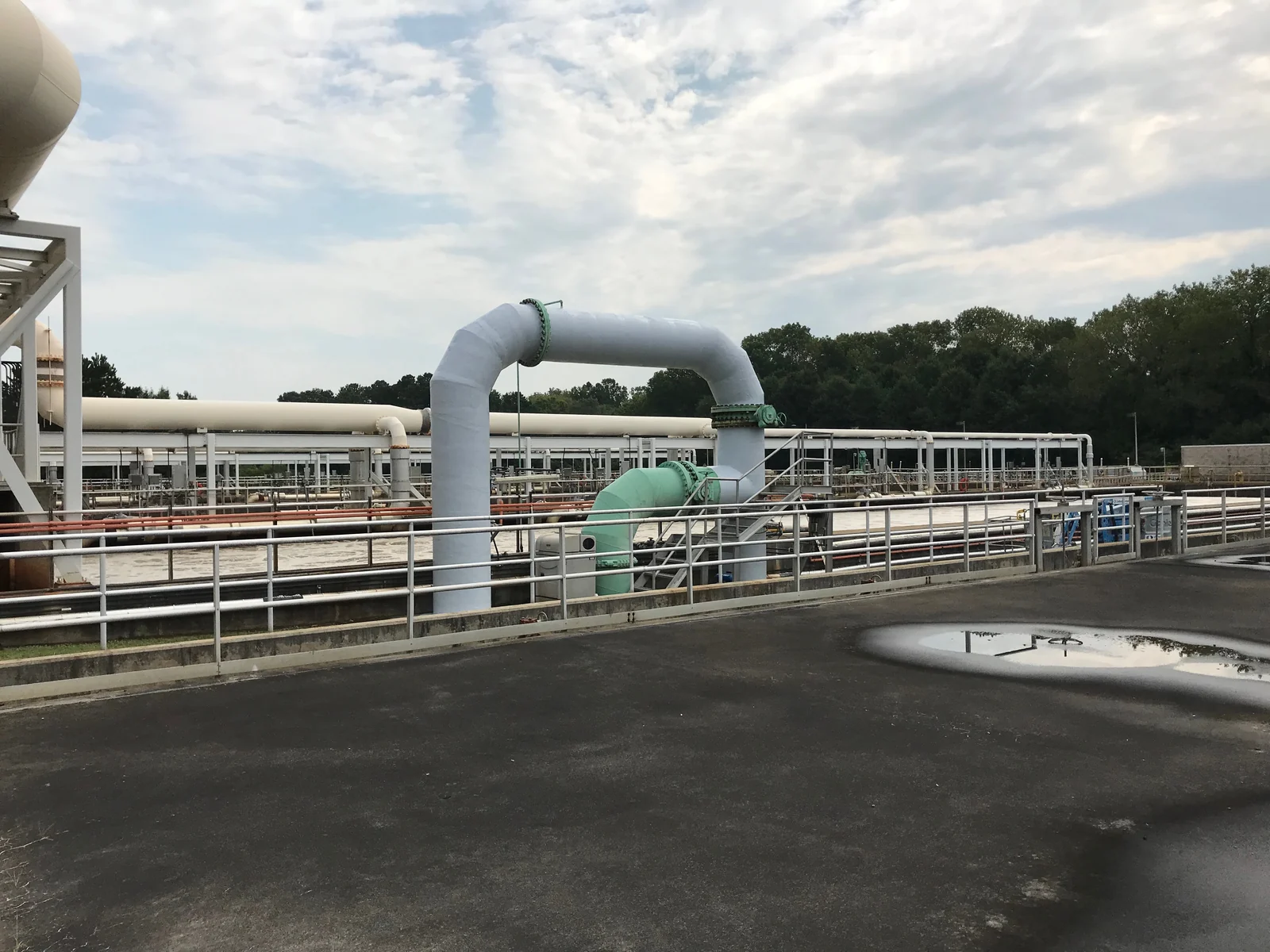
Cobb County 36-in. Piping
A carbon and glass FRP system (QW U27C, QW B2610G) applied to the outside of 54 ft of steel process pipe.
Read the case study -
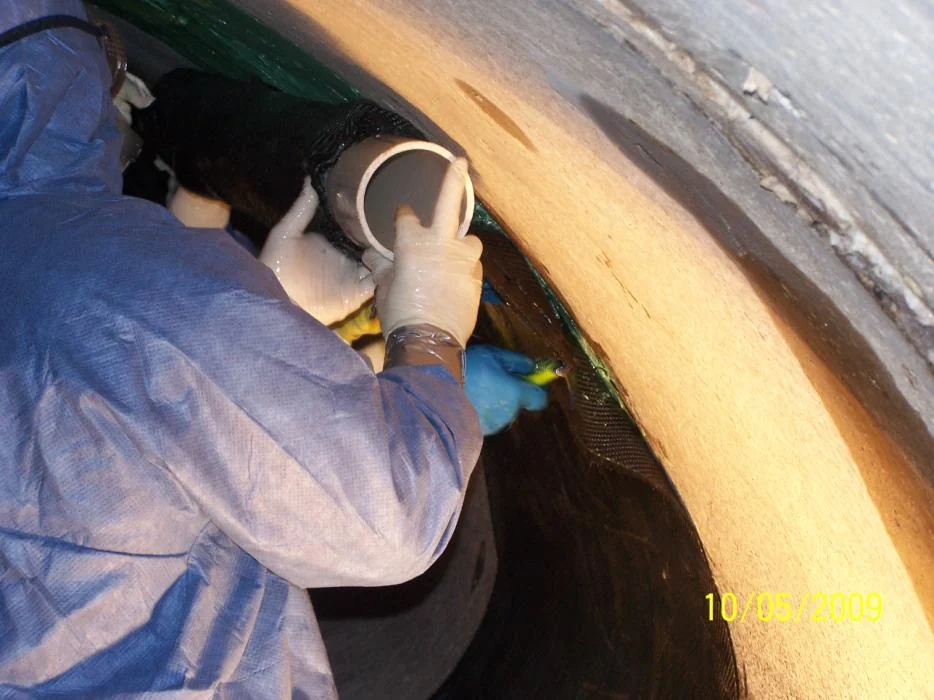
North Dakota DOT Culvert Study
Carbon and glass FRP installed inside a concrete pipe culvert in 2009. By 2011 the lined joints remained sealed.
Read the case study -
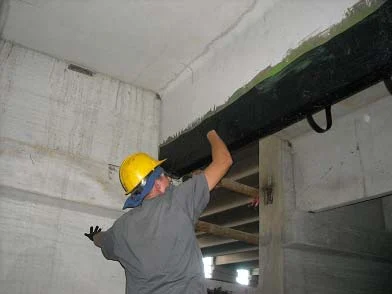
Martini Park Parking Garage
Carbon FRP strengthening of 17 prestressed double tee beams (34 stems) in Scottsdale, Arizona, wrapped by a crew of five in 11 days.
Project sheet (PDF) -

Fox Tucson Theatre
Unreinforced masonry walls, parapets, basement beams and the lobby floor of the 1929 theatre strengthened with QuakeWrap® glass fabric.
Read the case study


Wet & Dry Layup FAQs
What is the difference between wet layup and dry layup?
In wet layup, the fabric is saturated with resin first and then placed on a surface coated with an epoxy tack coat. In dry layup, dry fabric is placed on a rolled-on tack coat and the saturating resin is rolled over it in place, which is faster on large structures and vertical surfaces.
Is carbon FRP stronger than steel?
In tension, yes. Once the epoxy cures, carbon FRP reaches a tensile strength two to three times that of steel, at a fraction of the weight.
Should I use carbon or glass FRP?
Carbon has the highest strength and stiffness and is common for flexural and shear strengthening of beams, slabs and girders. Glass costs less, is non-conductive and is common for column confinement, masonry walls, blast and seismic retrofit. B2610G and B2408G glass fabrics add a mat for waterproofing.
How much surface preparation is needed?
The surface must be clean and sound, uneven areas filled with repair mortar, and sharp edges rounded to at least ¾ in. radius. Bond-critical work needs a pull-off strength of at least 200 psi with substrate failure. Where surface preparation is not practical, SPiRe®+ panels or PileMedic® laminates may fit better.
Can FRP be used in drinking water pipes and tanks?
Yes. The QuakeWrap® fabrics with QuakeBond™ 300SR are listed to NSF/ANSI/CAN 61 (IAPMO R&T listing N-11990, valid through January 29, 2030) for drinking water pipes 6 in. and larger and tanks of 3,000 gallons or more.
Can pipes be lined from the inside without digging?
Often, yes. Crews and equipment can enter through small openings such as manholes, so internal wet layup lining needs zero or minimal excavation. Carbon sheets are placed in the hoop and longitudinal directions and overlapped like roof shingles.
Can you provide specifications for our engineer?
Yes. Our team will recommend the right QuakeWrap® fabric and resin and provide product data sheets and specifications for your engineer of record. Design calculations must be made and certified by an independent licensed professional engineer.
More Applications for Layup FRP
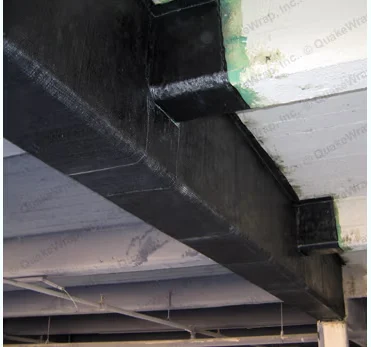
Have a Structure That Needs Strengthening?
Tell us what you are repairing. Our team will recommend the right QuakeWrap® system and provide specifications for your engineer.