
CASE STUDY
North Dakota DOT Study of FRP Culvert Joint Repair
The North Dakota Department of Transportation tested several repair strategies on a reinforced concrete pipe culvert. Its report found the joints lined with QuakeWrap® carbon and glass FRP remained sealed two years later.

Project Details
- REPORT
- Reinforced Concrete Pipe Repair, Experimental Study ND 09-01, Final Report (March 2012)
- AGENCY
- North Dakota Department of Transportation, Materials & Research Division
- STRUCTURE
- Twin 88 in. x 54 in. reinforced concrete arch pipe culverts
- LOCATION
- Interstate 29 northbound near Reference Point 75, north of Fargo, Cass County, North Dakota
- QUAKEWRAP® SYSTEM
- Wet layup: QuakeWrap TB20C carbon fabric and VB26G glass fabric, QuakeBond™ J300SR resin, J201TC tack coat
- INSTALLER
- Subsurface, Inc., supervised by a QuakeWrap representative
- QUAKEWRAP SCOPE
- All materials, onsite supervision and training
01 · THE STUDY
Comparing Repair Strategies on a Real Culvert
NDDOT's Materials & Research Division documented several contractors' repair methods on the same reinforced concrete pipe culvert. Subsurface, Inc. sealed the joints with oakum rope and water-activated flexible foam, then installed QuakeWrap's repair under the supervision of a QuakeWrap representative.
Rain and cold weather were factors. A significant moisture event delayed the installation for nearly four days, and the pipe was kept heated and above freezing so the system could cure.

02 · THE INSTALLATION
Two Fabrics, Two Layers Per Joint
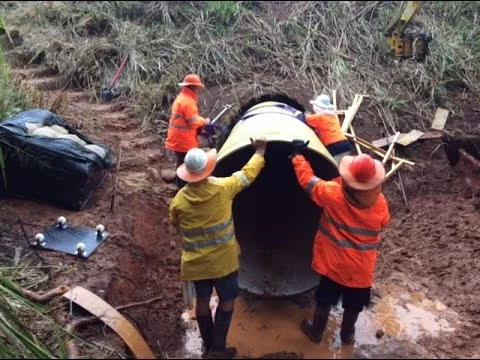
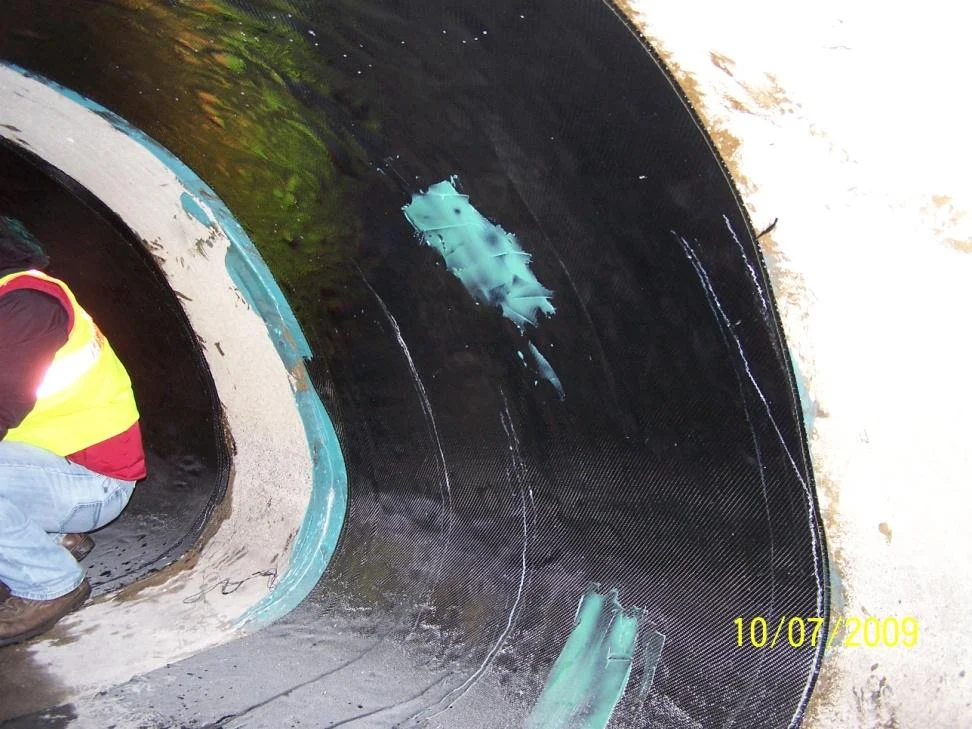
QuakeWrap used the wet layup method. Fabric was saturated with QuakeBond™ J300SR resin in an onsite trailer, carried into the pipe on a PVC pipe, and placed over a QuakeBond™ J201TC tack coat applied to the sides and top of the pipe. Workers smoothed out wrinkles with squeegees.
Two fabrics were tried on two joints each: QuakeWrap TB20C carbon fabric and VB26G glass fabric. Each joint received two layers, followed by a 24-hour cure.
- FRP fabric (TB20C carbon or VB26G glass)2 layers
- QuakeBond™ J201TC tack coatSides and top
- Concrete pipe jointHost
03 · THE RESULT
Still Bonded and Sealed in 2011
In its 2011 follow-up, the report states that the QuakeWrap carbon fiber and fiberglass "bonded to the concrete very well and those joints remained sealed and didn't show any signs of movement."
When the twin arch pipes were excavated and removed on June 13, 2011, the sections repaired with QuakeWrap lifted out of the trench together. The report notes the backhoe operator could not separate them without breaking the concrete.
The cost of QuakeWrap materials and onsite supervision was $18,910.
- installed
- 2009
- joints still sealed
- 2011
Products & Applications Used


MORE PROJECTS
Related Projects
-
Salt Lake City, Utah
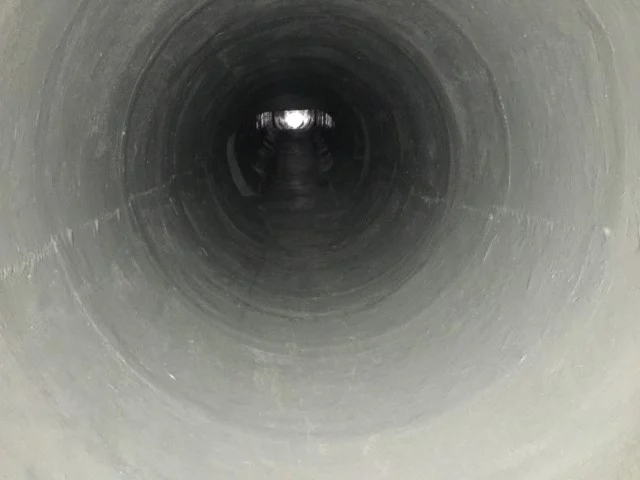
48-in. culvert repaired and lined with FRP along its entire length.
View case study -
Detroit Northeast Interceptor
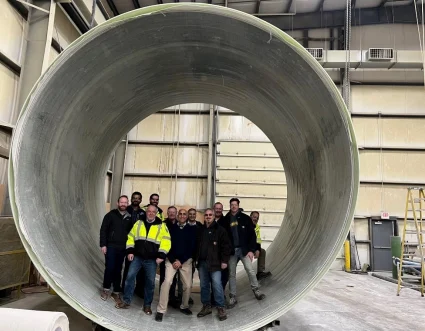
A 16-ft StifPipe® slipliner, likely the largest slipliner ever made.
View case study -
Cobb County, Georgia
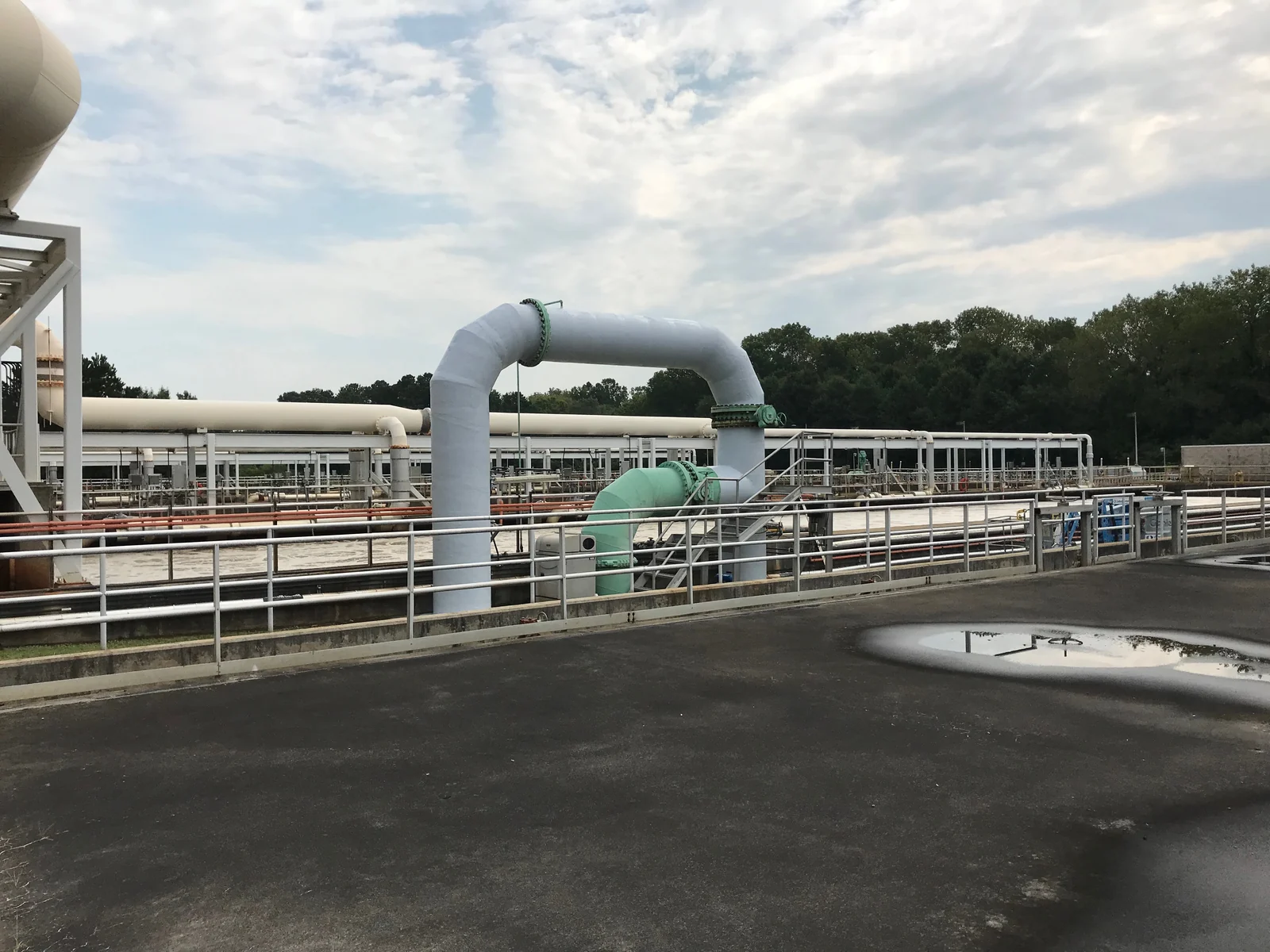
54 ft of 36-in. steel process pipe strengthened from the outside for 65 psi.
View case study


Have a Culvert That Needs Repair?
Tell us about the culvert, its size and condition. Our team will recommend the right QuakeWrap® system and provide specifications for your engineer.