
MARINE & WATERFRONT
Seawall & Bulkhead Repair Without Cofferdams
Repair steel, concrete and timber seawalls without cofferdams using SPiRe®+ FRP panel systems. Stay-in-place panels form a new structural face in front of seawalls and bulkheads, even in wet or underwater conditions.
- No cofferdams or dewatering
- Steel, concrete & timber seawalls
- Permanent corrosion protection

MATCHING PRODUCTS
QuakeWrap® Systems for Seawalls & Bulkheads
-
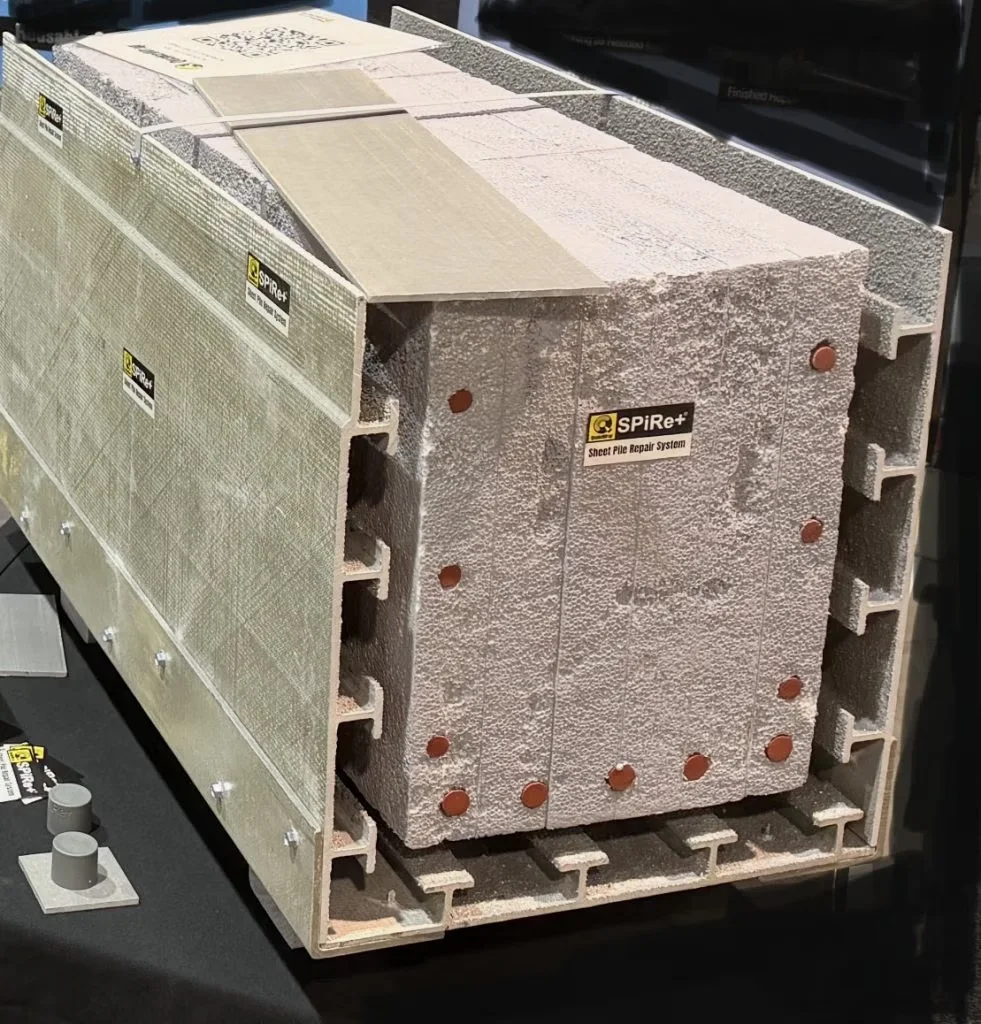
SPiRe®+
Stay-in-place FRP panels for seawalls, piles, beams and girders.
Explore SPiRe®+ -
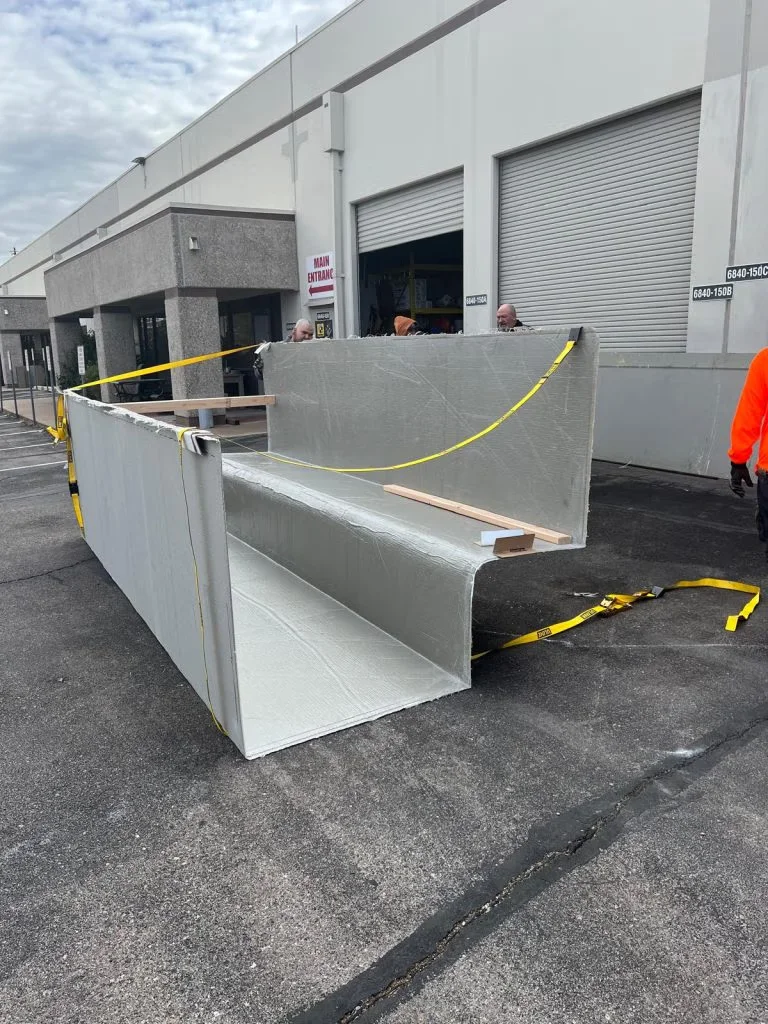
Custom FRP Shapes
Shells, forms and components built to fit.
Explore Custom FRP Shapes -
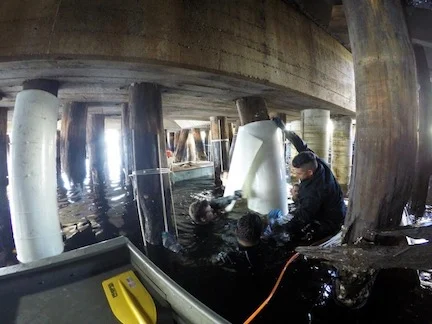
PileMedic®
Laminate jackets for piles and columns, even underwater.
Explore PileMedic®


Not sure which system fits?
Tell us about the structure and conditions. Our team will recommend the right QuakeWrap® system.
WHY SEAWALLS FAIL
Why Seawalls and Bulkheads Fail
Seawalls and bulkheads hold back soil along coastlines and riverbanks. They are built of concrete, steel sheet piles or timber, and most damage occurs in the splash zone, between the low and high tide levels.
-
Corrosion of steel sheet piles
Seawater thins steel sheet piles until they tear. The holes cost the wall strength and let backfill wash out.
-
Cracked concrete and corroded rebar
Saltwater enters fine cracks and corrodes the reinforcing steel, which expands and cracks the concrete further.
-
Rot in timber walls
Wet and dry cycles rot timber seawalls, and horizontal joints between panels deteriorate and move.
-
Joint separation and soil loss
Gaps between panels, toe and berm loss and hydrostatic pressure let soil escape. A dip in the land behind the wall is a warning sign.
REPAIR OPTIONS
Seawall Repair Methods Compared
Some common repairs seal cracks or stabilize soil but do not restore the strength the wall has lost.
| What it does | Limits | |
|---|---|---|
| Cathodic protection (steel) | Protects steel sheet piles from corrosion | Anodes need ongoing maintenance and replacement; if neglected, corrosion speeds up |
| Painting or coating (steel) | Protects the cleaned wall surface | Needs a cofferdam, dewatering, sandblasting and drying; coatings eventually fail |
| Welded steel patches | Covers holes in steel sheet piles | Temporary and labor-intensive; the new steel corrodes too |
| Structural epoxy injection (concrete) | Seals cracks and slows rebar corrosion | Does not restore strength lost to corroded rebar |
| Polyurethane or grout injection | Stabilizes and seals the soil behind the wall | Does not address lost strength in the wall |
| SPiRe®+ FRP panels | Builds a new structural face, seals the wall and blocks water and oxygen | Designed per project by the engineer of record |
Not sure which repair fits your seawall?
Tell us the wall type, length, height and condition. Our team will recommend the right QuakeWrap® system and provide specifications for your engineer.
HOW IT WORKS
How SPiRe®+ Repairs a Seawall
Instead of patching the damaged wall, SPiRe®+ creates a new structural face in front of it. The 3 ft (914 mm) wide pultruded fiberglass panels are anchored to the existing seawall on an approximate 3 ft x 3 ft (1 m x 1 m) grid, and the annular space between the panels and the wall is filled with grout or concrete.
The back face of each panel has protruding T profiles and a grit coating. The T profiles act as reinforcing bars permanently attached to the panel, and the grit bonds the panel to the grout. The panels contain no steel, so there is nothing to corrode, and the sealed panel face keeps water and oxygen off the old wall.
Panels install underwater without cofferdams and can be made to custom shapes to match existing walls. Our team will recommend the right SPiRe®+ system and provide typical details and specifications for your engineer of record.
- Steel sheet pile, concrete and timber seawalls
- Stops further leakage and soil loss
- Light enough for a two-person crew, no cranes
- Can be architecturally coated
- No cofferdam required
- No welding on site
- (914 mm) wide panels
- 3 ft
- Grade 60 rebar equivalency
- No. 6 @ 3.5 in.
- approximate anchor grid
- 3 ft x 3 ft

How a Seawall Is Repaired With SPiRe®+
-
Anchor
L-bolts are anchored to the seawall on an approximate 3 ft x 3 ft grid, and panels are set at the required stand-off from the wall.
-
Seal the joints
Overlapping panel edges are sealed to make them watertight, until the full repair length and height is covered.
-
Close the space
The bottom and sides of the annular space are sealed, or the panels are embedded in the seabed.
-
Grout
A grout plug seals the bottom, then grout or concrete fills the space, by tremie where needed, and the top is sealed.
WATCH A PROJECT
SPiRe® FRP Panels Repair a Steel Bulkhead
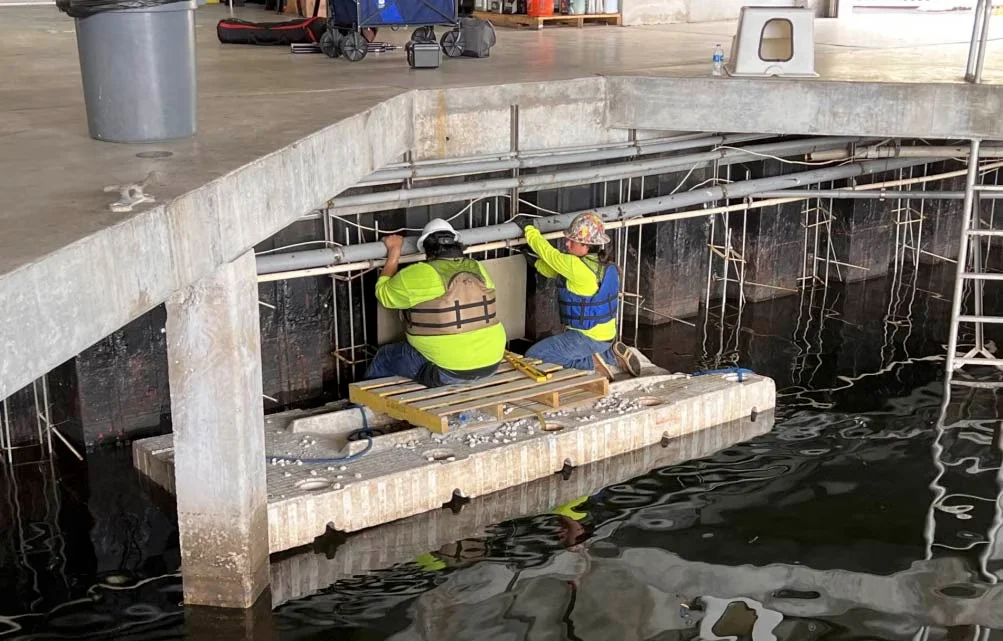
Plays from YouTube
PROVEN RESULTS
Seawalls & Bulkheads Projects
-
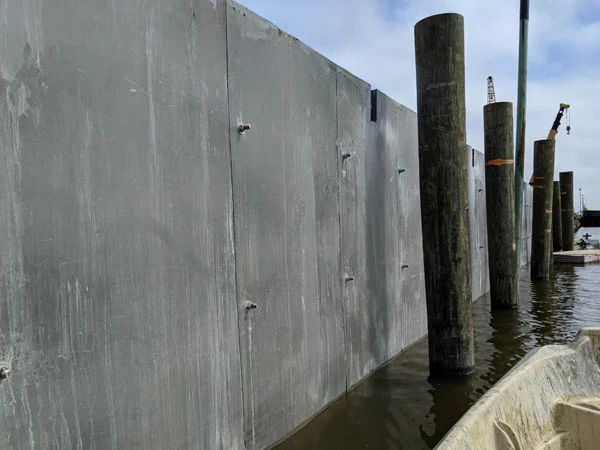
Port of West St. Mary
About 145 ft of corroded steel sheet pile bulkhead protected with 42 SPiRe® panels and GFRP rebar, installed underwater without cofferdams.
View the project -
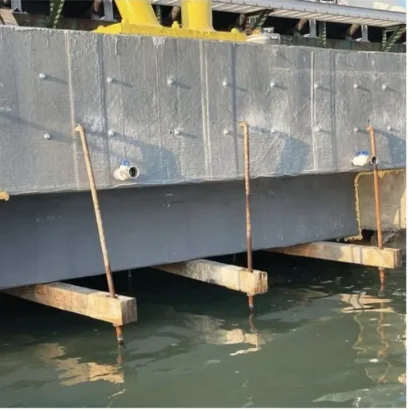
Port of Galveston, Texas
Custom-made shell for repair of a corroded marine deck.
View the project -
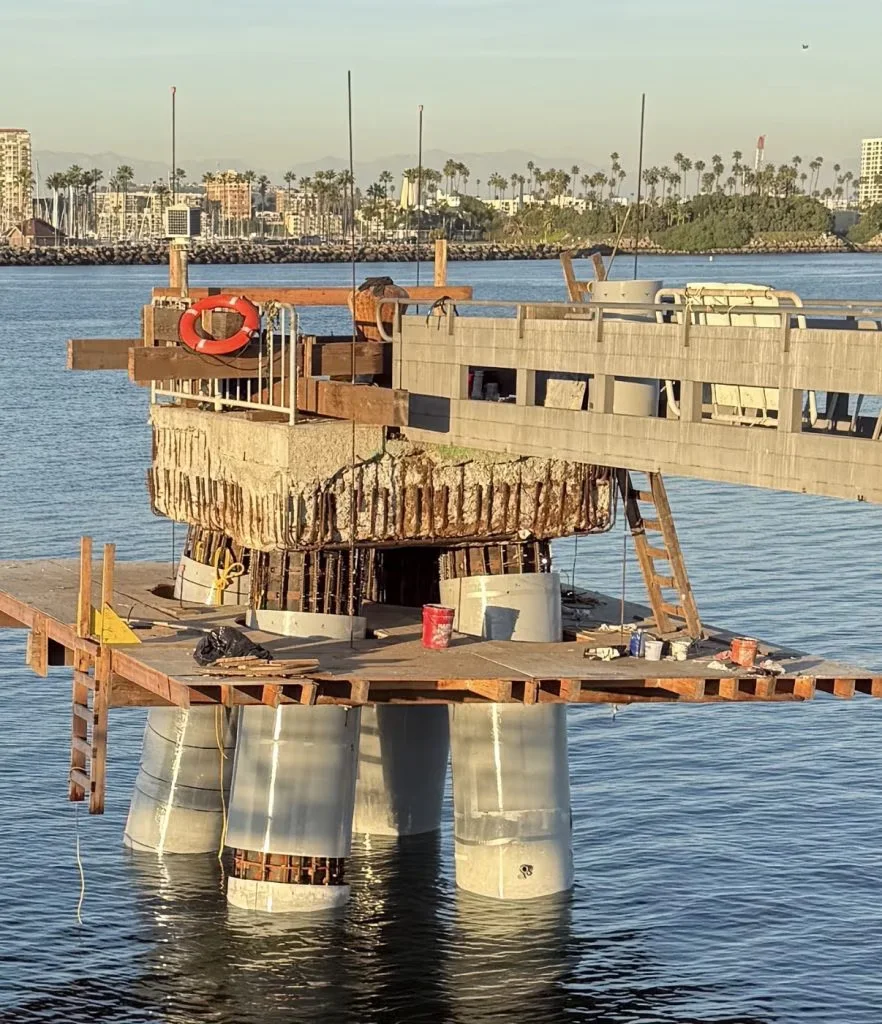
Port of Long Beach, California
Steel pipe piles and pile cap reinforced with an FRP jacket and panel.
View the project


MORE PROJECT SHEETS
More Seawall and Bulkhead Projects
-
STEEL BULKHEAD
U.S. Coast Guard, Tongue Point
Astoria, OR
About 42 ft of steel sheet pile bulkhead repaired with SPiRe® panels and underwater epoxy grout reinforced with glass FRP rebar. A photo nearly 8 years later shows the repair performing well.
PROJECT SHEET (PDF) -
MARINA SEAWALL
Bair Island Marina
California
2,319 linear ft of steel sheet pile (about 580 custom-length panels) protected with SPiRe®, after dry and wet mockups to verify fit and appearance.
PROJECT SHEET (PDF) -
CONCRETE SEAWALL
Hillsboro Inlet Seawall
Pompano Beach, FL
A cracked, corroded concrete seawall strengthened with two layers of glass fabric by wet layup inside a cofferdam, 50 ft sections in 48 hours (2012).
PROJECT SHEET (PDF)
Other SPiRe® installations
A 900+ ft seawall for an industrial client in Chesapeake, Virginia, and 1.25 km (0.75 miles) of steel sheet pile being repaired at the Port of Melbourne, Australia. Tell us about your wall and we will share the closest match.
Seawalls & Bulkheads FAQs
Can piles and seawalls be repaired underwater?
Yes. PileMedic® and SPiRe®+ systems are designed for underwater installation, so submerged piles, seawalls and bulkheads can often be repaired without cofferdams or dewatering.
How can I tell if a seawall is failing?
Look for cracks, rust and holes at the splash zone, gaps between panels, a leaning or bowed wall and, behind the wall, settlement or a dip in the yard or parking lot that collects water. Settlement usually means soil is washing out through the wall.
Does epoxy injection restore a concrete seawall's strength?
No. Epoxy injection seals cracks and slows corrosion of the reinforcing steel, but it does not restore strength already lost to corroded rebar. Polyurethane injection stabilizes the soil behind the wall but does not address lost strength either.
How does SPiRe®+ compare with cathodic protection or coatings?
Cathodic protection needs ongoing anode maintenance, and recoating a steel wall needs a cofferdam, dewatering and sandblasting. SPiRe®+ installs underwater without a cofferdam, contains no steel and forms a new structural face that keeps water and oxygen off the old wall.
Can SPiRe®+ repair concrete and timber seawalls?
Yes. SPiRe® systems work on concrete, steel and timber structures, and panels can be custom-made to match the shape of the existing wall.
Can you provide specifications and design details for our engineer?
Yes. Our team will recommend the right QuakeWrap® system and provide product data sheets, specifications and sample design details for your engineer of record.
Related FRP Repair Applications
Have a Project That Needs Repair?
Tell us about your structure. Our team will recommend the right QuakeWrap® system and provide specifications for your engineer.