
CASE STUDY
Port of Long Beach Steel Pipe Pile Repair Without Welding
Two mooring dolphins serving Carnival Cruise Line at the Port of Long Beach had severely corroded steel pipe piles and concrete caps. This steel pipe pile repair used PileMedic® jackets with mechanical ShearWrap™ load transfer, so no welding was done over the water, and SPiRe®+ panels rebuilt both caps in 2026 without replacing the dolphins.

Project Details
- LOCATION
- Port of Long Beach, California
- STRUCTURE
- Two mooring dolphins, each on four 36-in. steel pipe piles with a concrete cap about 12 ft x 16 ft x 4 ft
- QUAKEWRAP® SYSTEMS
- PileMedic® jackets and ShearWrap™ connectors on the piles, SPiRe®+ panels on the caps
- YEAR
- 2026
- OWNER
- Port of Long Beach
- FACILITY OPERATOR
- Carnival Cruise Line
- ENGINEER OF RECORD
- AtkinsRéalis
- GENERAL CONTRACTOR
- The Dutra Group
01 · THE CHALLENGE
Corroded Piles and Spalled Caps on a Busy Cruise Terminal
After decades in seawater, the two dolphins had extensive corrosion on the exposed steel piles, worst in the splash and tidal zones. In the caps, corroding reinforcing steel had cracked and spalled the concrete and left bars exposed, reducing the caps' structural integrity.
Replacing the dolphins would have been costly and disruptive at a busy port, and traditional repairs would have needed extensive scaffolding, conventional formwork and long schedules. The goal was to restore both structures with a faster method that kept interference with terminal operations to a minimum.

02 · THE PILES
PileMedic® Jackets With ShearWrap™ Load Transfer
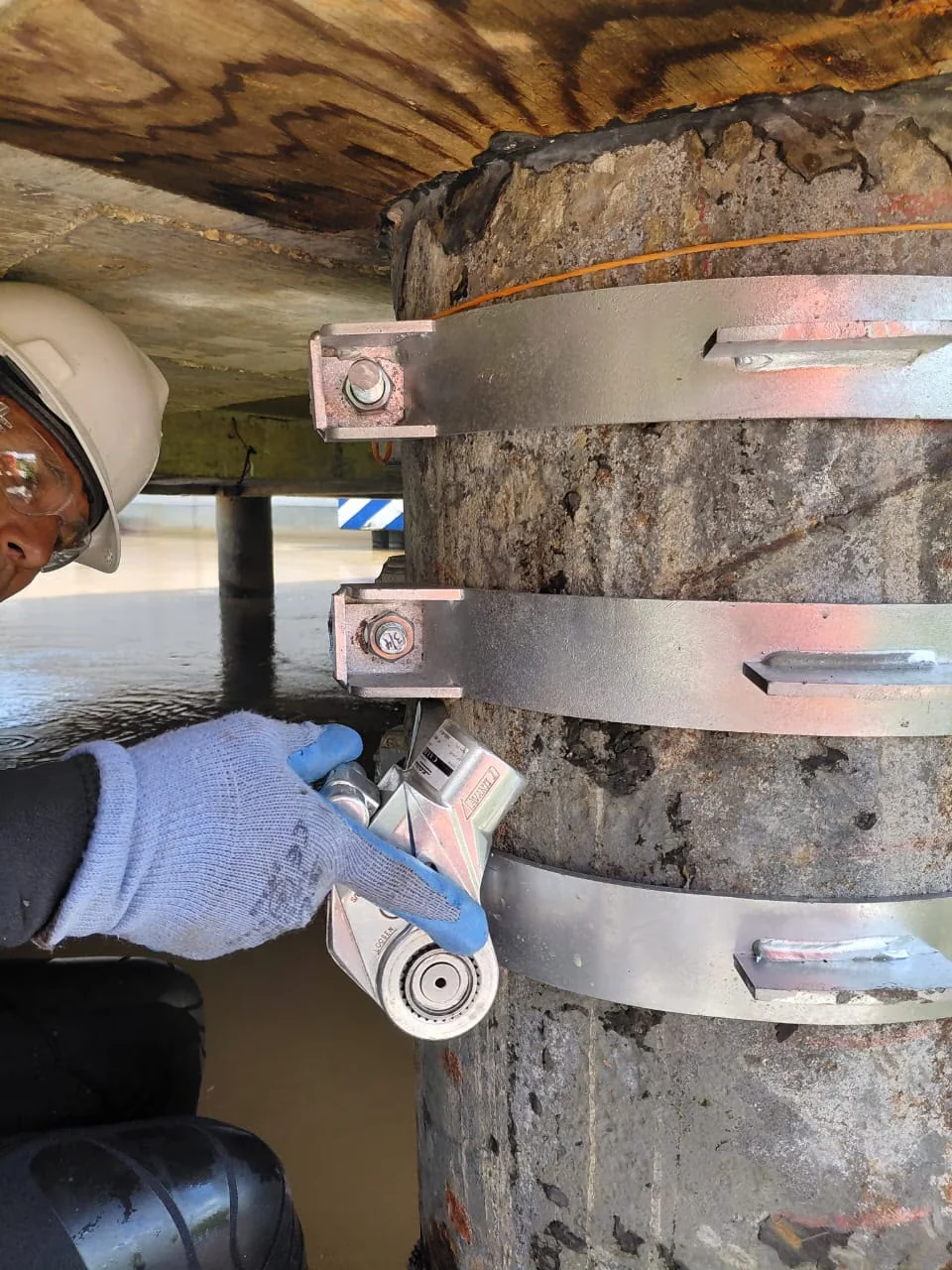
Spacers installed around each pile set a uniform 4-in. annular space between the corroded steel and the new jacket, and held supplemental reinforcing bars in the annulus. Where more load transfer was needed, ShearWrap™ connectors were installed. They transfer force mechanically, so no field welding or hot work was done over the water.
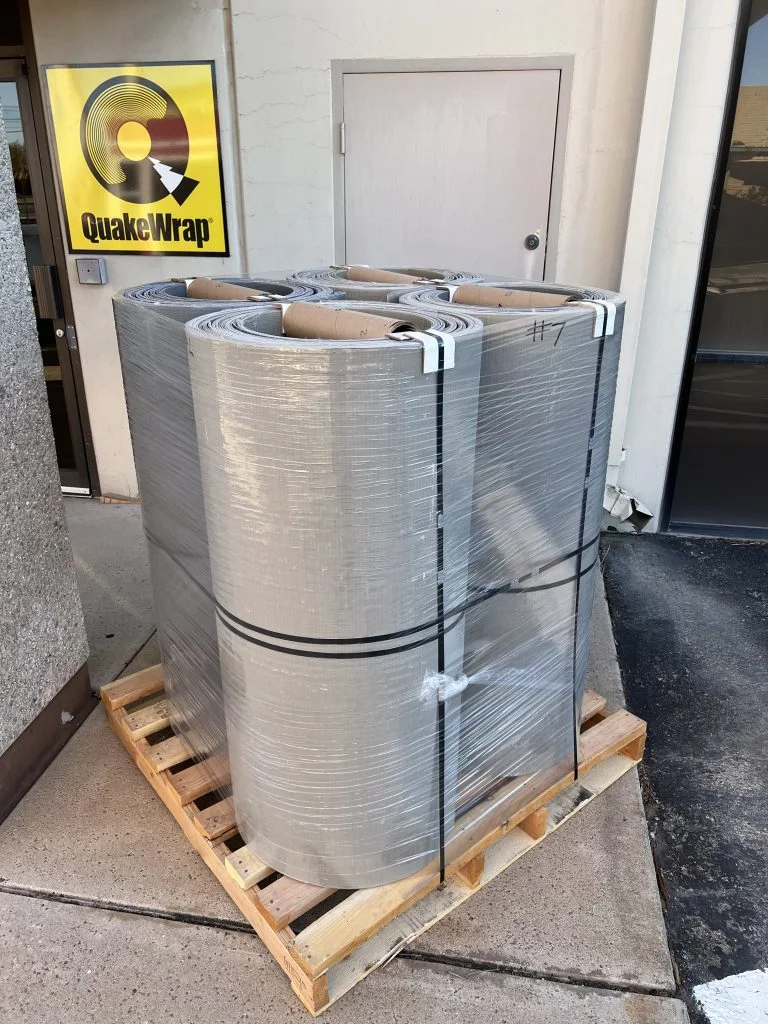
After the steel surface was prepared, a thin fiberglass PileMedic® laminate jacket was wrapped around each pile as a permanent stay-in-place form. The laminate arrives as a flexible sheet, so it was brought to the work area compactly and closed around the round pile. The annulus was filled with high-strength cementitious grout, with epoxy grout at the top and bottom to seal the repair, keep seawater off the cementitious grout and prevent washout during placement.
The jacket is more than a cover. The existing pile, supplemental bars, grout, load-transfer components and fiberglass shell together form a new structural section around each pile.
- No welded shear tabs or field welding
- Lightweight jackets installed without heavy lifting equipment
- A new composite section around each original pile

03 · LOAD TRANSFER
Steel Pipe Pile Repair Without Field Welding
A grout jacket only works if force can pass between the old steel pile and the new reinforced grout. In conventional steel pile rehabilitation, shear tabs, headed studs or other connectors are welded to the pile for that purpose. Over water, that welding is hard to do well: access is restricted, the work area is wet, the corroded surface is poor, and every weld brings inspection and hot-work controls.
At Long Beach, ShearWrap™ components took the place of welded shear tabs. They engage the pile mechanically and carry load between the existing steel and the new reinforced-grout jacket. No welding equipment had to be set up at each pile, the work did not depend on finding weld-quality steel along the corroded length, and a major hot-work operation over the water was avoided.
- Mechanical shear transfer instead of welded tabs or studs
- No hot work over the water
- Load path not dependent on the corroded steel surface

04 · THE CAPS
SPiRe®+ Panels as Form and Reinforcement
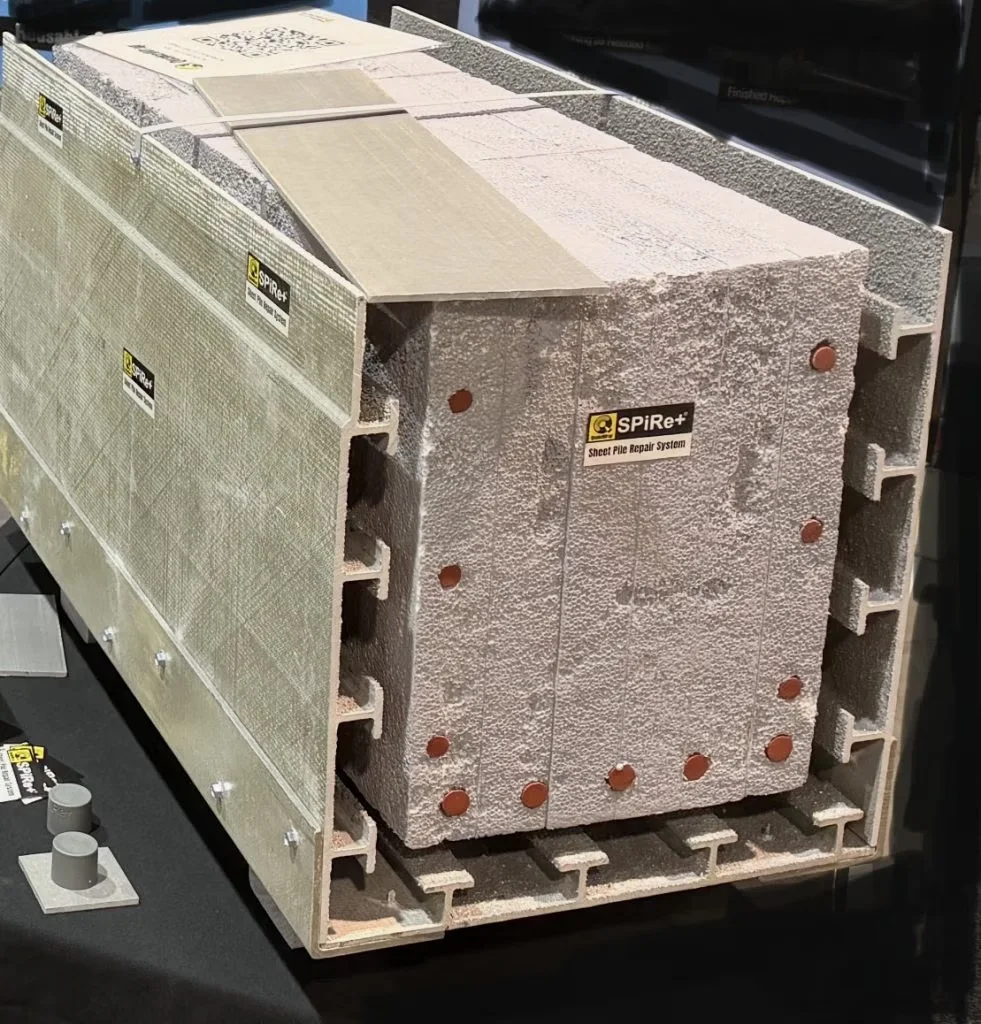
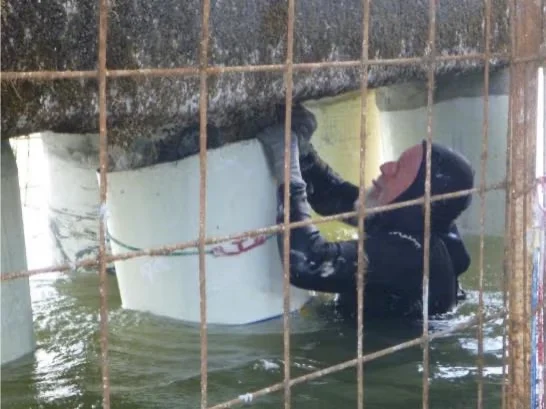
Each cap is about 12 ft x 16 ft in plan and 4 ft deep. Conventional repair would have meant building temporary forms beneath and around each cap and stripping them over the water afterward. Instead, deteriorated concrete was removed, the remaining bars were cleaned, and supplemental bars went in only where needed. SPiRe®+ pultruded fiberglass panels then enclosed the bottom and all four sides of each cap as permanent stay-in-place formwork.
The panels also add strength. Each provides reinforcement equivalent to about No. 6 Grade 60 bars at 3½ in. spacing, which significantly reduced the conventional steel the repair needed. High-strength cementitious grout bonded the original concrete, new steel and composite shell into a single structural element.
- Stay-in-place formwork during grouting
- Tensile reinforcement equal to about No. 6 bars at 3½ in.
- A corrosion-resistant shell around the repaired cap

CONSTRUCTION SEQUENCE
Piles First, Then the Caps
All eight piles were repaired and grouted before work moved up to the two dolphin caps.
-
Prepare
Remove deteriorated concrete and clean corroded steel.
-
Spacers and bars
Install spacers and supplemental reinforcing bars on the steel piles.
-
ShearWrap™
Install ShearWrap™ load-transfer connectors where required.
-
PileMedic® jackets
Wrap PileMedic® laminate jackets around all eight piles.
-
Grout the piles
Place cementitious grout in the annular spaces.
-
Epoxy seals
Place epoxy grout seals at the upper and lower ends of each pile repair.
-
Cap steel
Add supplemental reinforcing steel in the dolphin caps where required.
-
SPiRe®+ panels
Assemble stay-in-place panels around the bottom and sides of each cap.
-
Grout the caps
Place cementitious grout inside the cap repair forms.
-
Inspect
Final inspection and completion of both dolphins.
05 · THE RESULT
Both Dolphins Restored Without Replacement
The rehabilitation restored two heavily deteriorated mooring dolphins without replacing them. The 36-in. steel pipe piles and the concrete caps were strengthened and now have a corrosion-resistant exterior.
Because the jackets and panels stay in place, no form stripping or extra finishing was needed. The light fiberglass materials were handled without large cranes or special lifting equipment on an active marine facility.
Each material did the job it suits best. The existing piles and serviceable cap concrete stayed in service, supplemental steel went in where it was needed, cementitious grout restored the section, epoxy grout sealed the pile ends, and the fiberglass jackets and panels supplied formwork, reinforcement and corrosion protection.
- Stay-in-place composite forms on piles and caps
- Less supplemental steel and congestion in the repair zone
- Repaired members encapsulated in corrosion-resistant shells

Products & Applications Used
-
PileMedic®
Pile repair and strengthening, including underwater.
Explore PileMedic® -
ShearWrap™ & ShearClamp™
Bolt-on load transfer for steel piles, with no welding.
Explore ShearWrap™ -
SPiRe®+
Stay-in-place FRP panels for seawalls, piles, beams and girders.
Explore SPiRe®+ -
Pile Repair
Timber, steel and concrete piles, including underwater.
Explore Pile Repair -
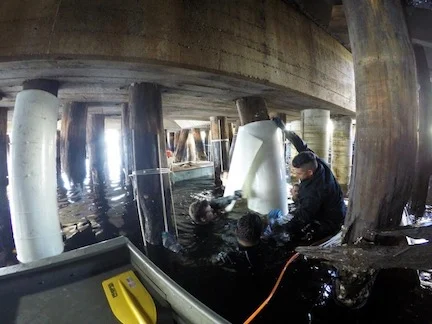
Marine Infrastructure
Ports, wharves and piers kept in service.
Explore Marine Infrastructure -
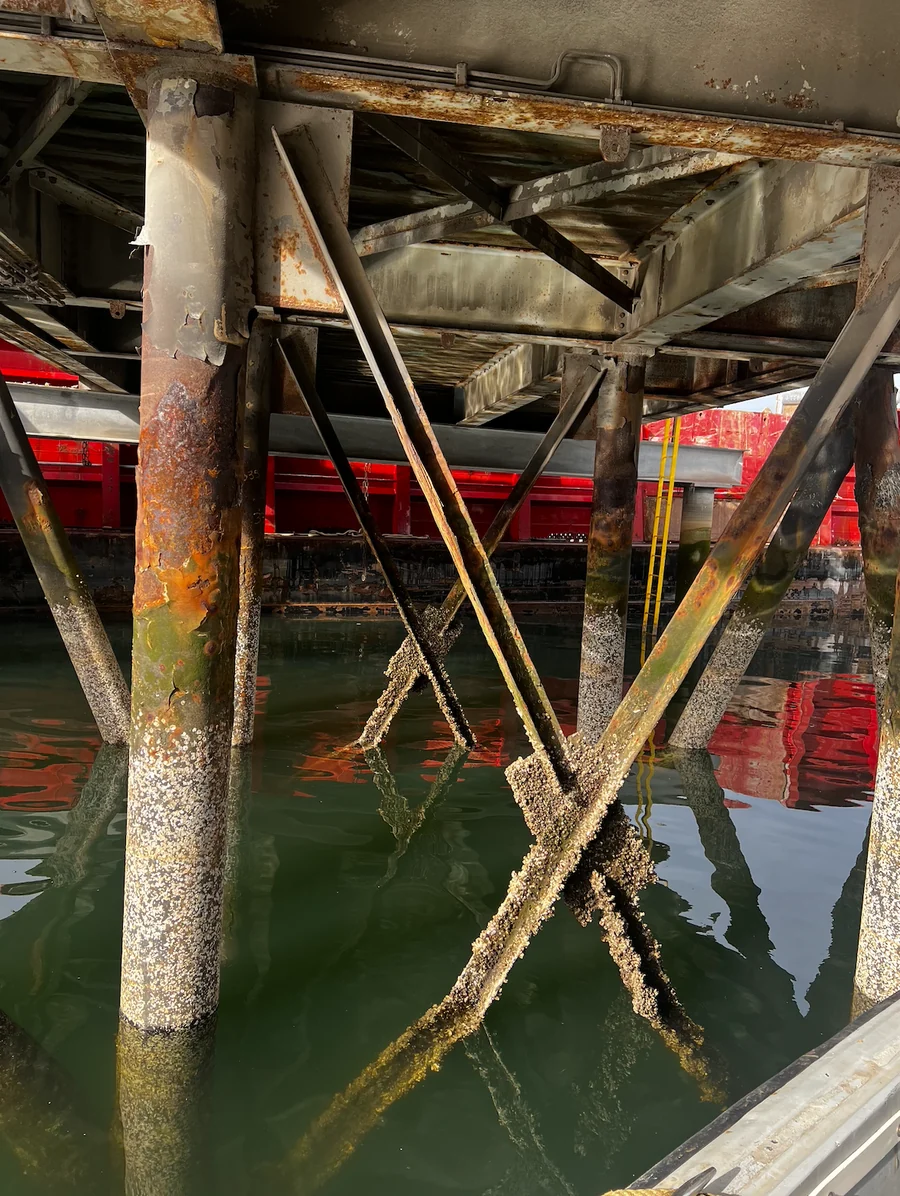
Steel Pipe Pile Repair
How corroded steel pipe piles are encased and strengthened.
Read the guide


MORE PROJECTS
Related Projects
-
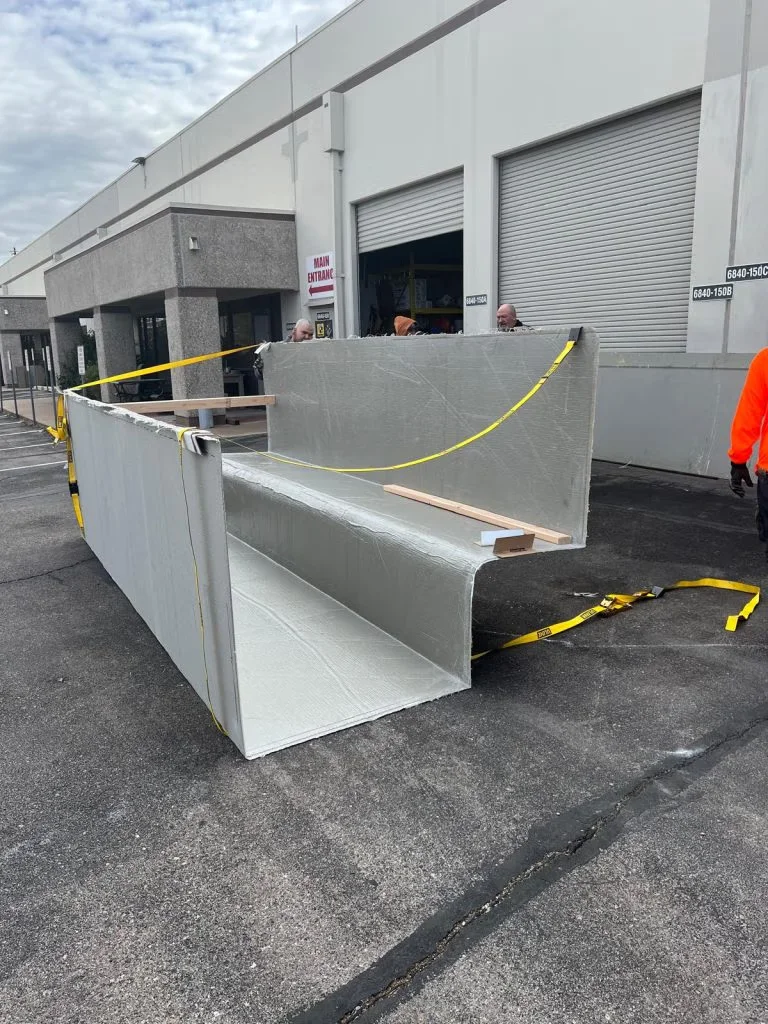
Port of Galveston, Texas
30 corroded beams and 6 piles repaired with custom SPiRe® forms.
View case study -
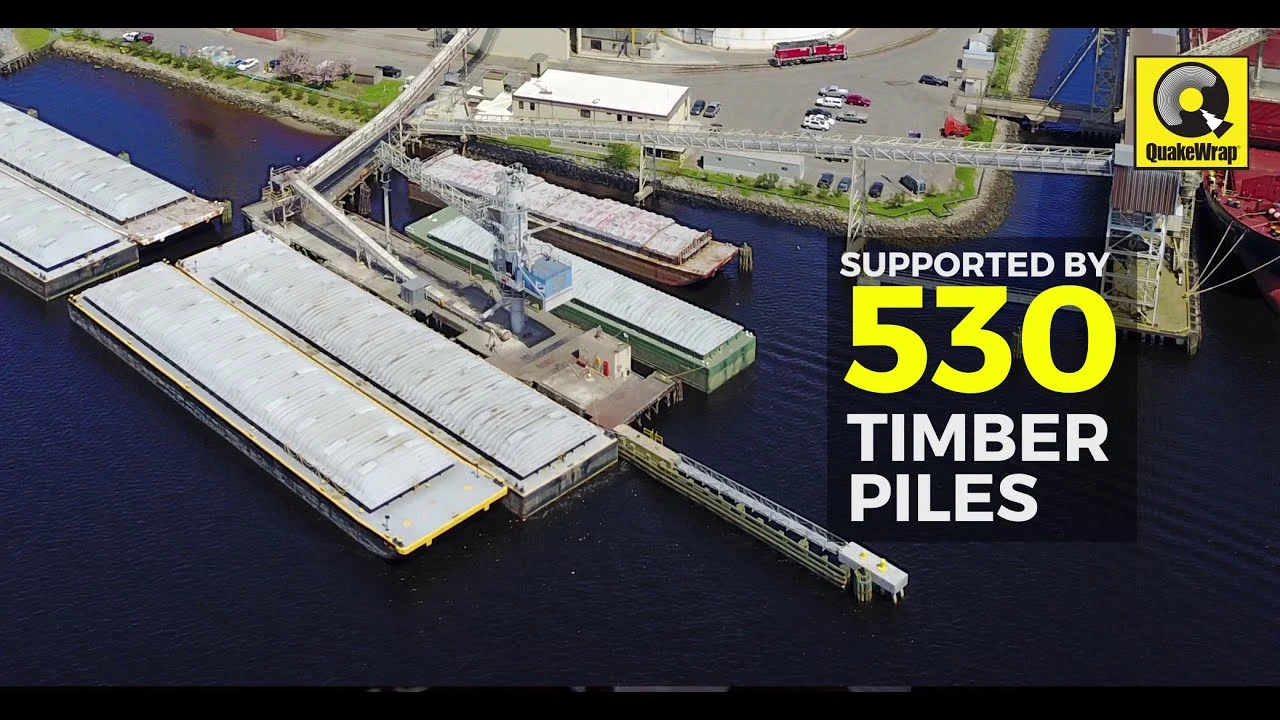
Agricultural Port, Chesapeake, Virginia
500+ timber piles restored with PileMedic® while the dock stayed open.
View case study -
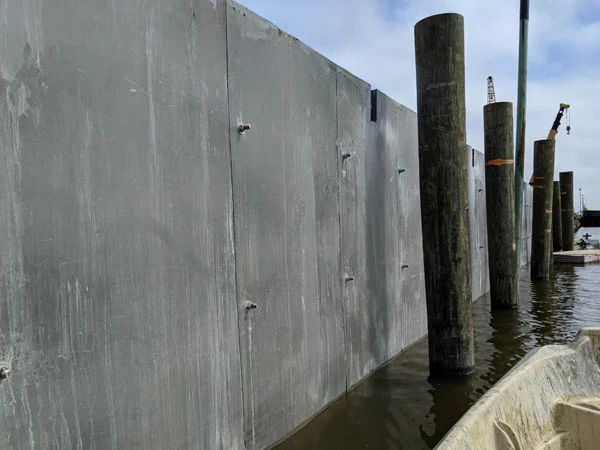
Port of West St. Mary, Louisiana
145 ft of steel sheet pile bulkhead protected with 42 SPiRe® panels.
View case study


Have Piles That Need Repair?
Tell us about the piles and site conditions. Our team will recommend the right PileMedic® system and provide specifications for your engineer.