
INDUSTRIAL & UTILITY
Utility Pole and Cell Tower Strengthening
Strengthen poles and towers in place, including cell towers. About 200 cell towers have been retrofitted with PileMedic® laminates.
- Strengthened in place
- ~200 cell towers retrofitted
- No corroding parts

MATCHING PRODUCTS
QuakeWrap® Systems for Utility Poles & Towers
-
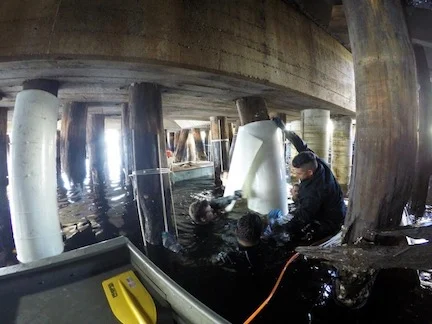
PileMedic®
Laminate jackets for piles and columns, even underwater.
Explore PileMedic® -
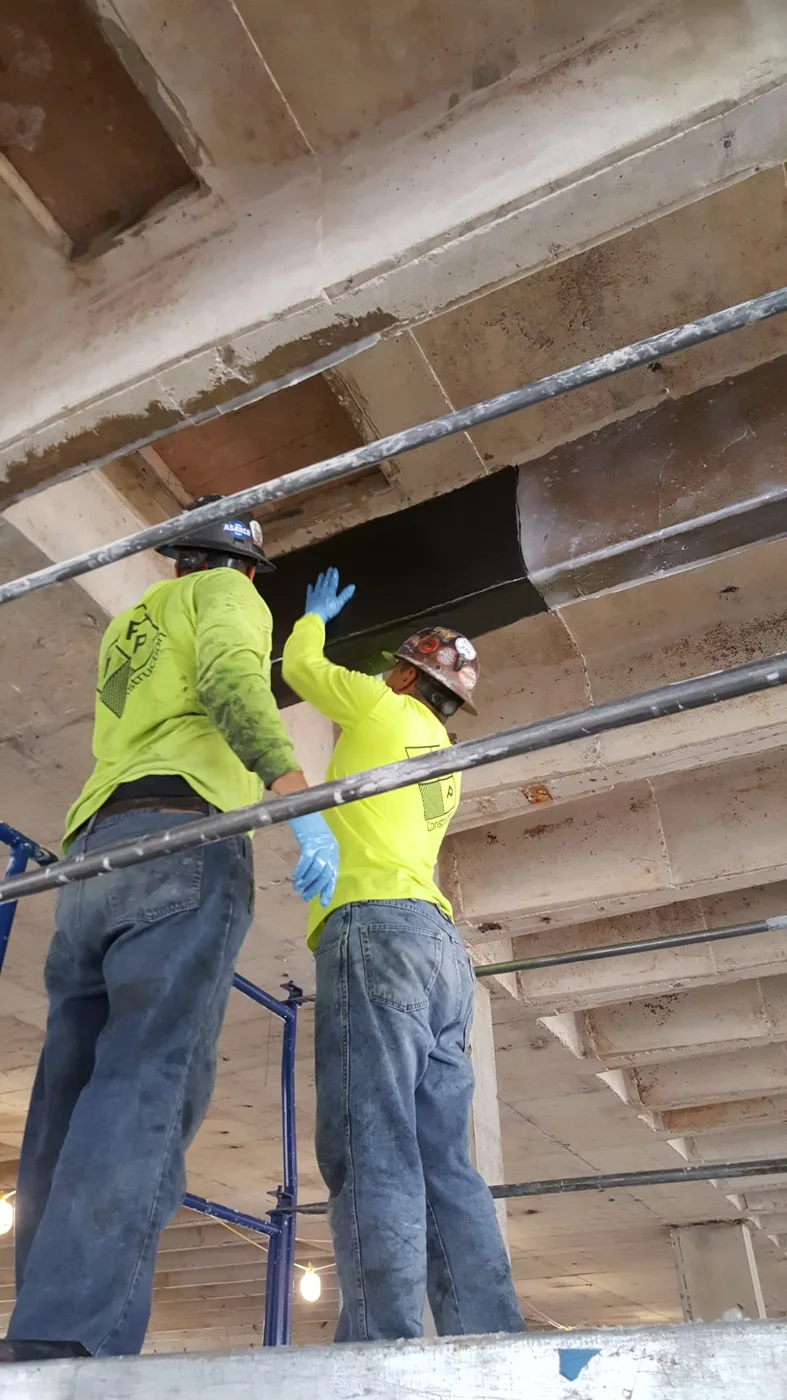
Wet & Dry Layup FRP
Carbon and glass fabric systems for beams, columns, slabs and walls.
Explore Wet & Dry Layup FRP

Not sure which system fits?
Tell us about the structure and conditions. Our team will recommend the right QuakeWrap® system.
WHY POLES AND TOWERS NEED WORK
Why Poles and Towers Need Strengthening
Timber, steel and concrete poles serve the electrical, telephone and wireless industries, and each fails in its own way.
-
Insects and age in timber
Termites, weather cycles and aging weaken wood poles, and many break and bring down lines in storms. Termites cost one utility up to 75% of the section on four structures.
-
Hidden corrosion in steel
Steel and light poles corrode at the base. Galvanized poles can corrode from the inside, so the damage is often invisible until the pole fails in a storm.
-
New equipment on towers
As carriers moved from 3G to 4G and 5G, towers took on more and heavier antennas, and current codes are more demanding than when they were designed.
-
Seismic upgrades
Cell service is in high demand right after an earthquake. Los Angeles introduced an ordinance requiring cell towers to be upgraded to survive a major earthquake.
TIMBER POLES
Strengthening Timber Utility Poles in Place
The repair was developed and tested with Tucson Electric Power. Carbon strips go on along the height of the pole to raise its flexural strength, the pole is wrapped with PileMedic® laminates or QuakeWrap® fabric, and a low viscosity resin is injected to fill the voids, cracks and crevices inside the pole. The repair can start a few feet below grade, so there is no trench to dig, and the pole stays in service.
In the TEP field test, a Class III 45 ft wood distribution pole broke about 5 ft above ground at 1,070 lb. A pole repaired from 2 ft 9 in. below ground to 25 ft 9 in. above broke at 2,400 lb, 2¼ times the original failure load, exactly where the repair stopped.
The finished pole can be painted brown to look like a new one. The impervious FRP shell keeps moisture and insects out and extends the service life of the pole by decades.
- Strength increased in all directions
- Thin laminates fit between adjacent poles
- Lines can stay energized
- failure load before and after repair (TEP test)
- 1,070 to 2,400 lb

WATCH THE REPAIR
Strengthening a Timber Utility Pole for Tucson Electric Power
A deteriorated timber pole in Tucson, Arizona strengthened to the strength of a new steel pole with PileMedic® carbon laminate strips, QuakeBond™ resin and biaxial glass fabric. The repair took 3 days with no disruption of service, and the pole was painted brown to match its original color.
Plays from YouTube
STEEL AND LIGHT POLES
Repairing Corroded Steel Poles at the Base
Damage to steel utility and light poles is usually concentrated at the base, so in most cases only the few feet near the foundation, and sometimes the foundation itself, need strengthening. New steel bars can be drilled and epoxy-anchored into the foundation.
PileMedic® laminates form a strong stay-in-place form around the pole that is filled with concrete. The shell is equivalent to No. 4 ties at less than 4 in. spacing along the pole, so no steel ties are needed around the vertical bars.
New concrete bonds poorly to a steel pole, so load transfer needs attention. Shear studs can be welded on, or where hot work is not allowed, patented ShearWrap™ and ShearClamp™ units are torqued around the pole to transfer load through friction.
- Only the damaged base is repaired
- No welding needed with ShearWrap™
- Shell replaces steel ties

CELL TOWERS
Strengthening a Prestressed Concrete Cell Tower in Los Angeles
A 55 ft hollow, spun-cast prestressed concrete pole built in 1996, 15.75 in. in diameter with a 2¼ in. wall, needed new antennas. Under the new demand the lower 22 ft was overstressed, and the base needed nearly 136% more strength. Guy wires, a new steel tower around the pole or replacement would all have meant more land, permits, cost or downtime.
Three layers of carbon fabric went on the lower 16 ft and two layers from 16 to 26 ft, wrapped with 2 ft bands of glass fabric for confinement without interfering with the antenna signals. To relieve compression, a two-ply glass laminate shell was formed around the pole and filled with grout, thickening the wall 1½ in. up to 22 ft. Twelve No. 8 bars were epoxy-anchored into the foundation to carry moment into the footing.
The work took about four days from a manlift and scaffolding, and the pole stayed fully operational. Fifty-two monopoles were retrofitted this way in 2015 and 2016, part of some 200 cell towers retrofitted in the U.S.
- Tower stays on air during the work
- Adds only 2 to 3 in. to the diameter
- Keeps the original taper
- Footprint confined to the base

ADVANTAGES
Advantages of PileMedic® for Poles and Towers
-
One size fits all
The same laminate fits circular, rectangular and H-section poles, so there is no jacket to size and order ahead.
-
Ready for emergencies
Laminate is available from stock to shore up many poles quickly after a hurricane or earthquake.
-
Seamless shell
A one-piece shell is strong enough for high-pressure resin injection deep into damaged wood.
-
No metal parts
No bands, straps or bolts to corrode, which matters in coastal and other corrosive sites.
-
No trenching
The jacket reaches below grade to the hidden damage without digging a trench.
-
All materials
Timber, concrete and steel poles, with axial and flexural capacity increased.
Poles or towers overloaded?
Tell us about the structures, their material and the new loads. Our team will recommend the right QuakeWrap® system and provide specifications for your engineer of record.
PROVEN RESULTS
Utility Poles & Towers Projects
-
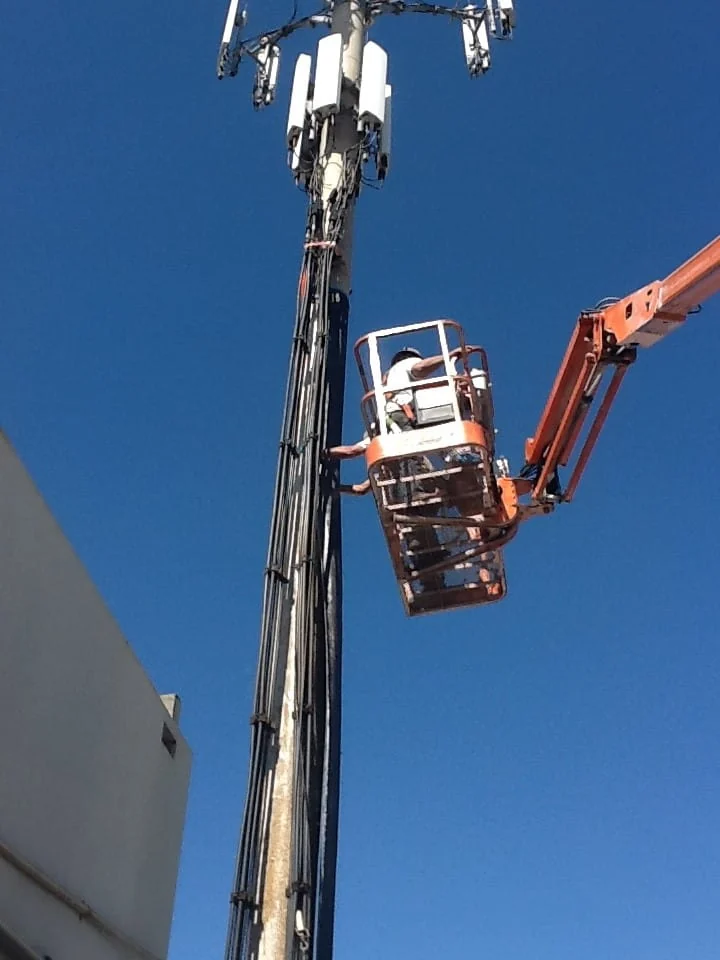
Cell Tower Strengthening
About 200 cell towers retrofitted with PileMedic® laminates. Structure magazine covered a Los Angeles prestressed concrete pole strengthened in about four days.
Read the article -
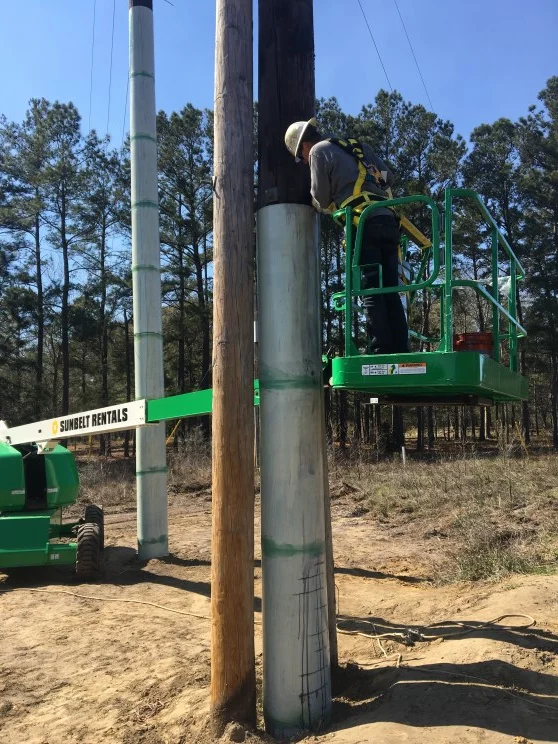
Santee Cooper, Wando, South Carolina
Termite-damaged poles on a 230 kV line feeding a chemical plant were wrapped in PileMedic® PLG60.60 jackets and filled with QuakeBond™ 320LV resin while energized. The owner added 3 more poles mid-job, and the work was done in 3 weeks.
Read the case study -
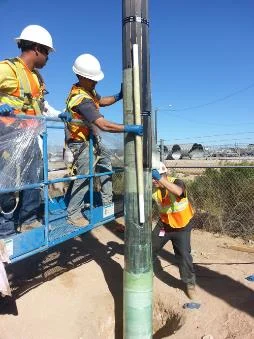
Tucson Electric Power Timber Pole Test
A repaired Class III 45 ft wood pole carried 2,400 lb, 2¼ times the 1,070 lb that broke the original pole.
Test report (PDF) -
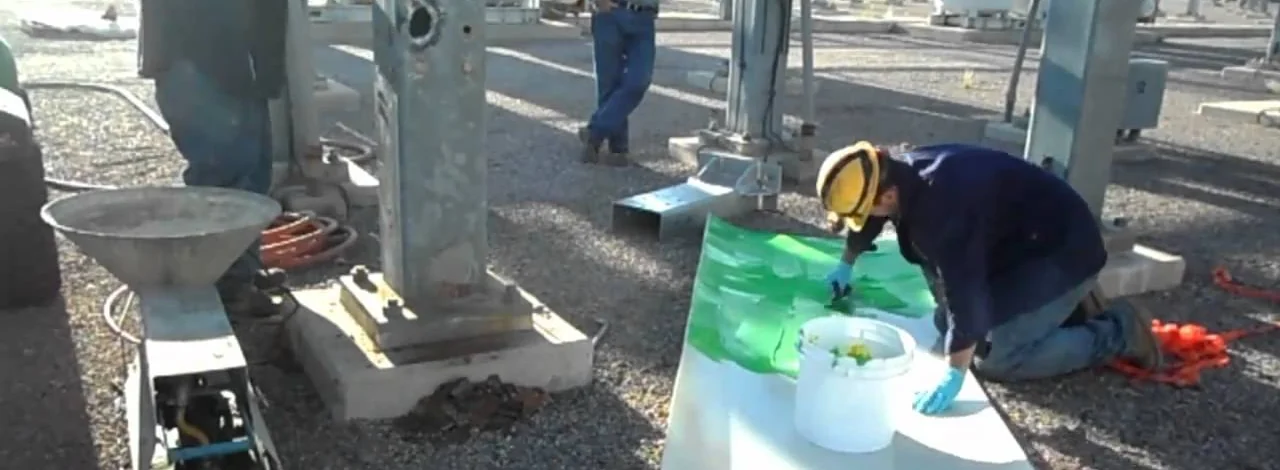
Tucson Electric Power Substations
Grout-filled PileMedic® glass laminate jackets restored rusted galvanized steel equipment columns while the substations stayed energized.
Read the case study


Utility Poles & Towers FAQs
Can you provide specifications and design details for our engineer?
Yes. Our team will recommend the right QuakeWrap® system and provide product data sheets, specifications and sample design details for your engineer of record.
Can poles be repaired while the lines are energized?
Yes. At Santee Cooper in South Carolina, termite-damaged poles on a 230 kV line were repaired with the lines energized and limited disruption to the poles.
How much stronger is a repaired pole?
In the Tucson Electric Power test, the repaired timber pole carried 2¼ times the load that broke the original. Cell towers can be strengthened to 2 to 3 times their original capacity.
Does the repair change how the pole or tower looks?
Very little. Timber poles can be painted brown, and a tower repair adds only 2 to 3 in. to the diameter and keeps the original taper.
Can damage below grade be repaired?
Yes. The repair can begin a few feet below grade, and the PileMedic® jacket reaches the hidden damage without a trench.
Do towers have to go off the air?
No. Towers remain fully operational during the repair, which is confined to the base of the tower.
Related FRP Repair Applications
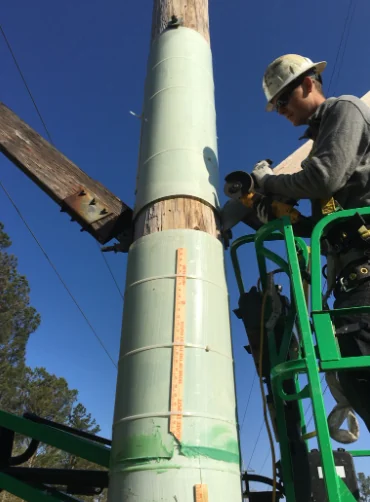
Have a Project That Needs Repair?
Tell us about your structure. Our team will recommend the right QuakeWrap® system and provide specifications for your engineer.