
CASE STUDY
Tucson Electric Power Substation Column Repair
Galvanized hollow steel columns that support equipment in Tucson Electric Power substations were rusting through at the base. Grout-filled PileMedic® glass laminate jackets restored them while the substations stayed energized.

Project Details
- OWNER
- Tucson Electric Power Company (TEP)
- LOCATION
- TEP substations, Tucson, Arizona
- STRUCTURE
- Galvanized 10 x 10 in. hollow steel tube (HSS) columns supporting substation equipment and transmission lines
- DAMAGE
- Corrosion from the inside near the base, from trapped rainwater and likely poor galvanizing inside the tubes
- QUAKEWRAP® SYSTEM
- PileMedic® glass FRP laminate, 0.026 in. thick, wrapped into a two-ply shell and filled with non-shrink grout
- SCOPE
- Corroded columns at two TEP substations [Confirm with QuakeWrap: final column count. The project flyer says over 70 columns, pilemedic.com says 31 and the 2015 ASCE paper says nearly sixty structures]
- SERVICE DURING REPAIR
- No outage, shutdown or switch-over
- PUBLISHED
- STRUCTURE magazine, January 2012, and 2015 ASCE Electrical Transmission and Substation Structures Conference, both co-written with TEP engineers
PROJECT VIDEO
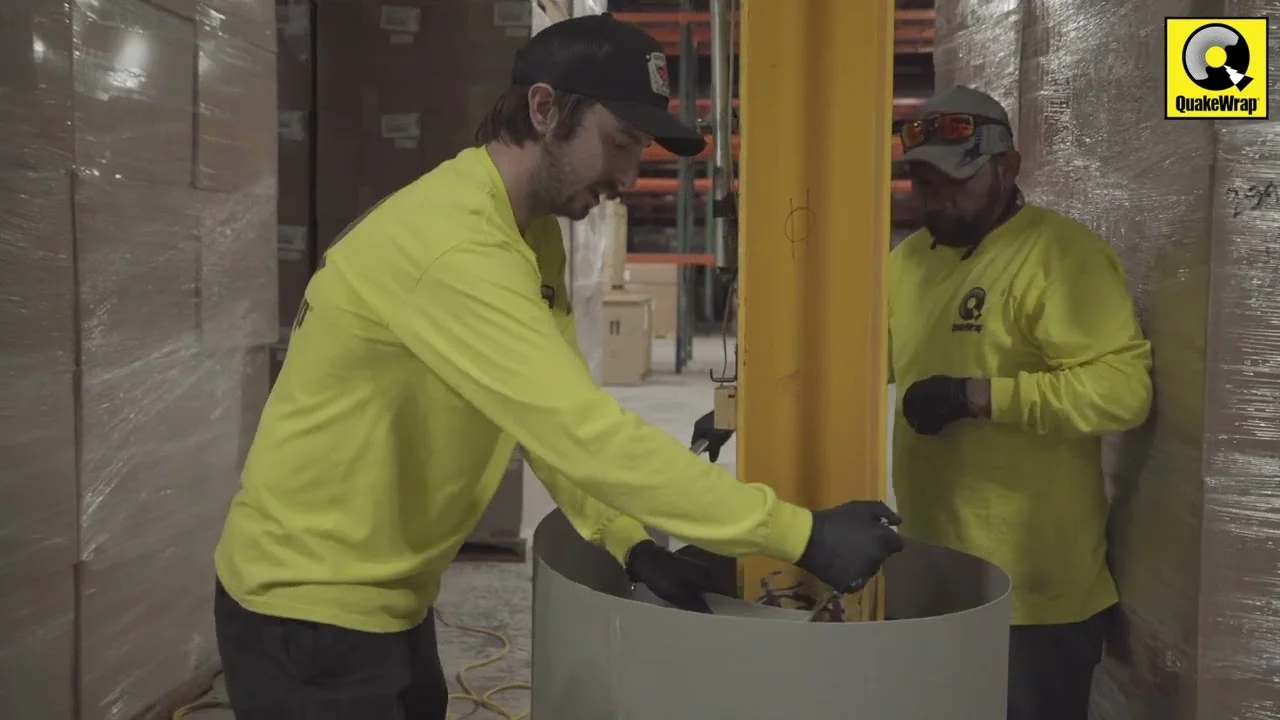
Repair of Corrosion-Damaged Columns Using PileMedic®
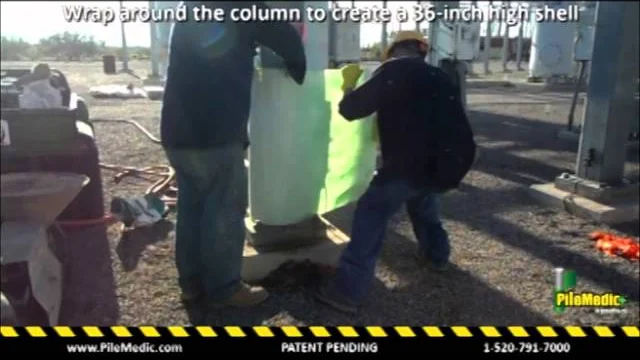
Plays from YouTube
01 · THE CHALLENGE
Columns Rusting From the Inside Out
During an inspection at one of TEP's substations, extensive corrosion was found on many support columns. Ultrasonic thickness readings showed the wall loss getting worse toward the base, where stresses are highest, and much of the damage was on the inside of the tubes with little or no sign outside.
The likely causes: the acid bath was not fully drained from the tubes during galvanizing, leaving the inside near the base poorly coated, and grout placed between the base plate and the foundation trapped rainwater inside.
Earlier repairs bolted custom steel collars around the lower 3 ft. They were heavy and hard to install, and they hid the damage while corrosion kept going inside. Replacing the columns, or repairing them the traditional way, meant a temporary shutdown of the substation and disruption to the local grid.

02 · THE SOLUTION
A Grout-Filled Laminate Jacket, Installed Live
TEP chose a PileMedic® laminate jacket because it could be installed with the structures in service. Glass laminate was used for its dielectric properties: 0.026 in. thick with a tensile strength of 62,000 psi. A 3 ft x 8.5 ft piece per column makes a two-ply, 15 in. diameter shell with 8 in. of overlap.
- Remove loose rust from inside the column
- Cut a 3 in. access port about 33 in. above the base and pump non-shrink, high-strength grout into the column
- Weld four No. 5 U-shaped bars to the base plate for added flexural capacity
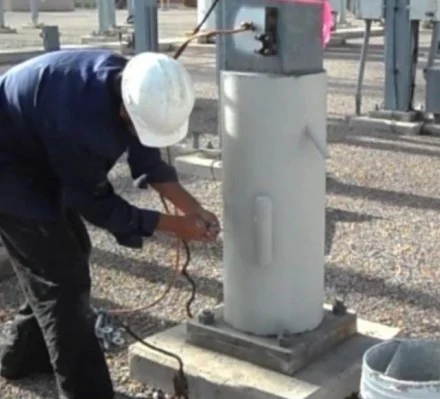
- Trowel a 20 to 30 mil epoxy paste onto the laminate, wrap it into a two-ply shell and hold it with ratchet straps
- Add a 1 in. PVC drain so rainwater cannot collect inside, and seal the jacket's bottom edge on the base plate
- Fill the annular space with the same grout and consolidate it with a small vibrator
- Remove the straps after several hours and paint the jacket with a UV-protecting coating

03 · THE RESULT
Restored in Place With No Outage
All repairs were done while the substations stayed fully operational, with safety personnel overseeing the work and no electrical shutdowns or switch-overs. QuakeWrap's project flyer reports that more than 70 columns were rehabilitated in 5 working days.
The 2015 paper co-written with TEP's engineer reports that the repaired structures now exceed their design strength, the drains keep water from collecting inside the columns, and corrosion has been eliminated on the repaired structures.
The goal was to restore original capacity, so the foundations needed no strengthening. Going beyond the original capacity would also mean checking the base plate and foundation.
- during the repairs
- No outage
- strength after repair (2015 paper)
- Above design
Products & Applications Used
-
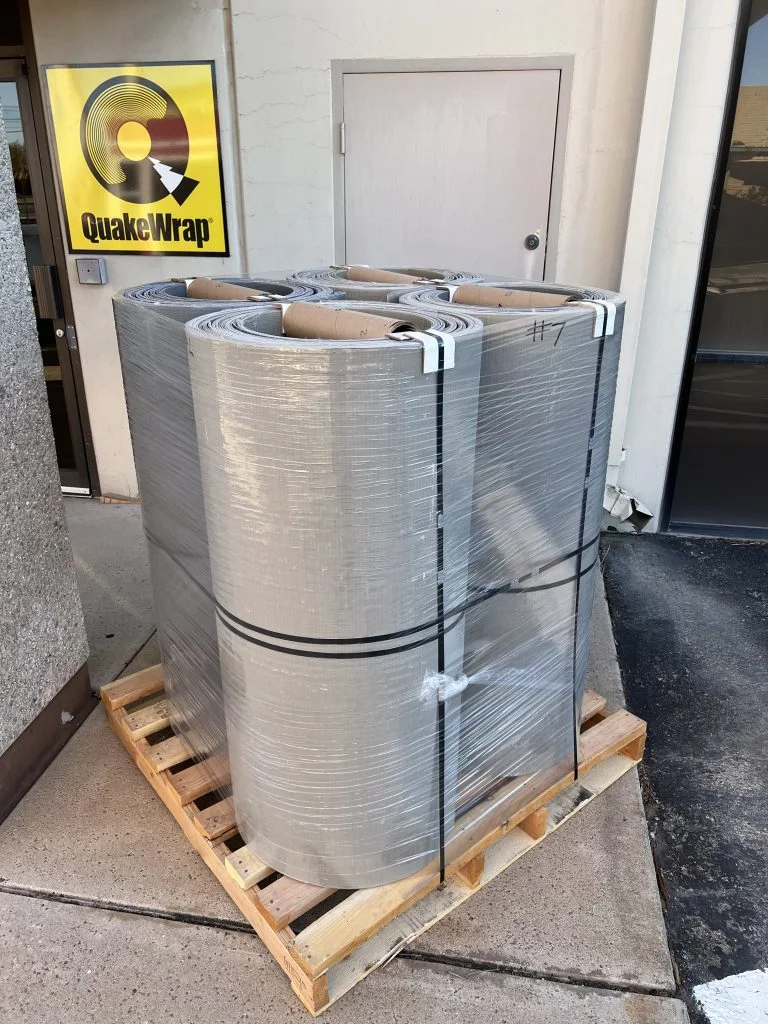
PileMedic®
Laminate jackets for piles and columns, filled with grout or resin.
Explore PileMedic® -
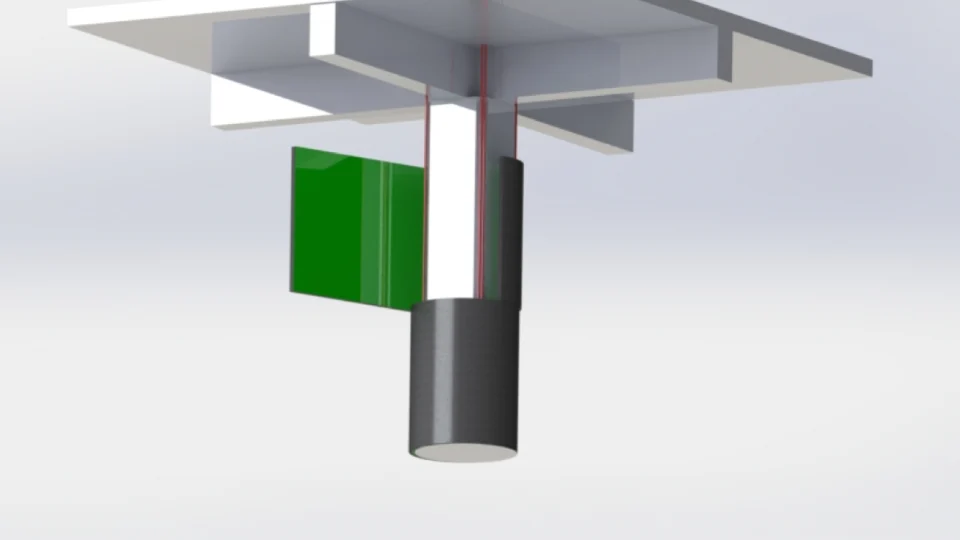
Columns
Strengthen concrete and steel columns for added load, low strength or corrosion.
Explore Columns -
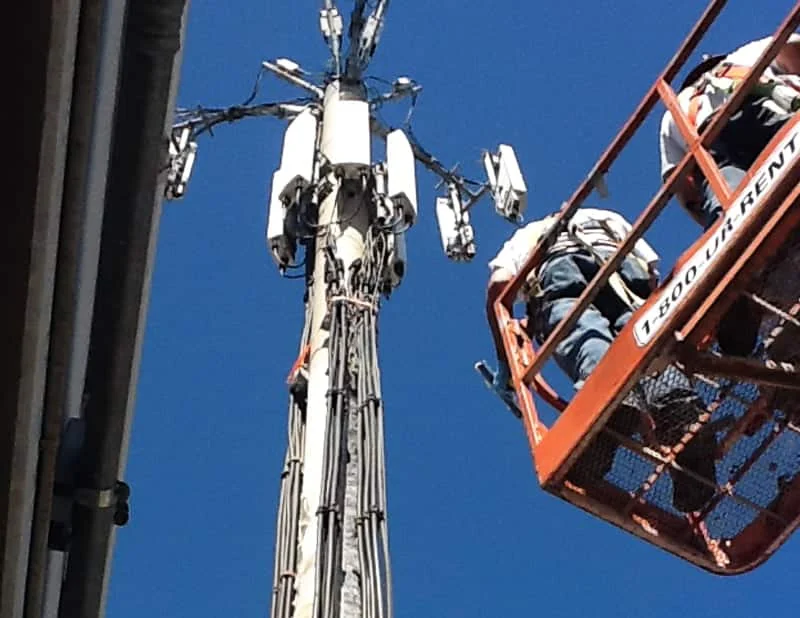
Utility Poles & Towers
Strengthen poles, towers and substation structures in place, often with no outage.
Explore Utility Poles & Towers


MORE PROJECTS
Related Projects
-
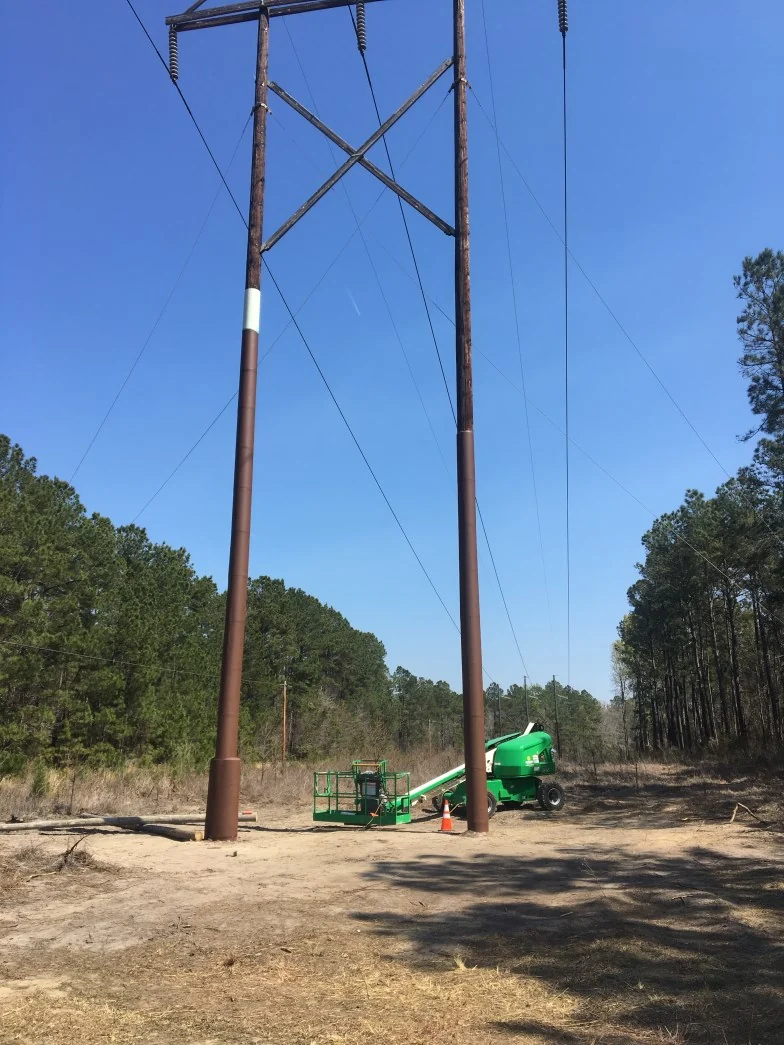
Santee Cooper Utility Poles
Termite-damaged poles strengthened with PileMedic® jackets while they stayed energized.
View case study -
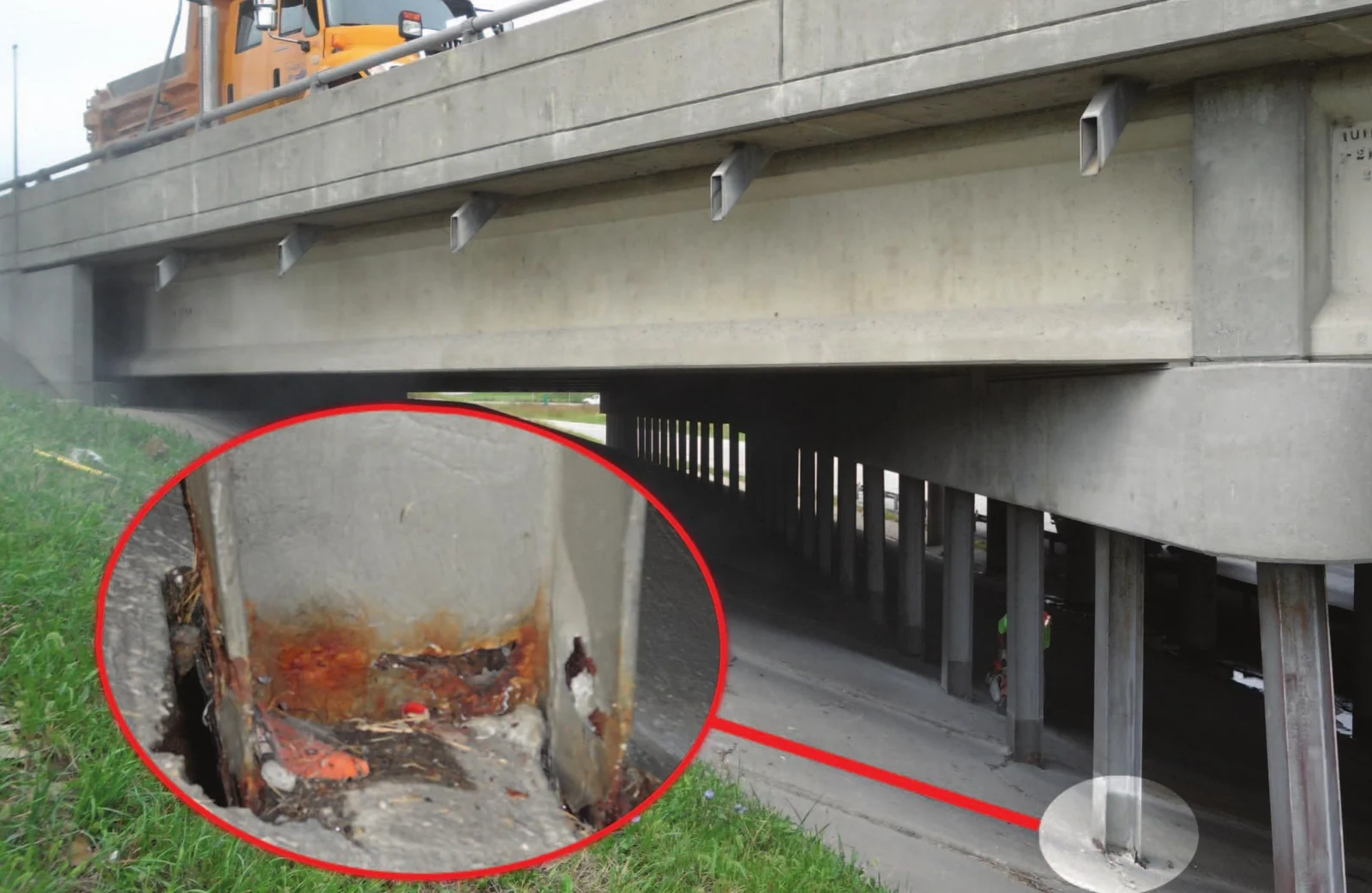
Missouri DOT I-70/I-270 Bridges
49 corroded steel H-piles under four interstate bridges restored with PileMedic® shells and grout in two weeks.
View case study -
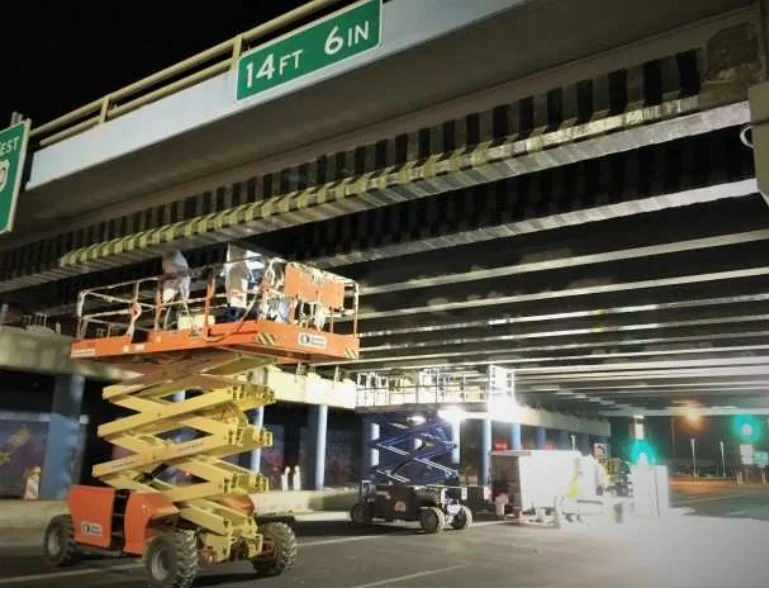
Arizona DOT I-17 Bridges, Phoenix
12 truck-damaged prestressed girders strengthened with carbon FRP, working nights only.
View case study


More Resources for Engineers
- FOR ENGINEERS Specifications & Design Details
- PROJECT FLYER Restoration of Corrosion-Damaged Columns Using PileMedic Step-by-step photos of the TEP repair (PDF)
- Repair of Corrosion-Damaged Substation Structures Ehsani and McGhee (TEP), ASCE 2015 (PDF)
- Substation Structure Repair How the repair works, step by step
Have Corroded Steel Columns or Utility Structures?
Tell us about the structures, the damage and whether they must stay in service. Our team will recommend the right QuakeWrap® system and provide specifications for your engineer.