
PILEMEDIC® SYSTEM
PileMedic® Pile Jackets: Seamless FRP Jackets Built on the Pile
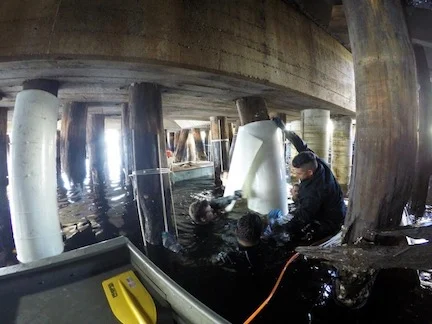
A PileMedic® pile jacket is cut from a roll of FRP laminate, wrapped twice around the pile and bonded to itself. It has no vertical seam, no bolts and no holes, and it confines the pile as well as protecting it. The space inside is filled with grout or epoxy.
- One roll fits any pile shape or size
- No vertical seams, bolts or holes
- Laminate replaces lateral ties

WHAT A PILE JACKET DOES
A Pile Jacket That Adds Strength, Not Just Cover
Piles under piers, wharves, bridges and docks lose section to corrosion, rot and marine borers, most often in the tidal and splash zone. A pile jacket encases the damaged length in a shell. The space between shell and pile is filled with grout or epoxy, which seals the pile off from water and oxygen.
Most jackets arrive as two half shells made for one pile size, then bolted or glued along one or two vertical seams. Those seams are planes of weakness and an entry point for water and oxygen. Because the fibers stop at the seam, the jacket cannot confine the pile, and the grout inside cannot be pressurized.
The patented PileMedic® jacket is assembled around the pile on site from a high-strength thin flat roll of laminate. It wraps twice around the pile with an 8 in. overlap, bonded with epoxy paste, to form a seamless shell with continuous fibers all the way around. That shell confines the core: QuakeWrap's test data shows a typical 4,000 psi concrete pile rising to over 6,000 psi once wrapped.
- Timber, concrete and steel piles, including square, octagonal and H-piles
- Above water, in the splash zone and underwater
- Existing structures, repaired while they stay in service
- No cofferdam required
- No welding on site
SIDE BY SIDE
PileMedic® vs. a Traditional Structural Jacket Repair
Based on QuakeWrap's side-by-side detail for a timber pile repair, plus the published drawbacks of seamed jackets.
| Traditional jacket repair | PileMedic® jacket | |
|---|---|---|
| Jacket | Half shells custom-made to each pile size | Cut on site from one roll, any shape or size |
| Vertical seams | One or two, bolted or epoxied | None |
| Holes in the jacket | Bolt holes along the seam | None |
| Annular space | Up to 6 in. | About 2 in., set by spacers |
| Lateral reinforcement | Welded wire or horizontal ties | None needed: the laminate acts as the ties |
| Rebar | Vertical bars plus horizontal ties | Vertical bars only, if the design calls for them |
| Through studs and shear bolt (timber detail) | Required | Not required |
| Confinement | No confining pressure | 360° confining pressure |
| Pressurized grout | Not possible with a seam | Possible |
| Heavy equipment | Required | Not required |
Not sure which jacket fits your piles?
Send the pile type, size, condition and water depth. Our team will recommend the right PileMedic® system and provide specifications for your engineer.
PILE JACKET CONSTRUCTION
How a PileMedic® Pile Jacket Is Built
A typical sequence from the PileMedic® installation guide. Your engineer's design and the project specifications govern.
-
Clean the pile
Water blast or scrape the pile. Where the repair reaches the seabed, jet the soil away so the jacket can be embedded 6 to 12 in.
-
Set spacers and rebar
Band spacer assemblies around the pile every 2 to 3 ft. Snap GFRP or steel bars into the spacers if the design calls for them.
-
Cut and coat
Cut the 4 ft wide laminate to two wraps plus 8 in. Spread epoxy paste about 0.030 in. thick on the overlapping half.
-
Wrap and stack
Wrap the sheet around the spacers, tighten it onto itself and strap it while the epoxy cures. Each new jacket overlaps the last by 4 in.
-
Seal and fill
Seal the bottom, place a 6 to 12 in. grout plug and let it set, then fill the rest by tremie or through grout ports.
FIELD REFERENCE
Jacket Cut Length by Pile Size
From the PileMedic® installer's cheat sheets, for a standard two-ply jacket with an 8 in. overlap. For other sizes, in inches: circular piles (diameter + 3) × 2π + 8; square piles (width × 1.41 + 1) × 2π + 8.
| Pile size (in.) | Circular pile: cut length (in.) | Square pile: cut length (in.) |
|---|---|---|
| 8 | 77 | 85 |
| 10 | 90 | 103 |
| 12 | 102 | 121 |
| 14 | 115 | 138 |
| 16 | 127 | 156 |
| 18 | 140 | 174 |
| 20 | 152 | 191 |
| 22 | 165 | 209 |
| 24 | 178 | 227 |
LAMINATE GRADES
PileMedic® Laminate Grades
Carbon and glass laminates, tested before they ship. Values are from the current product data sheets (ASTM D3039). PLG9.7 and PLG14.13 carry a factory gel coat for UV resistance.
| Grade | Fiber | Ply thickness | Tensile strength, 0° / 90° | Two plies equal (No. 4 Gr. 40) | Standard roll |
|---|---|---|---|---|---|
| PLG9.7 | Biaxial glass, gel coat | 0.039 in. (0.99 mm) | 22 / 17.7 ksi | Ties at 3.5 in., vertical bars at 4.5 in. [Confirm with QuakeWrap: the November 2024 PLG9.7 sheet repeats the PLG14.13 values; the May 2024 PLG9.7 sheet gave ties at 4.2 in. and bars at 5.4 in. for the earlier laminate] | 48 in. x 393.7 ft |
| PLG14.13 | Biaxial glass, gel coat | 0.054 in. (1.36 mm) | 22 / 16.7 ksi | Ties at 3.5 in., vertical bars at 4.5 in. | 48 in. x 393.7 ft |
| PLG60.60 | Bidirectional glass | 0.026 in. (0.66 mm) | 62 / 60 ksi | Stirrups at 2.5 in., vertical bars at 2.5 in. | 50 in. x 150 ft |
| PLC100.60 | Bidirectional carbon | 0.026 in. (0.66 mm) | 101 / 64.2 ksi | Stirrups at 1.75 in., vertical bars at 2.5 in. | 50 in. x up to 240 ft |
CONFINEMENT
Nominal Confining Pressure, PileMedic® PLG14.13
Confining pressure from a cylindrical PLG14.13 jacket, per the data sheet. More plies or a smaller diameter give more confinement, which raises the axial capacity of the pile.
| Jacket diameter | Two plies | Three plies | Four plies |
|---|---|---|---|
| 12 in. (305 mm) | 393 (2.7) | 590 (4.0) | 786 (5.4) |
| 18 in. (455 mm) | 262 (1.8) | 393 (2.7) | 524 (3.6) |
| 24 in. (610 mm) | 196 (1.3) | 295 (2.0) | 393 (2.7) |
| 30 in. (760 mm) | 157 (1.0) | 236 (1.6) | 314 (2.1) |
| 36 in. (915 mm) | 131 (0.9) | 196 (1.3) | 262 (1.8) |
Why Engineers Specify PileMedic® Jackets
-
No weak seams
Fibers run continuously around the pile, so the full jacket goes into confinement.
-
No holes in the jacket
No bolt lines for water and oxygen to get in.
-
Replaces lateral ties
Two plies of PLG14.13 equal No. 4 Gr. 40 ties at 3.5 in. on center.
-
Smaller annular space
Spacers hold about 2 in., cutting grout volume and dead load.
-
One size fits all
No waiting on shells made to each pile size.
-
UV-resistant gel coat
PLG9.7 and PLG14.13 pass 500 hours of carbon arc weathering (ASTM G152).
-
Fewer divers
Jackets are wrapped at the waterline and slid down the pile.
-
Tight spaces
Thin laminates fit piles with limited clearance, with no heavy equipment.
TESTED BY AGENCIES
Test Results Behind the Jacket
- U.S. ARMY CORPS OF ENGINEERS
- Selected PileMedic® after market research and testing of commercial pile jackets (PIER program)
- TEXAS DOT, UNIV. OF HOUSTON
- 14 corroded steel H-piles: capacity restored to the uncorroded value in all but one, which was built without its designed anchors
- NEBRASKA DOR, FLORIDA INTL. UNIV.
- 5 damaged timber piles: failure loads 5.3 to 9.9 times design capacity
- CALTRANS AND USDOT
- Rapid repair of an earthquake-damaged 24 x 36 in. bridge column
WATCH IT INSTALLED
Rapid Pile Repair Using PileMedic®
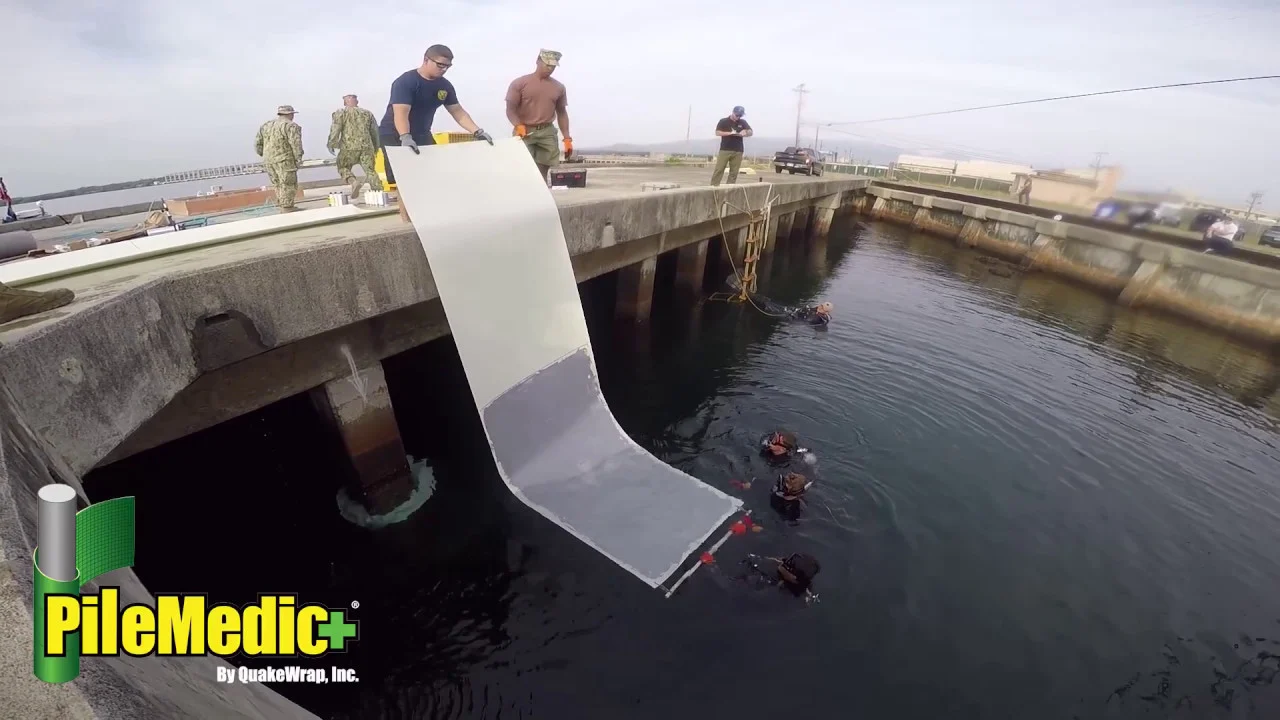
Plays from YouTube
PROVEN RESULTS
Pile Jacket Projects
-
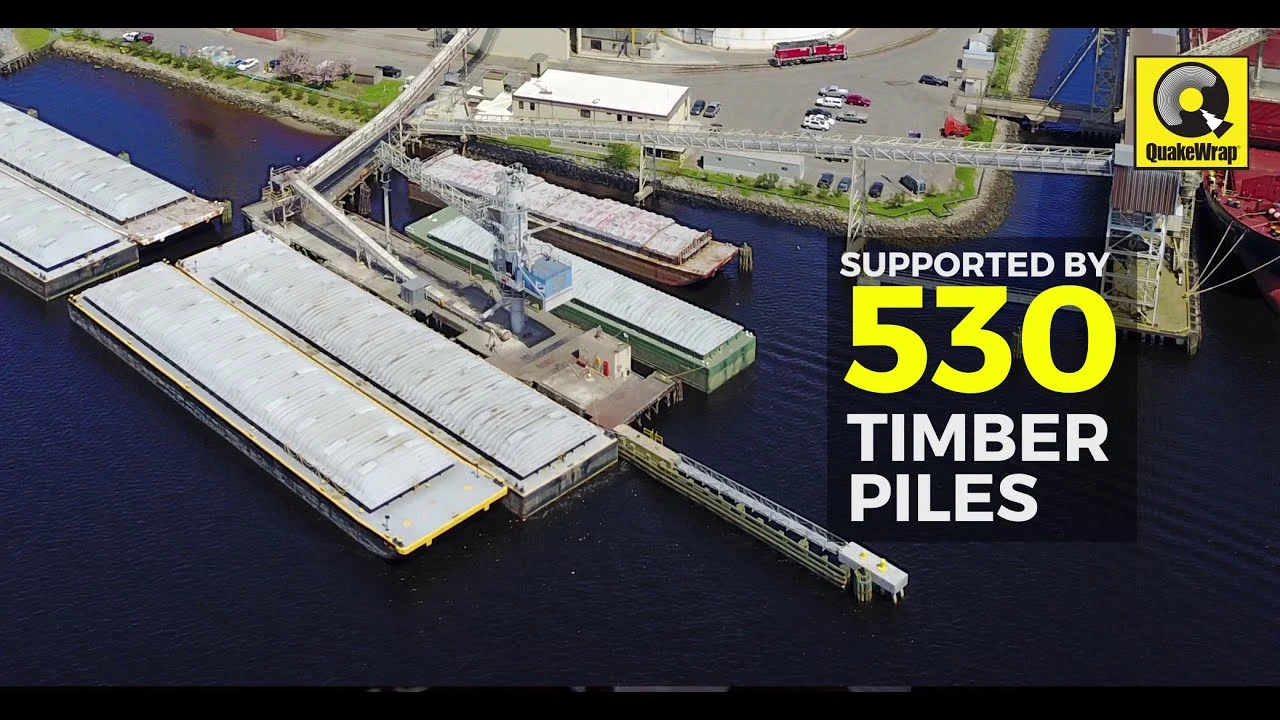
500+ Timber Piles, Dock Stayed Open
PileMedic® jackets, spacers and six #4 GFRP bars, with grout in a 1.5 in. annulus.
View the project -
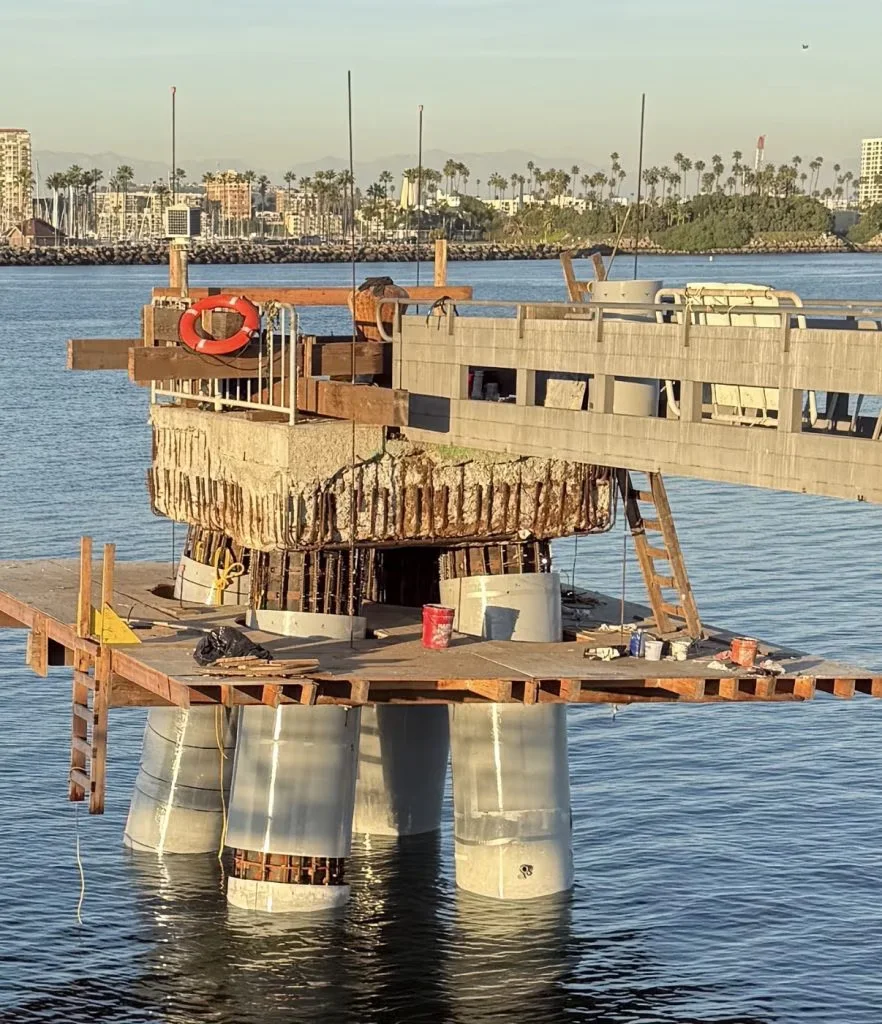
Port of Long Beach, California
PileMedic® jackets on steel pipe piles, SPiRe®+ panels on the pile caps.
View the project -
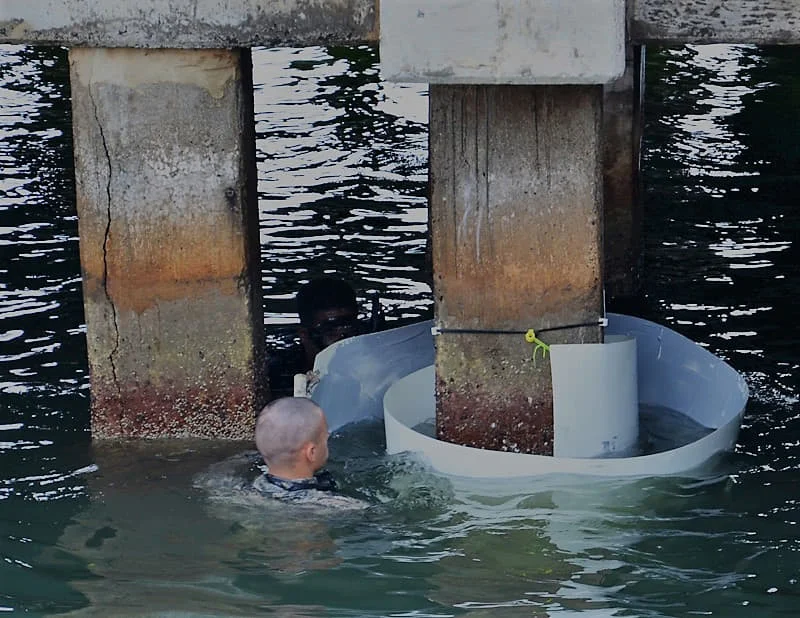
Joint Base Pearl Harbor, Hawaii
After a 3-year Army Corps study, U.S. Navy divers repaired piles with PileMedic®.
Watch the video -
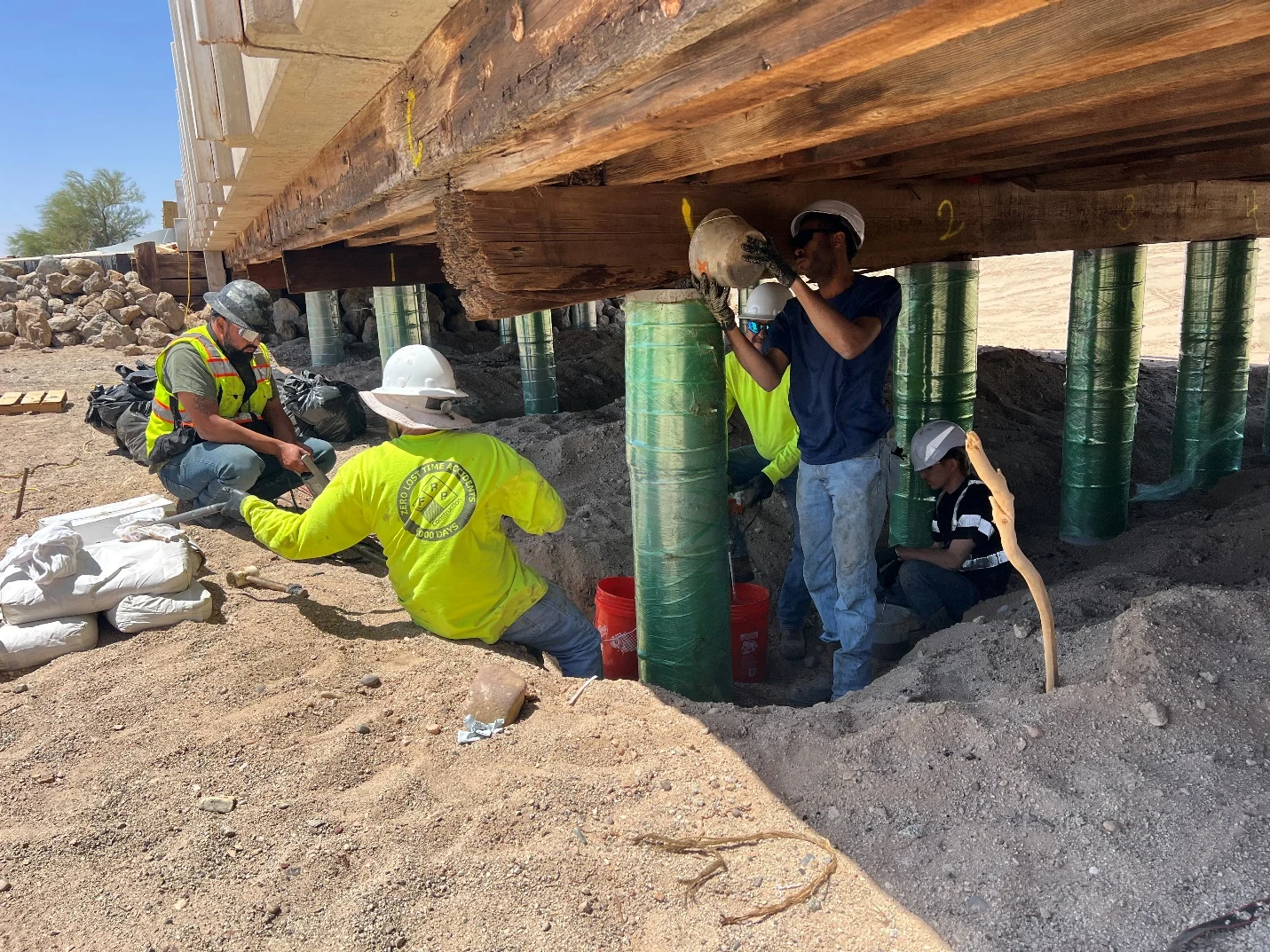
Araz Road Timber Bridge
20 timber bridge piles jacketed with glass FRP and epoxy grout, and 4 cap beams wrapped with glass fabric.
Read the case study -
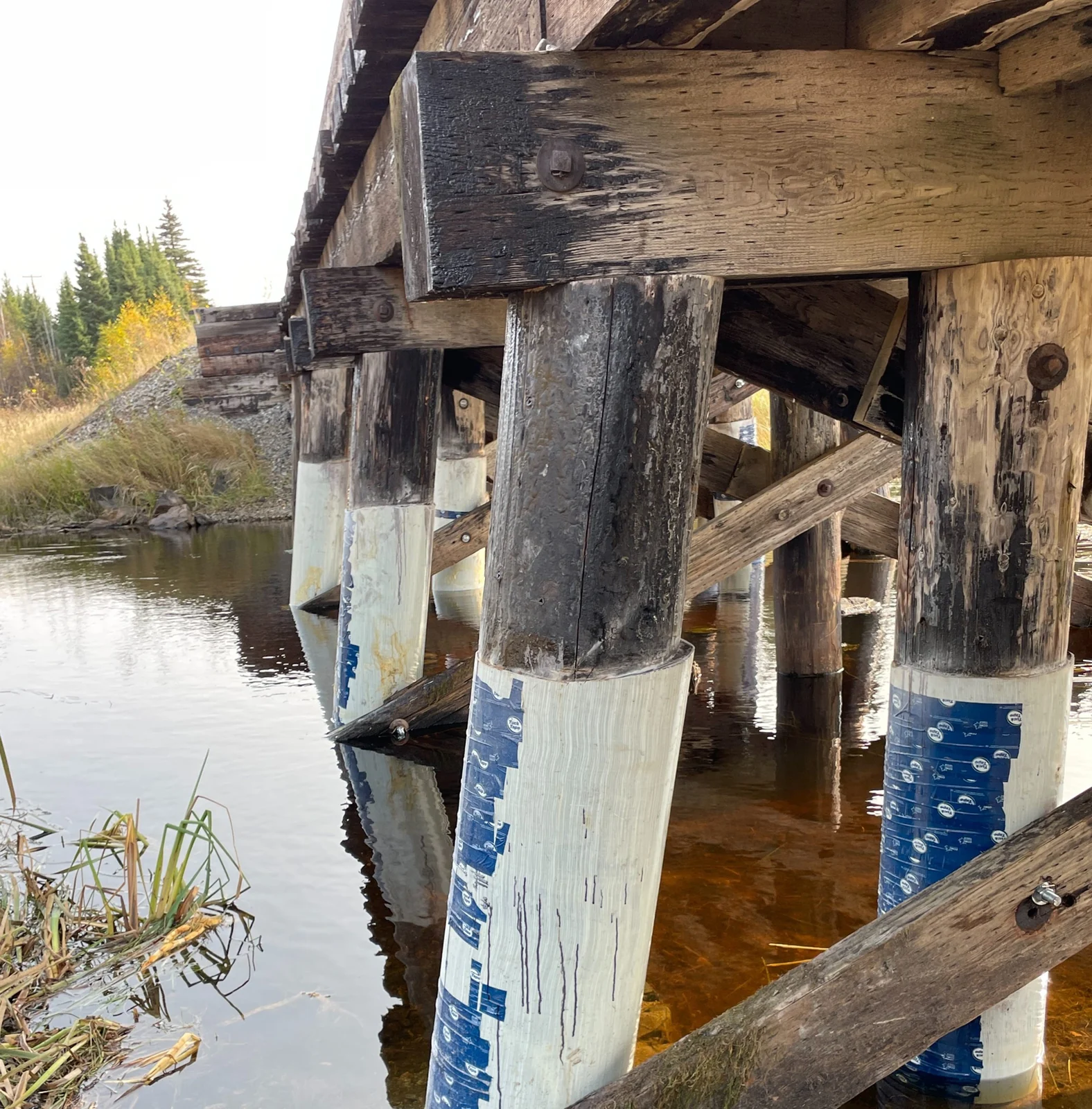
Canadian Rail Timber Bridges
About 300 decayed timber piles on remote rail bridges restored with PileMedic® shells and low-viscosity resin.
Read the case study -
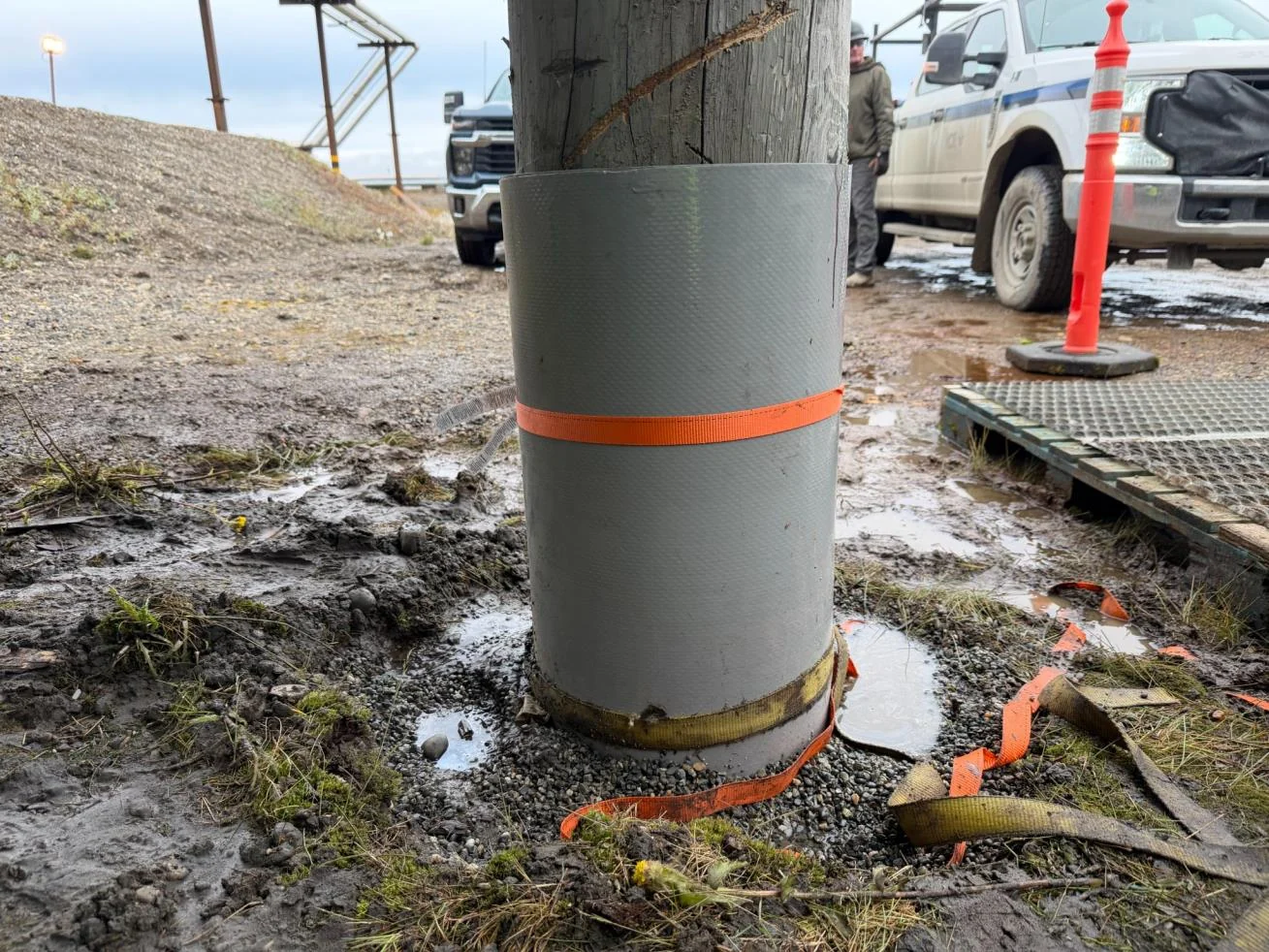
Prudhoe Bay Installer Training
Two days of on-site PileMedic® installation training for a timber pile repair crew, with a cold-weather cure test.
Read the case study


90+ projects in 15+ countries on 6 continents
Tell us about your piles. Our team will recommend the right PileMedic® jacket and provide specifications for your engineer.
Pile Jacket FAQs
What is a pile jacket?
A pile jacket is a shell placed around a damaged pile. The space between the shell and the pile is filled with grout or epoxy to protect the pile from water and oxygen. A structural jacket like PileMedic® also restores or adds capacity by confining the pile.
What piles can PileMedic® jackets repair?
Timber, concrete and steel piles and columns, on land or underwater. Laminates wrap round, square and octagonal piles, and corner bars protect the jacket on square piles and steel H-piles. Around corners, the bend radius should be at least 2 in. (50 mm).
What fills the jacket?
Common fills are PileMedic® UW Grout, a washout-resistant underwater grout, and QuakeBond™ 320LV epoxy, used alone or mixed with sand and pea gravel. The right fill depends on the design. See PileMedic® Accessories for data on each.
Can PileMedic® jackets be installed underwater?
Yes. The epoxy paste that bonds the laminate cures underwater, so jackets go on without cofferdams. Jackets are usually wrapped at the waterline and slid down the pile, which keeps diving to a minimum.
How long does a PileMedic® jacket last?
The laminates are non-corroding FRP, the seamless shell keeps out moisture and oxygen, and PLG9.7 and PLG14.13 carry a UV gel coat. [Confirm with QuakeWrap: a design service life it can publish; none is stated on the PLG data sheets, the user manual or quakewrap.com.]
Who designs the repair?
Your engineer of record. Our team will recommend the right PileMedic® system and provide specifications, sample design details and data sheets for your engineer. The data sheets require design calculations certified by a licensed professional engineer, and installation by specially trained and approved contractors.
PILEMEDIC® SYSTEM
More of the PileMedic® System
Have Piles That Need Jackets?
Tell us the pile type, size and site conditions. Our team will recommend the right PileMedic® system and provide specifications for your engineer.