FRP lining and strengthening for water, sewer, gas and industrial pipes from 4 in. to over 180 in. in diameter. Most repairs are trenchless, with minimal downtime.
Pipelines carry water, wastewater, oil, gas and industrial fluids, and many are aging. Most repair projects start with one of these problems.
1
Corrosion and wall loss
Corroded steel pipes lose wall thickness until they can no longer hold their design pressure.
2
Broken PCCP wires
In prestressed concrete cylinder pipe, corrosion of the prestressing wires cracks the concrete and can lead to collapse.
3
Leaks, cracks and joints
Cracks and failing joints leak, and pipes damaged during installation may need emergency repair.
4
Soil and traffic loads
Badly deteriorated pipes and culverts need a liner that carries soil and traffic loads on its own.
INTERNAL OR EXTERNAL
How to Choose Internal vs. External Pipe Repair
The right approach depends on the pipe material, the damage, the pressure and which side of the pipe you can reach. Most internal repairs are trenchless, with zero or minimal excavation.
When it fits
QuakeWrap® system
Internal wet layup lining
Man-entry pipes reached through manholes or small access ports; restores hoop and longitudinal strength and stops leaks
Tell us the pipe material, diameter, pressure and access. Our team will recommend the right QuakeWrap® system and provide specifications for your engineer.
How Wet Layup FRP Strengthens a Pipe From the Inside
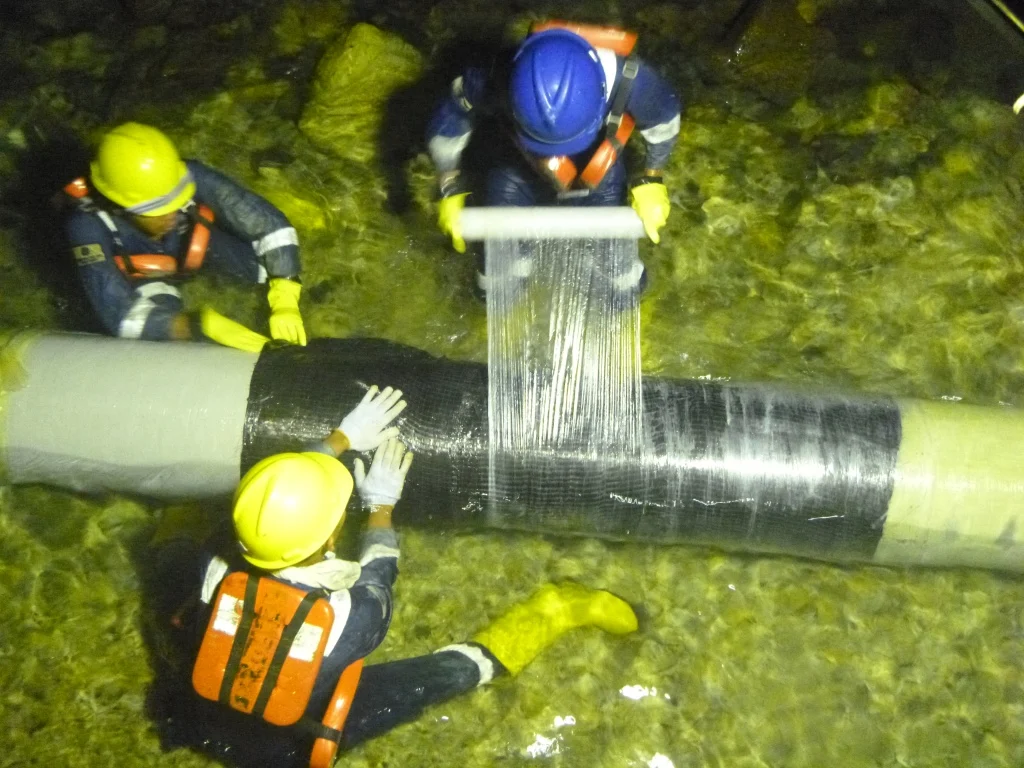
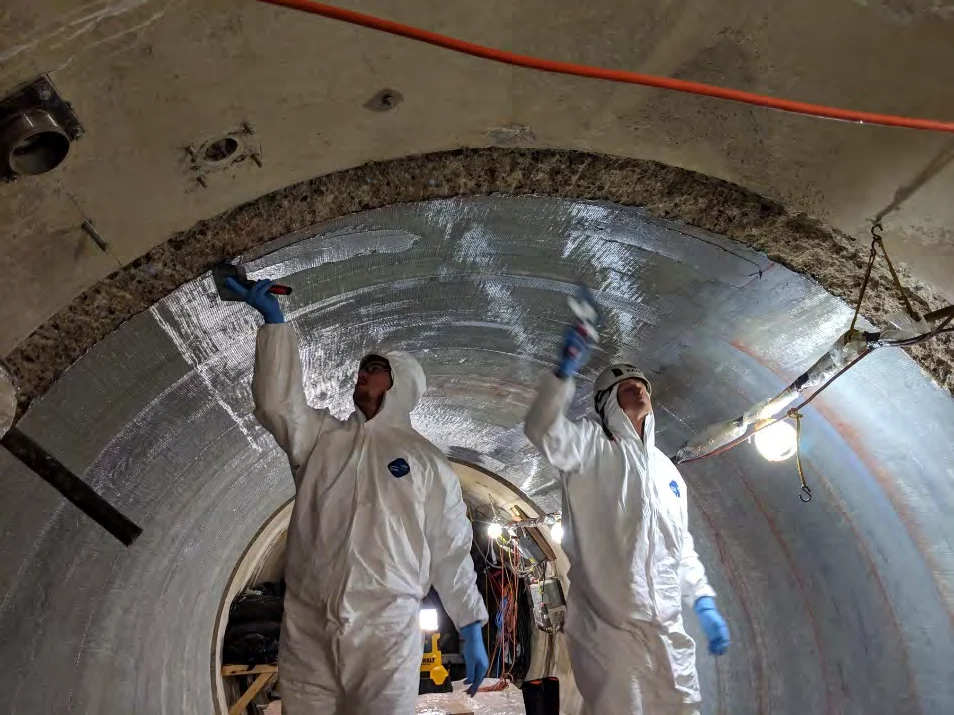
Bands of carbon fabric, typically 2 to 4 ft (600 to 1,200 mm) wide, are saturated with epoxy and applied in the hoop direction, with the ends overlapped into a continuous loop. The bands also overlap along the length of the pipe like roof shingles, so flow passes from one band to the next. A final epoxy top coat, chosen for abrasion and the chemistry of the fluid, protects the lining.
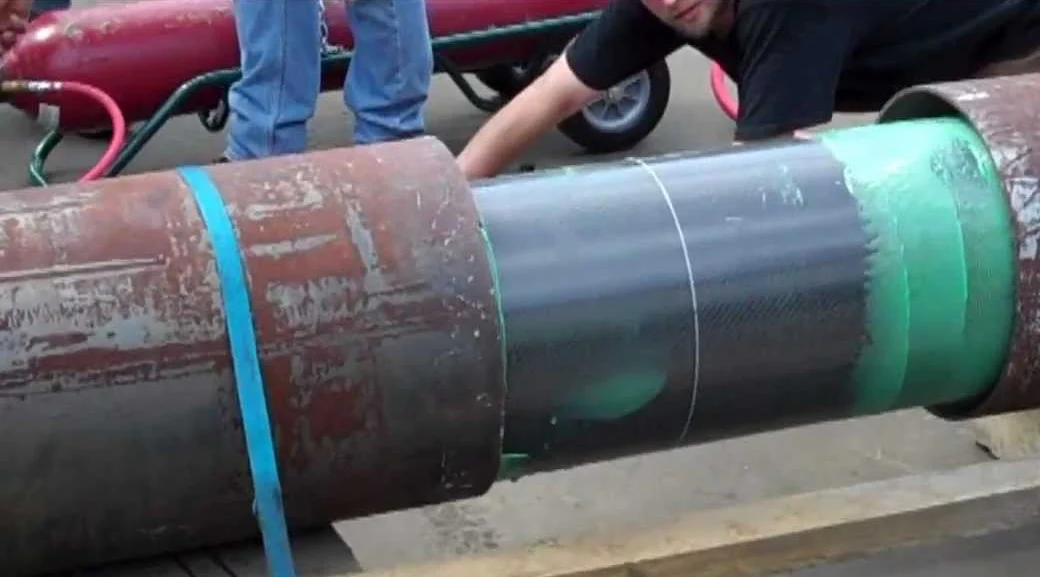
Crews and equipment can enter through small access ports and reassemble the equipment inside, so the repair is truly trenchless. For pipes 24 in. (600 mm) and smaller, the saturated fabric is wrapped around an inflatable packer, pulled into place with a closed-circuit camera, and pressed against the pipe until it cures.
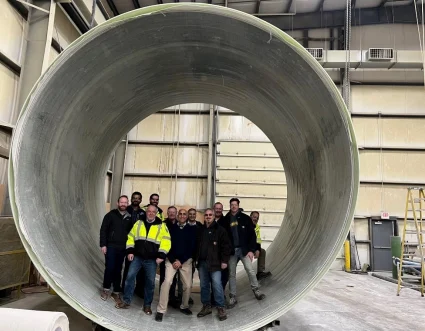
Where a liner must resist internal pressure and external soil and traffic loads on its own, many layers of carbon may be needed. That is why Prof. Mo Ehsani developed StifPipe®, which builds a stiff, fully structural pipe with far less material. Our team will recommend the right QuakeWrap® system and provide specifications for your engineer.
Adds about 1/4 in. (5 mm) or less to the wall
Can raise the pressure rating of the pipe
Smooth lining can improve flow
Spot repair of only the damaged areas
pipe diameters
4 to 180+ in.
and larger: NSF/ANSI 61 approval for drinking water pipes
6 in.
PCCP repair standard the system meets, with IAPMO/ICC AC125
AWWA C305
PCCP REPAIR
Prestressed Concrete Cylinder Pipe, Strengthened Beyond Its Design
In one of the first applications of this technique, QuakeWrap® products were used in 1998 and 1999 to repair 9 ft diameter PCCP at a major U.S. nuclear power plant, where inadequate cover had let the prestressing wires corrode. In an on-site test, the strands of a new pipe were cut to model total wire loss, the pipe was wrapped with carbon FRP and pressurized, and testing stopped when the pressure exceeded the pipe's original design strength.
At the San Juan Generating Station in Farmington, New Mexico, a carbon fabric developed for the project strengthened 700 linear ft of 10 ft PCCP with a single layer instead of two. All equipment had to fit through a 30 in. manhole. The project received the 2008 ICRI Award of Excellence.
of carbon fabric, nuclear plant PCCP (1999)
11,500 sq ft
single-layer carbon fabric, San Juan Generating Station (2007)
27,000 sq ft
manhole: the only access at San Juan
30 in.
ADVANTAGES
Advantages of FRP Pipe Repair
Mostly trenchless
Zero or minimal excavation for most repairs.
Higher pressure rating
Can increase the pressure rating of the pipe significantly.
Inside or outside
Repairs can be done internally or externally.
Thin wall
Typically adds about 1/4 in. (5 mm) of wall thickness.
Better flow
The smooth FRP lining can improve flow capacity.
Fast
Repairs are quick with minimal downtime.
Spot repair
Ideal for repairing only the damaged areas.
Drinking water safe
NSF/ANSI 61 for drinking water pipes 6 in. and larger, and for water storage tanks.
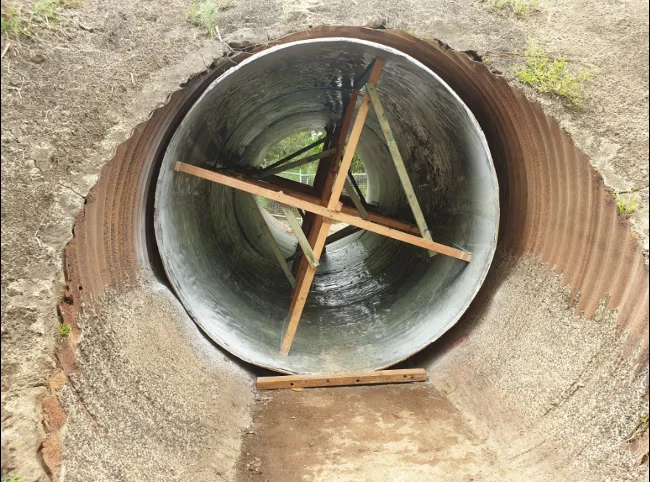
77 linear ft of corroded 8 ft corrugated metal pipe under a parking lot rehabilitated with concrete and FRP instead of excavating, which would have closed the business for 3 to 4 weeks.
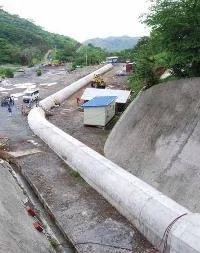
A 90-year-old, 10 ft riveted steel penstock with 90 psi internal pressure and high-velocity flow rehabilitated and strengthened from the inside with carbon FRP in June 2017.
Three 20 ft sections of 96 in. PCCP flagged by electromagnetic inspection lined with a fully structural carbon FRP system per AWWA C305, for soil load and 82 psi internal pressure, in under two weeks.
After a breach shut down water service, the hole was patched with a steel plate and the pipe lined with a 5-layer, NSF 61 certified carbon FRP system per AWWA C305 within a couple of weeks.
A corroded, leaking 54 in. steel siphon with about 150 leaks sealed, then lined with glass, chopped mat and carbon fabric and returned to service in April 2018.
Emergency standalone StifPipe® retrofit of a deteriorated 72 in. x 10 ft concrete pipe section, built in place by wet layup in a couple of days with 3 FRP layers and 1 core mat layer.
QuakeWrap provided an innovative, multi-purpose FRP liner design that not only targeted the leak problems, but also provided additional structural strengthening… which increased the life cycle of the penstock.
WRWalter RetanaProject Manager, Ghella Costa Rica
Pipe Repair FAQs
Can pipelines be repaired without excavation?
In most cases, yes. PipeMedic® FRP repairs are typically trenchless, lining or strengthening water, sewer, gas and industrial pipes from 4 in. to over 180 in. in diameter from the inside with zero or minimal excavation.
Should my pipe be repaired from the inside or the outside?
If the pipe is buried and large enough to enter, internal lining through manholes or access ports is usually trenchless. Pipes 24 in. and smaller can be repaired internally with a packer. External wrapping fits exposed or excavated pipe, corroded steel, welded joints and fittings. Our team will recommend the right approach for your pipe.
Can FRP repair prestressed concrete cylinder pipe (PCCP)?
Yes. The QuakeWrap® wet layup system is among a small group of solutions that meet AWWA Standard C305 for PCCP repair. In an on-site test at a nuclear power plant, a PCCP pipe with cut strands was wrapped with carbon FRP and pressurized beyond its original design strength.
What if the pipe can no longer carry soil and traffic loads?
A fully structural liner is needed. StifPipe® is designed to carry those loads independently of the host pipe.
Is the system safe for drinking water?
Yes. The QuakeWrap® wet layup system meets NSF/ANSI Standard 61 for drinking water pipes 6 in. and larger and for water storage tanks, and is IAPMO/ICC certified under Acceptance Criteria AC125.
Can you provide specifications and design details for our engineer?
Yes. Our team will recommend the right QuakeWrap® system and provide product data sheets, specifications and sample design details for your engineer of record.