
MARINE & WATERFRONT
Mooring Cell Repair
River level changes corrode steel sheet pile mooring cells at the splash zone until holes let the ballast wash out. A seamless PileMedic® laminate shell, filled with grout, confines the cell and keeps moisture and oxygen off the steel.
- Seamless shell, no welded patches
- Non-corroding FRP laminates
- Access cut-outs for mooring hardware

MATCHING PRODUCTS
QuakeWrap® Systems for Mooring Cells
-
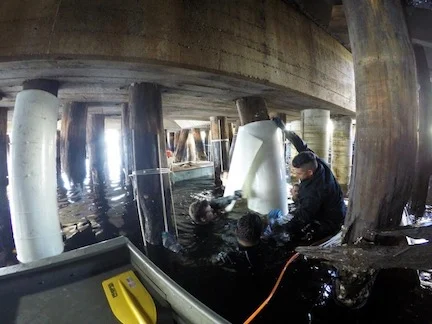
PileMedic®
Laminate jackets for piles and columns, even underwater.
Explore PileMedic® -
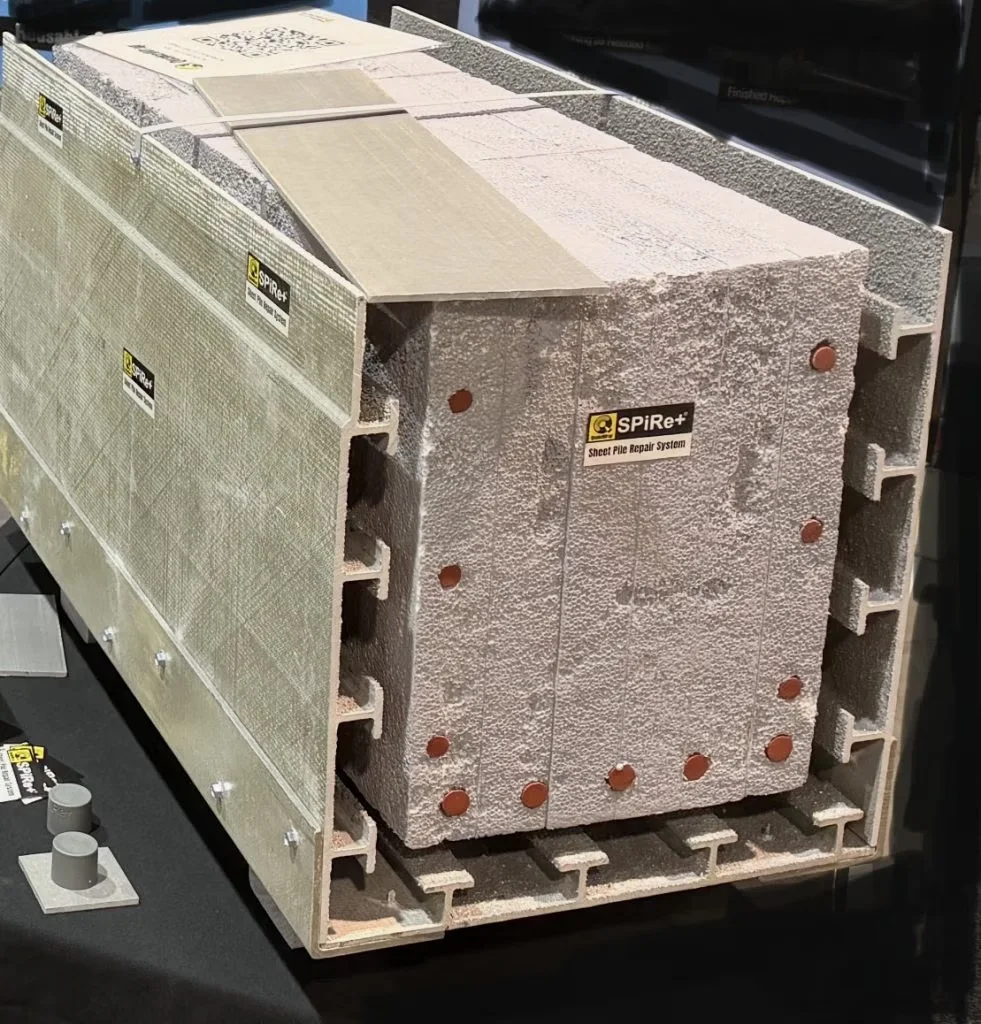
SPiRe®+
Stay-in-place FRP panels for seawalls, piles, beams and girders.
Explore SPiRe®+ -
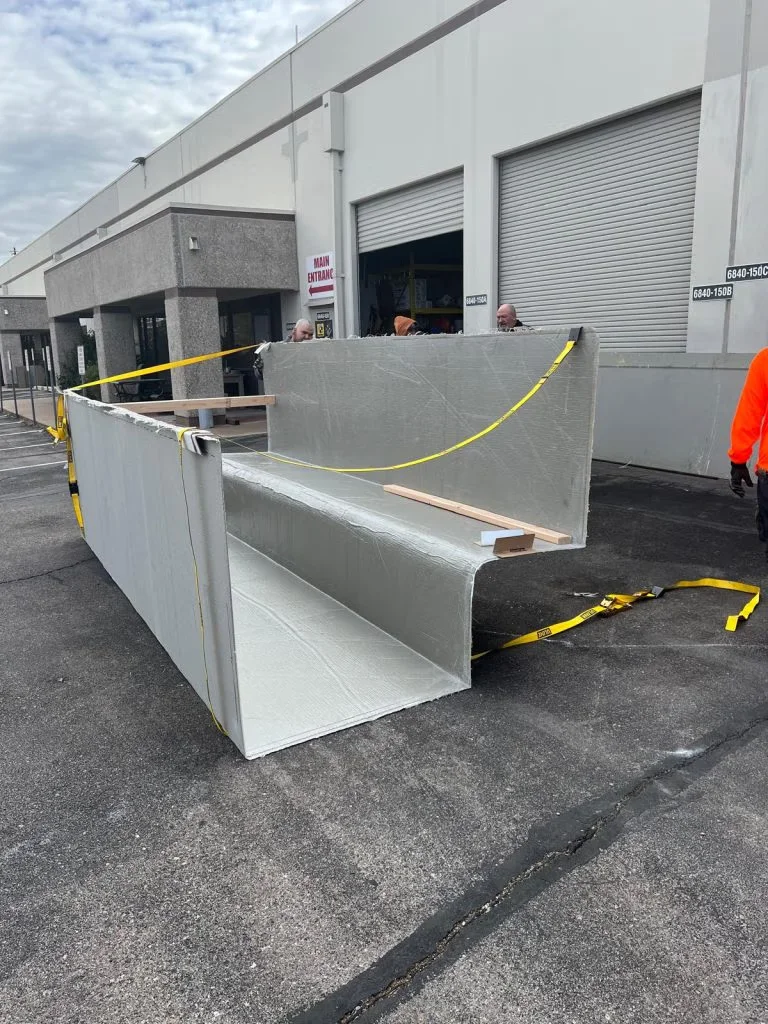
Custom FRP Shapes
Shells, forms and components built to fit.
Explore Custom FRP Shapes


Not sure which system fits?
Tell us about the structure and conditions. Our team will recommend the right QuakeWrap® system.
WHY MOORING CELLS FAIL
Why Mooring Cells Deteriorate
Mooring cells keep barge fleets aligned and are used to load and unload cargo at inland river ports and terminals. Most are steel sheet pile panels driven into the soil in a circular or rectangular formation and filled with soil or granular ballast.
-
Splash zone corrosion
Fluctuating river levels corrode the steel in the splash zone and weaken the cell.
-
Holes and lost ballast
In extreme cases large holes form and the ballast washes out, further reducing the cell's strength.
-
Steel patches corrode too
Welded plates or a continuous steel band welded around the cell begin corroding soon, just like the original structure.
HOW IT WORKS
How a PileMedic® Shell Repairs a Mooring Cell
The solution developed by Prof. Mo Ehsani wraps the cell in non-corroding, high-strength PileMedic® laminates. Each wide band of laminate is wrapped once or more around the cell with a small annular space, and the overlapping end is coated with epoxy and can be secured with screws. If needed, horizontal reinforcing bars are positioned around the cell before wrapping.
The upper 4 in. edge of each shell is coated with epoxy and the shell is lowered into the water. The next band is wrapped and bonded to it, and the process repeats until the required height is encased in a seamless shell. The bottom is sealed and the annular space is filled with concrete or grout. Cut-outs in the shell keep the mooring rings and other hardware accessible.
The shell confines both the cell and its ballast. Our team will recommend the right QuakeWrap® system and provide specifications for your engineer. [Confirm with QuakeWrap patent status: the old page says patent-pending, but no published application or issued patent for this method appears on Google Patents or https://pilemedic.com/patents/ (checked 2026-10-21)]
- equals No. 5 (15 mm) bars at 6 in. (150 mm) along the height
- 1 layer
- equal No. 5 (15 mm) bars at 3 in. (75 mm)
- 2 layers
- epoxy-coated overlap between shells
- 4 in.

How the Mooring Cell Shell Is Installed
-
Wrap the first band
Wrap the first 10 ft wide band of laminate around the cell and apply epoxy to the overlap. PileMedic® laminates can be custom made up to 126 in. wide.
-
Coat the top edge
Apply epoxy to the 4 in. overlapping edge at the top of the shell.
-
Lower and repeat
Lower the first shell into the water and wrap the next band over it. Screws can optionally be added at the overlaps.
-
Encase the cell
Continue until the full height of the cell is encased in a seamless shell, with cut-outs for mooring hardware.
-
Fill with grout
Seal the bottom and fill the annular space between the cell and the shell with grout or concrete.
ADVANTAGES
Advantages of the PileMedic® Mooring Cell Repair
-
Long service life
Non-corroding FRP laminates.
-
Lower corrosion rate
An impervious shell keeps moisture and oxygen from reaching the steel cell.
-
Smooth finish
Debris passes the cell more easily.
-
Clean appearance
An aesthetically pleasing finished surface.
Have corroded mooring cells?
Tell us the cell size, the height to repair and the river conditions. Our team will recommend the right QuakeWrap® system and provide specifications for your engineer.
WATCH THE METHOD
Repair of Corroded Mooring Cells for Inland River Ports and Terminals
An animation of the installation steps above, from QuakeWrap®.
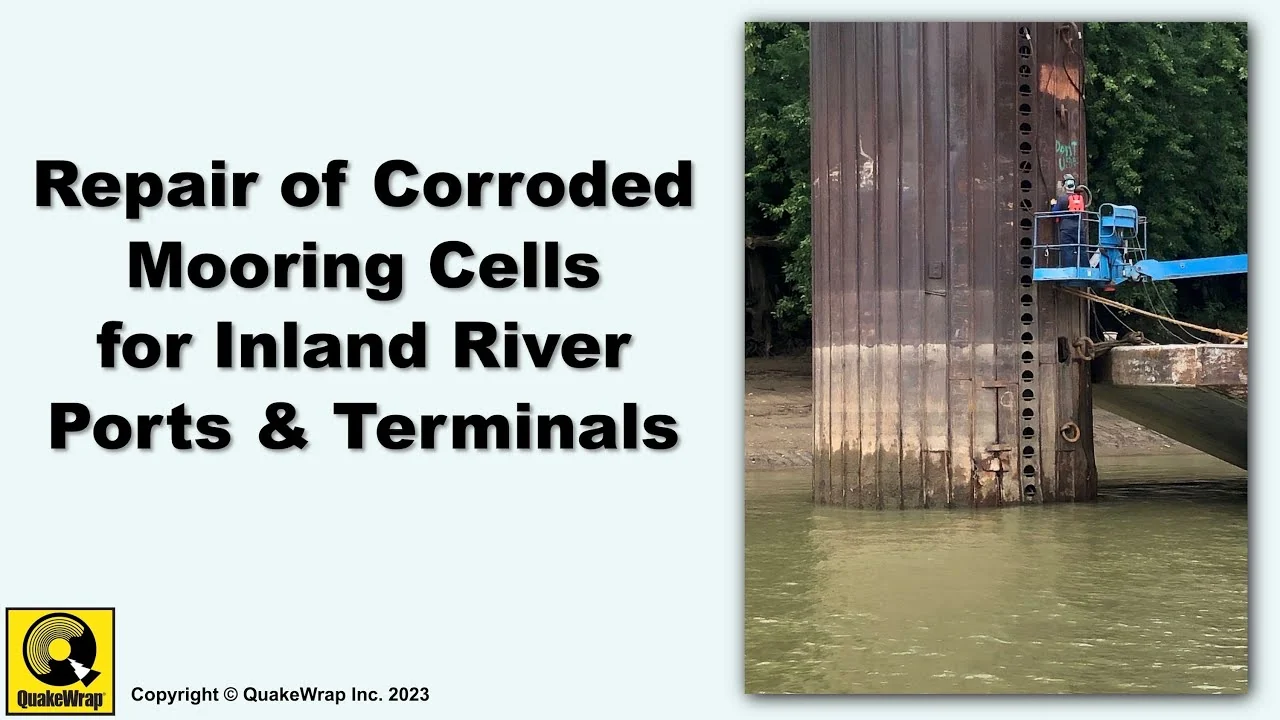
Plays from YouTube
PROVEN RESULTS
Related Marine Projects
These marine projects use the same QuakeWrap® systems on mooring dolphins, piles and decks.


Mooring Cells FAQs
How is a corroded mooring cell repaired?
Wide PileMedic® laminates are wrapped around the cell in bands, each bonded to the one below with a 4 in. epoxy-coated overlap and lowered into the water, until the full height is encased. The bottom is sealed and the space between the cell and the shell is filled with grout or concrete.
How strong is the laminate shell?
According to QuakeWrap®, a single layer of PileMedic® is equivalent to No. 5 (15 mm) bars at 6 in. (150 mm) along the height of the cell, and two layers are equivalent to No. 5 bars at 3 in. (75 mm). Horizontal reinforcing bars can also be added before wrapping.
Can the mooring rings and hardware stay in use?
Yes. Cut-outs can be formed in the shell to keep the mooring rings and other hardware accessible.
Why not weld steel plates over the holes?
Welded patches and steel bands begin corroding soon, in the same way as the original cell. The FRP shell does not corrode and keeps moisture and oxygen away from the steel.
Can piles and seawalls be repaired underwater?
Yes. PileMedic® and SPiRe®+ systems are designed for underwater installation, so submerged piles, seawalls and bulkheads can often be repaired without cofferdams or dewatering.
Can you provide specifications and design details for our engineer?
Yes. Our team will recommend the right QuakeWrap® system and provide product data sheets, specifications and sample design details for your engineer of record.
Related FRP Repair Applications
Have a Project That Needs Repair?
Tell us about your structure. Our team will recommend the right QuakeWrap® system and provide specifications for your engineer.