
CASE STUDY
Arizona DOT I-17 Bridge Girder Repairs With Carbon FRP
In its first use of carbon FRP on state highway bridges, the Arizona Department of Transportation strengthened 12 truck-damaged prestressed girders on two I-17 bridges in downtown Phoenix. Crews worked only at night, and the freeway reopened every morning at 5 a.m.

Project Details
- OWNER
- Arizona Department of Transportation (ADOT)
- LOCATION
- I-17 at Jefferson Street and at 19th Avenue, Phoenix, Arizona
- STRUCTURES
- Precast prestressed AASHTO Type II girder bridges built in 1959 (Jefferson St.) and 1961 (19th Ave.)
- DAMAGE
- Repeated truck strikes: 1 girder at Jefferson St. (50% flexural loss assumed) and 11 girders at 19th Ave. (20% assumed)
- QUAKEWRAP® SYSTEM
- Externally bonded unidirectional carbon fabric (QuakeWrap® TU27C): longitudinal layers plus 6 in. U-wrap strips at 12 in. on center
- DESIGN BASIS
- AASHTO Guide Specifications for Design of Bonded FRP Systems for Repair and Strengthening of Concrete Bridge Elements, as required by ADOT
- GENERAL CONTRACTOR
- FNF Construction, Inc., Tempe, Arizona
- FRP INSTALLER
- FRP Construction LLC, Tucson, Arizona
- FRP MATERIALS AND DESIGN SUPPORT
- QuakeWrap, Inc., Tucson, Arizona
- COMPLETED
- May 2017
PROJECT VIDEO
ADOT Bridge Repair Using QuakeWrap
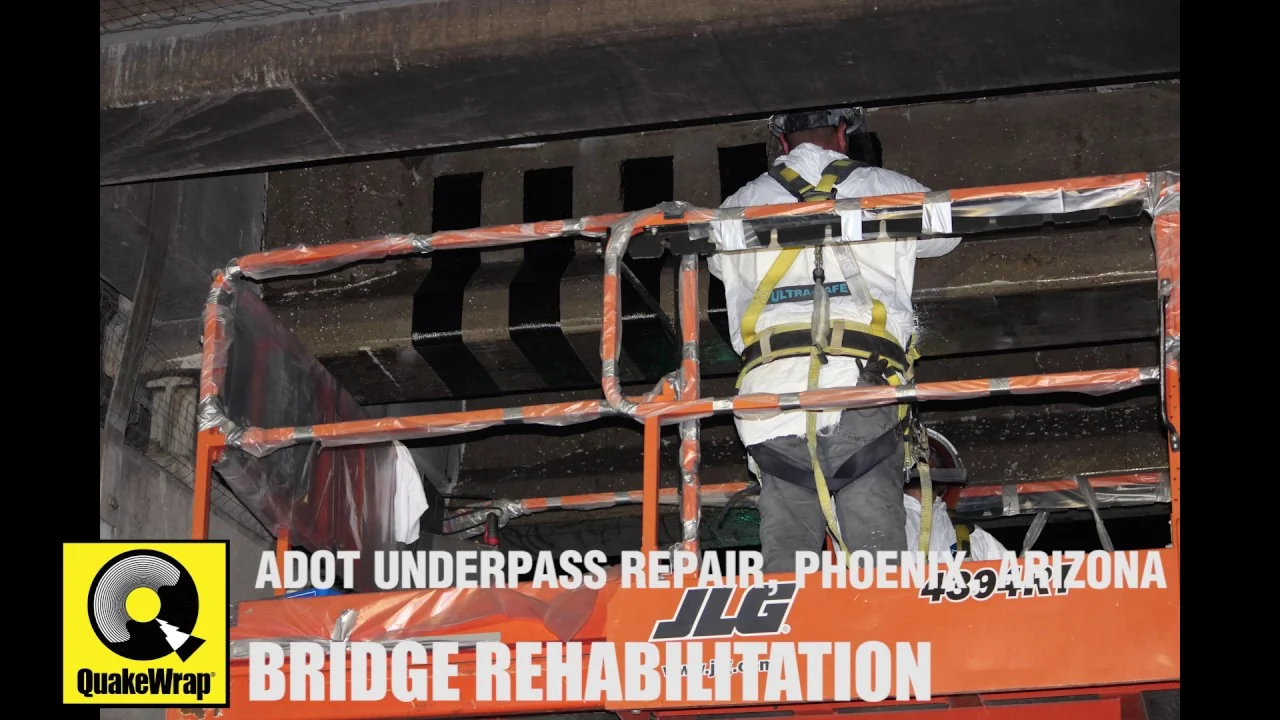
Plays from YouTube
01 · THE CHALLENGE
Girders Hit Again and Again Over a Busy Freeway
The two bridges sit on I-17 in downtown Phoenix, less than 2 miles apart. In 2010 this stretch had only three lanes each way and carried an average of 100,000 vehicles a day, about 9.6% of them trucks, so any traffic disruption was a major concern.
At Jefferson Street, the northwest girder over southbound I-17 was hit and repaired in 2003, 2006, 2008 and 2014, and multiple prestressing strands were completely severed. At 19th Avenue, so many minor strikes had spalled the bottom flanges and exposed rebar and strands that no one could say how many times the bridge had been hit.
Replacing girders would have closed I-17 for too long. ADOT's Bridge Group chose FRP because it could be installed quickly with minimal disruption to traffic. It would be the department's first carbon FRP bridge repair.

02 · THE SOLUTION
Carbon Fabric Bonded to the Girders, Night by Night
Federal money funded the work, so ADOT bid it openly under a performance-based specification adapted from Caltrans. FNF Construction won the contract and chose FRP Construction LLC as its FRP supplier and installer, and FRP Construction brought in QuakeWrap, Inc. for the carbon FRP materials, design support and installation details.
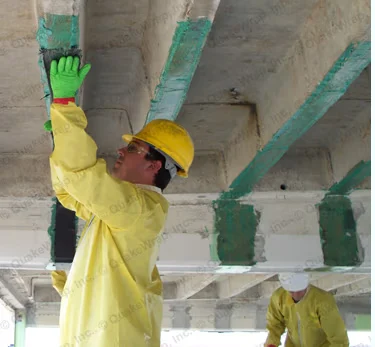
Unidirectional QuakeWrap® carbon fabric was bonded along the bottom and lower sides of each damaged girder over 40 to 50 ft. On the heavily damaged Jefferson Street girder, fabric on the sides is what made the required capacity reachable. Carbon U-wraps hold the new reinforcement in place and act as a net for spalled concrete. “The reinforced fiber strips add strength to the girders and are designed to limit the amount of debris that could fall should a girder be struck again,” said ADOT Senior Bridge Engineer William Downes.
A six-person FRP Construction crew worked from 9 p.m. to 5 a.m. After the first night, an RFI and ADOT approval switched the U-wraps from biaxial fabric to the easier-to-cut unidirectional fabric, and the crew reached about 500 sq ft per night.
- Jefferson St.: 1,027 k-ft of added flexural capacity vs. 1,000 k-ft required
- 19th Ave.: 392 k-ft added vs. 360 k-ft required
- Deck slab treated as composite with the girders, as approved by ADOT
- Fabric lot and resin batch numbers logged for every girder
- Daily witness panels tested to ASTM D3039 by Western Technologies, plus bond tests

03 · THE RESULT
Finished Early, and a Bridge Off the Deficient List
FNF Construction scheduled about 20 working days for the 19th Avenue bridge, and it was finished in about 15. The Jefferson Street girder was done over a single weekend in May 2017, from Friday at 9 p.m. to Monday morning.
According to ADOT, one of the two bridges is no longer listed as structurally deficient as a result of the repairs. The 19th Avenue bridge had earlier been labeled the most-traveled structurally deficient bridge in Arizona by the American Road & Transportation Builders Association.
“We think the carbon-fiber repairs are effective, can extend the lifespan of structures and can be done in much less time than other repair methods,” said ADOT State Bridge Engineer David Eberhart. “We’re likely to use it again if and when repairs are needed.”
- vs. 20 scheduled
- ~15 days
- lanes reopened every day
- 5 a.m.


MORE PROJECTS
Related Projects
-
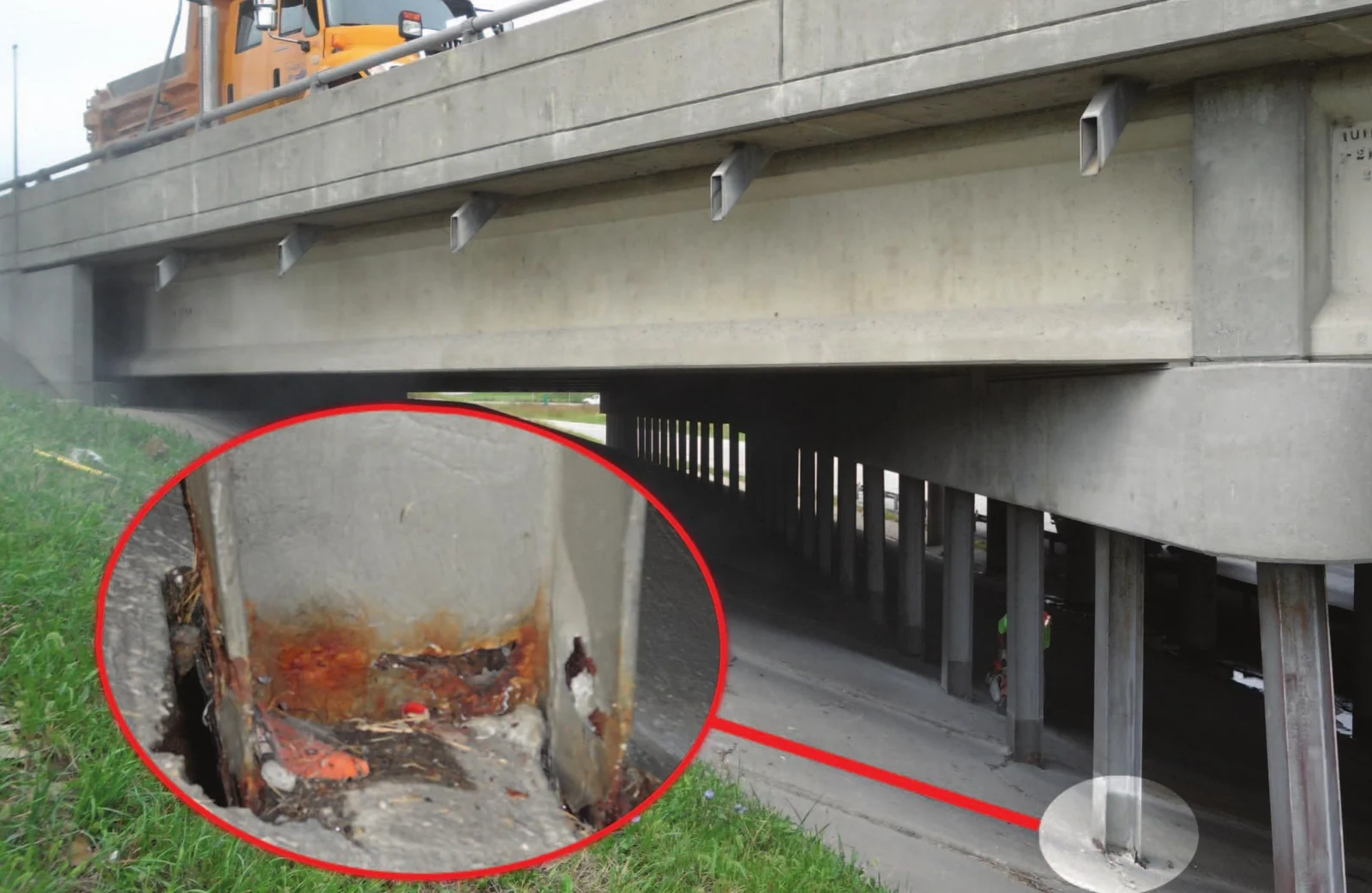
Missouri DOT I-70/I-270 Bridges
49 corroded steel H-piles under four interstate bridges restored with PileMedic® shells and grout in two weeks.
View case study -
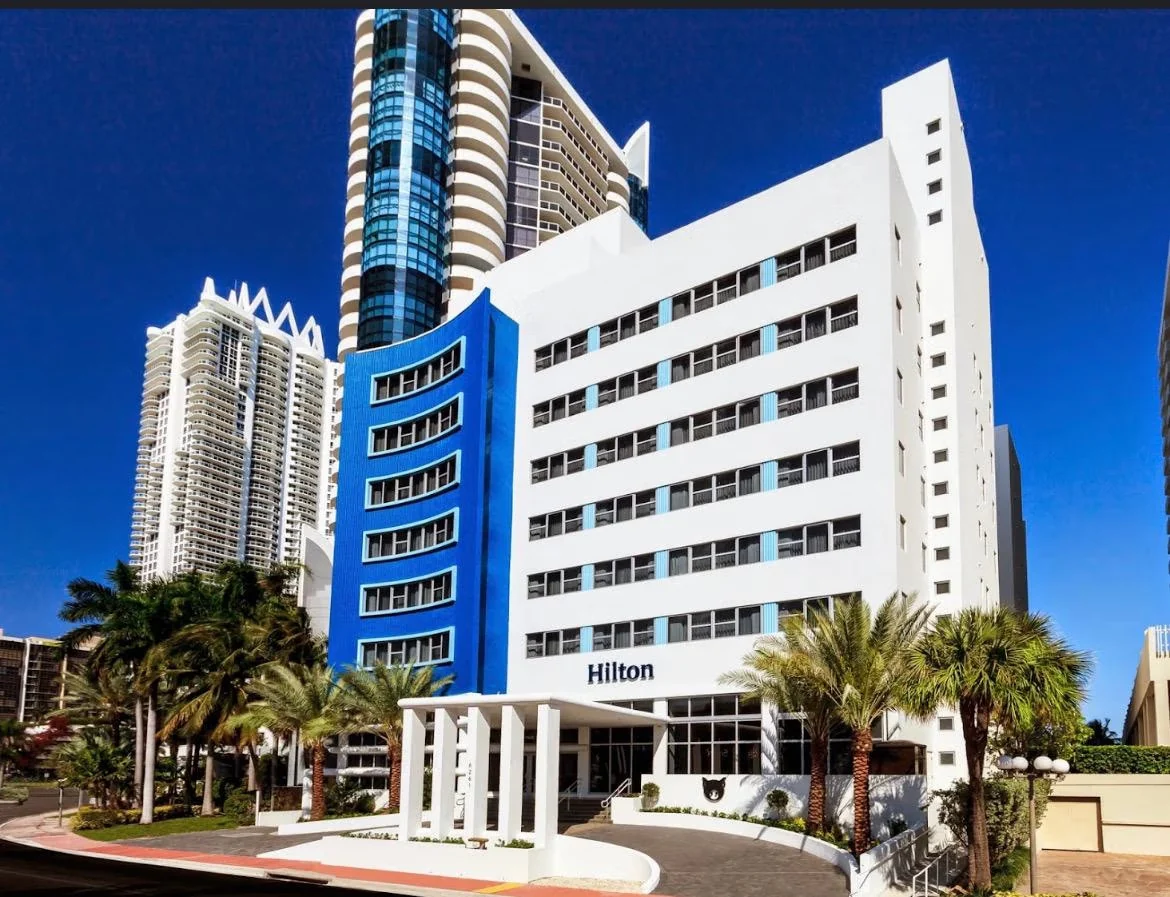
Cabana Hotel, Miami Beach
Low-strength concrete columns wrapped with 2 to 8 layers of carbon FRP for two added stories.
View case study -
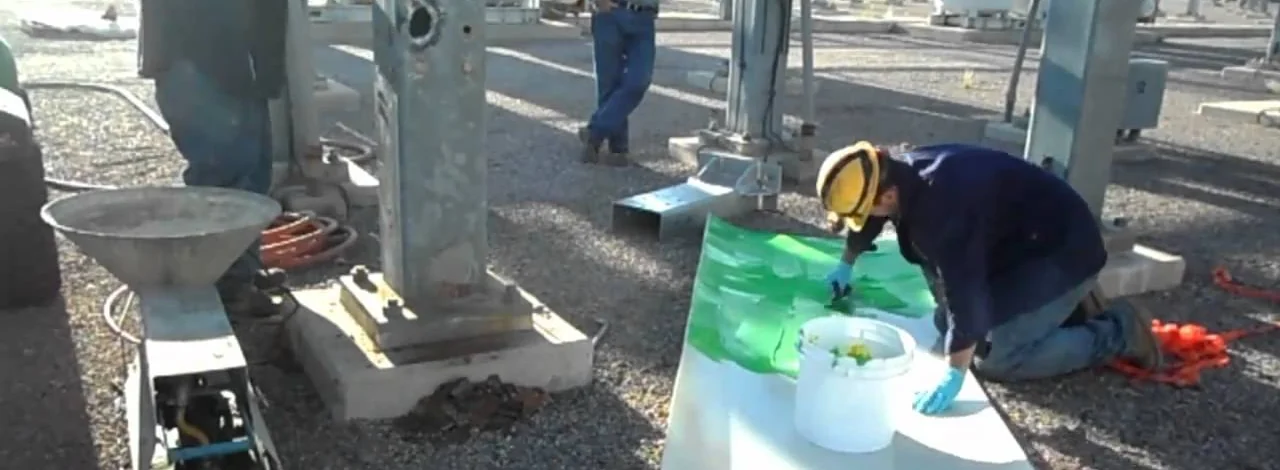
Tucson Electric Power, Arizona
Corroded steel substation columns restored with grout-filled PileMedic® jackets and no outage.
View case study


More Resources for Engineers
- FOR ENGINEERS Specifications & Design Details
- TECHNICAL PAPER Arizona DOT Performs First CFRP Bridge Repair Ehsani, Johnson (QuakeWrap) and Downes (ADOT), International Bridge Conference (PDF)
- Product Data Sheets Fabrics, laminates, resins and panels
- Installation Videos Step-by-step installs and training
Have a Girder or Beam That Needs Strengthening?
Tell us about the structure, the damage and your traffic or access limits. Our team will recommend the right QuakeWrap® system and provide specifications for your engineer.