
CASE STUDY
Marina Pier Repair at Casa de Campo, Dominican Republic
A marina pier repair at Marina Casa de Campo in La Romana: six corroded concrete fingers rehabilitated in 2026 with underwater-applied glass FRP on the piles and pile caps and new GFRP-reinforced access slabs, while limiting disruption to marina operations.

Project Details
- MARINA
- Marina Casa de Campo
- LOCATION
- La Romana, Dominican Republic
- STRUCTURE
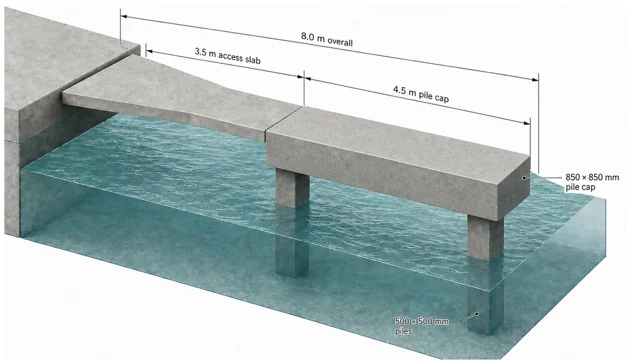
- Six 8.0 m concrete fingers, each with two 500 x 500 mm piles, a pile cap about 850 x 850 mm and 4.5 m long and a 200 mm access slab 3.5 m long
- FRP SYSTEM
- Wet layup biaxial glass fabric with chopped-strand mat and two-part epoxy resin, applied underwater
- NEW SLABS
- Concrete reinforced with GFRP bars
- CONSTRUCTION
- June to July 2026
- CONTRACTOR
- Holsteinson & Associates
- FRP SYSTEM AND ENGINEERING SUPPORT
- QuakeWrap, Inc.
01 · THE CHALLENGE
Concrete Marina Fingers Corroding in Caribbean Seawater
Marina Casa de Campo, on the southeastern coast of the Dominican Republic, is one of the Caribbean's largest full-service marinas, with about 350 slips and berths for vessels up to 250 ft long. Its reinforced-concrete fingers face constant saltwater, airborne chlorides, moisture and oxygen. Once chlorides reach the reinforcing steel, corrosion products crack and delaminate the concrete cover and eventually cause spalling.
Each finger has three zones: two 500 x 500 mm piles, a recessed pile cap about 850 x 850 mm and 4.5 m long, and a 200 mm access slab connecting it to the main pier. Assessment showed the zones had deteriorated at different rates. The access slabs had advanced reinforcement corrosion and significant spalling, while the piles and caps had only localized damage.
The owners and residents chose to start with six fingers, in three opposing pairs, so they could judge the finished appearance and performance before deciding whether to extend the program to the marina's many other fingers.
02 · PILES AND PILE CAPS
Underwater Glass FRP Wraps Instead of Replacement
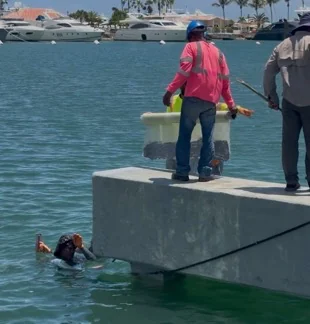
Divers removed marine growth, contamination and unsound concrete from the piles, then restored voids and damaged areas with cementitious repair grout. Four-foot-wide biaxial glass fabric was saturated with a two-part epoxy and rolled around a PVC pipe, a compact package the dive team could position and unroll underwater without folding or tangling the wet laminate. Each square pile got one full turn plus a 12-in. closure overlap, consolidated with layers of shrink wrap during cure.
On the pile caps, 4-ft strips ran over the top, down both sides and back across the recessed underside for continuous transverse reinforcement. Adjacent bands overlapped 8 in. along the 4.5 m cap, and the end faces were wrapped to close the shell. A thin epoxy layer with broadcast sand gives the top a slip-resistant walking surface.
- Tensile capacity equivalent to No. 4 steel bars at 6 in. on center
- Fibers in two directions for flexure, shear and confinement
- Chopped-strand mat forms a resin-rich, continuous outer layer
- No cofferdams or heavy lifting equipment
INSTALLATION SEQUENCE
Marina Pier Repair Sequence for the Piles and Pile Caps
The same five steps restored and encapsulated the retained concrete in Zones A and B.
-
Clean
Remove marine growth, surface contamination and unsound or spalled concrete to reach a sound substrate.
-
Restore
Fill voids and damaged areas with cementitious repair grout to reestablish the member geometry.
-
Saturate and roll
Saturate 4-ft biaxial glass fabric with two-part epoxy and roll it on a PVC pipe for handling underwater.
-
Wrap and overlap
Piles: one full turn plus a 12-in. closure. Caps: transverse bands overlapped 8 in., end faces encapsulated.
-
Consolidate and finish
Shrink wrap holds the pile laminate against the concrete during cure. Cap tops get epoxy with broadcast sand.
03 · ACCESS SLABS
Replacement Slabs Reinforced With GFRP Bars
Corrosion and spalling in the 200 mm access slabs were too extensive to patch, so they were demolished. The new slabs were formed to the original 3.5 m geometry: a rectangular segment about 0.85 m wide, then a trapezoidal segment widening to about 1.5 m at the main pier.
Instead of steel, the new slabs are reinforced with GFRP bars. Because the bars do not corrode, they remove the mechanism that destroyed the original slabs.

04 · THE RESULT
Concrete Marina Finger Repair That Kept the Supports
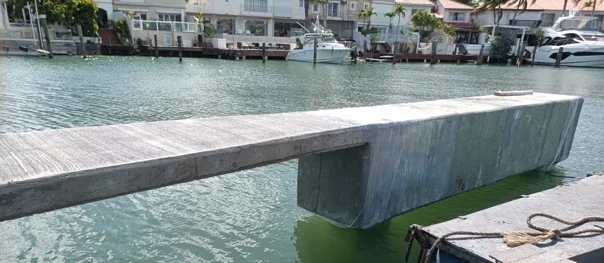
Tailoring the work to each zone avoided replacing serviceable piles and caps. The cured glass FRP jacket strengthens them and greatly reduces the entry of seawater, chlorides, moisture and oxygen, protects the cementitious repairs and helps contain the concrete if it cracks in the future. Because the fabric went on underwater, normal marina activities saw limited disruption.
Two forms of glass reinforcement work together: GFRP bars inside the new slabs and GFRP fabric outside the retained piles and caps. The six-finger pilot now lets the owners and residents see the finished result before deciding whether to extend the system to the remaining fingers.
- Sound surface preparation and full fabric saturation
- Closure and strip overlaps for structural and environmental continuity
- PVC-tube handling underwater and shrink wrap consolidation during cure
Products & Applications Used
-
Wet & Dry Layup FRP
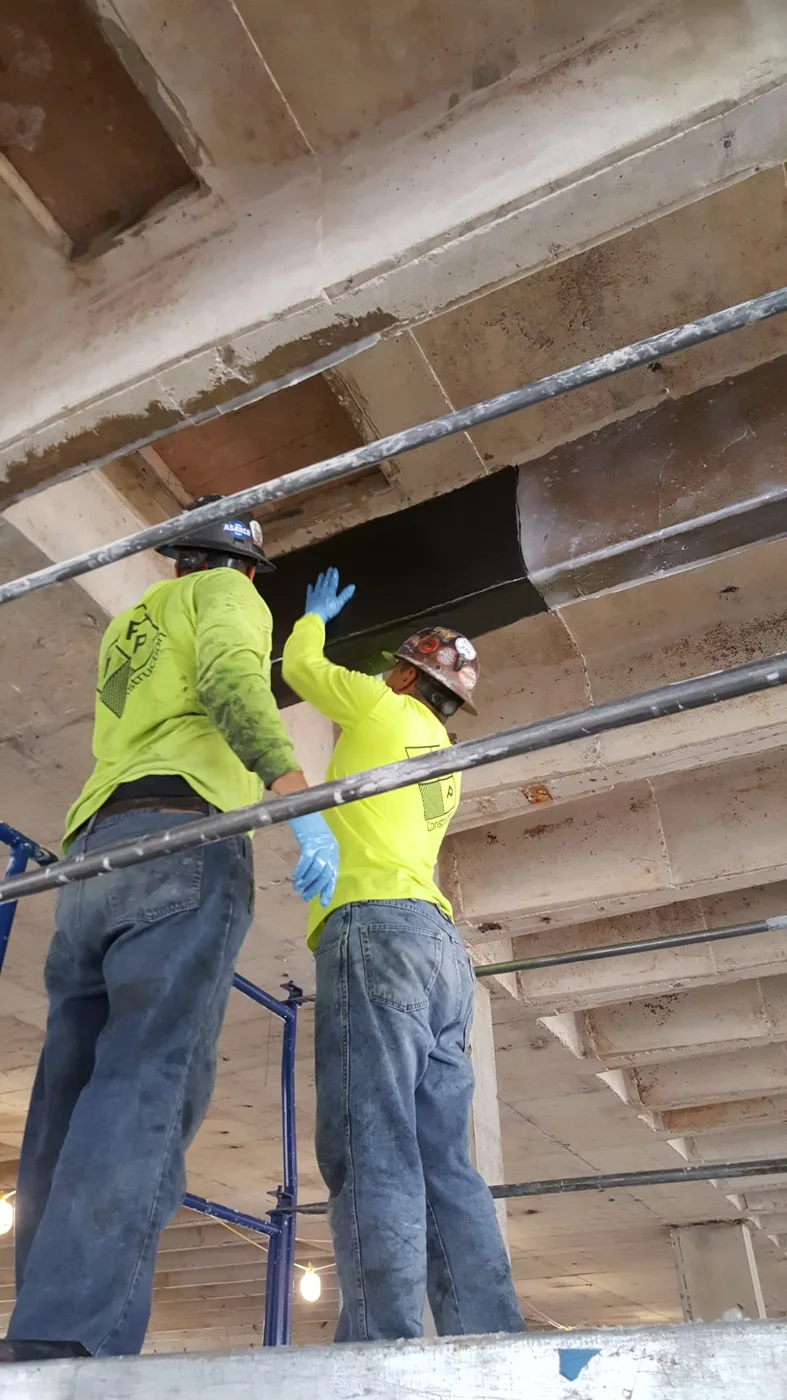
Carbon and glass fabric systems for beams, columns, slabs, walls and pipes.
Explore Wet & Dry Layup FRP -
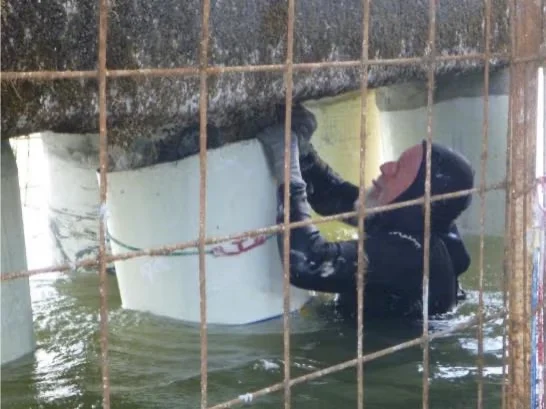
Pile Repair
Timber, steel and concrete piles, without cofferdams.
Explore Pile Repair -
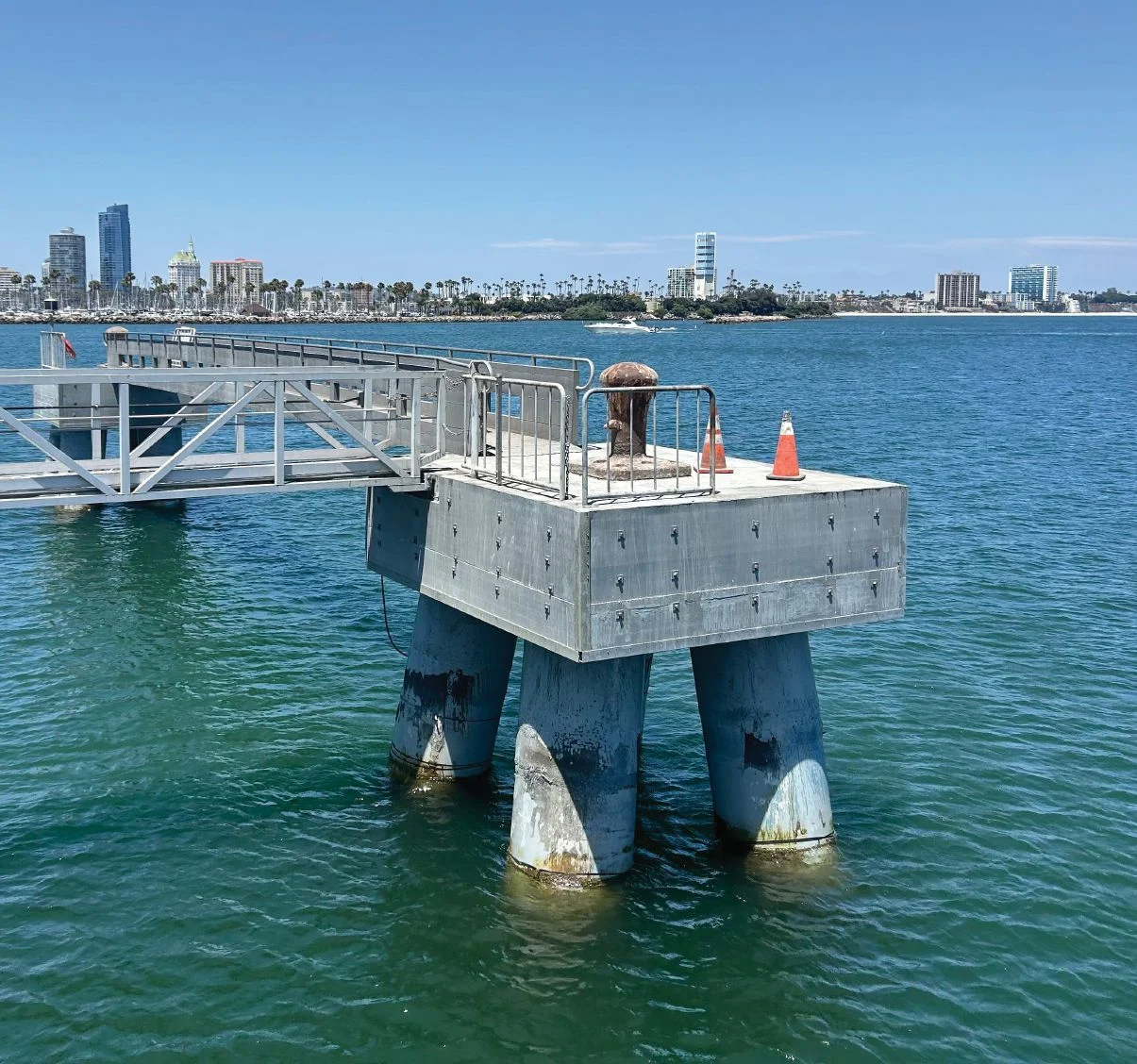
Marine Infrastructure
Ports, wharves and piers kept in service.
Explore Marine Infrastructure


MORE PROJECTS
Related Projects
-
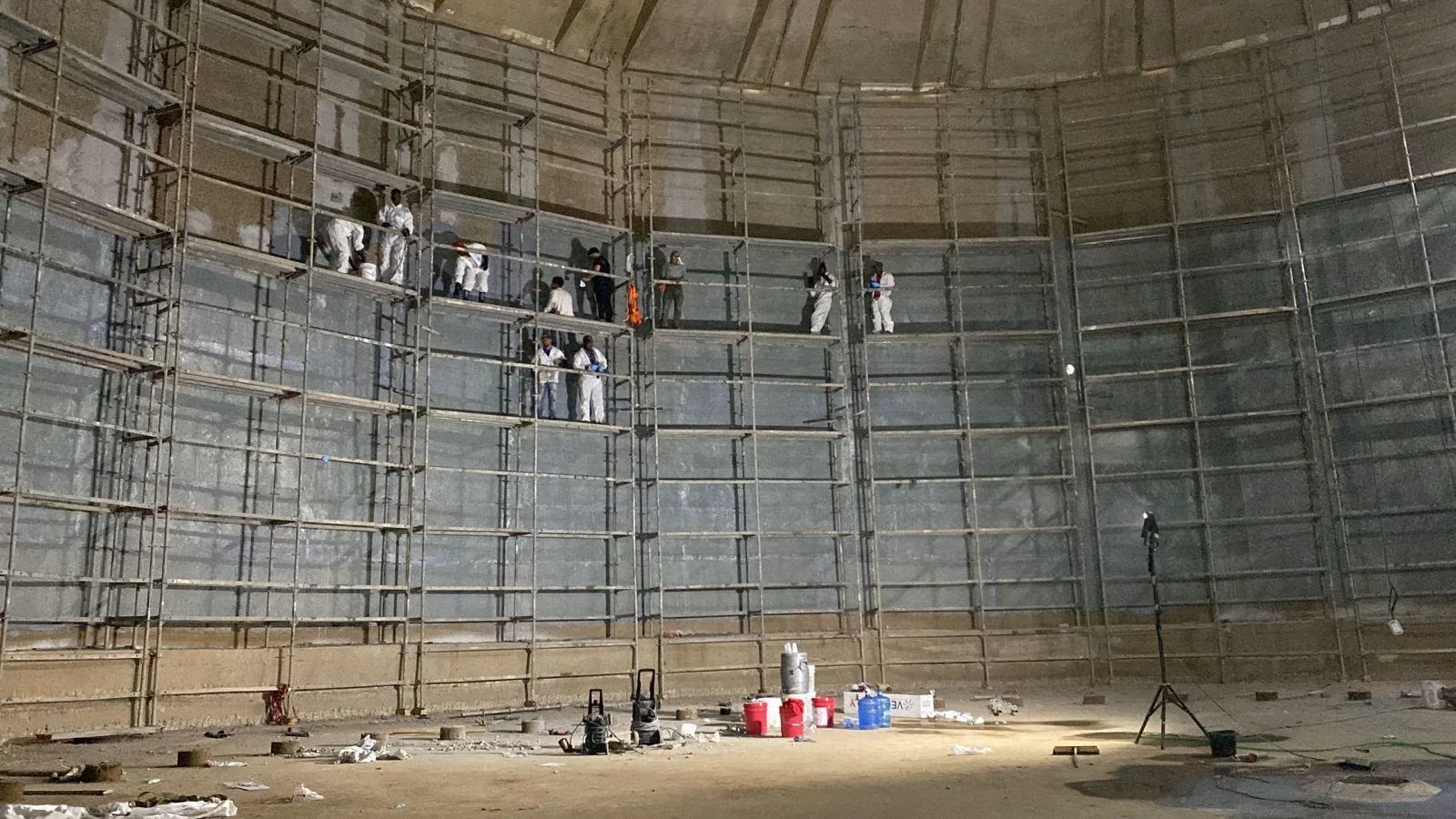
CORAASAN Water Tank, Dominican Republic
A leaking 2.5 million gal concrete tank lined with NSF/ANSI 61 glass FRP instead of grout patching.
View case study -
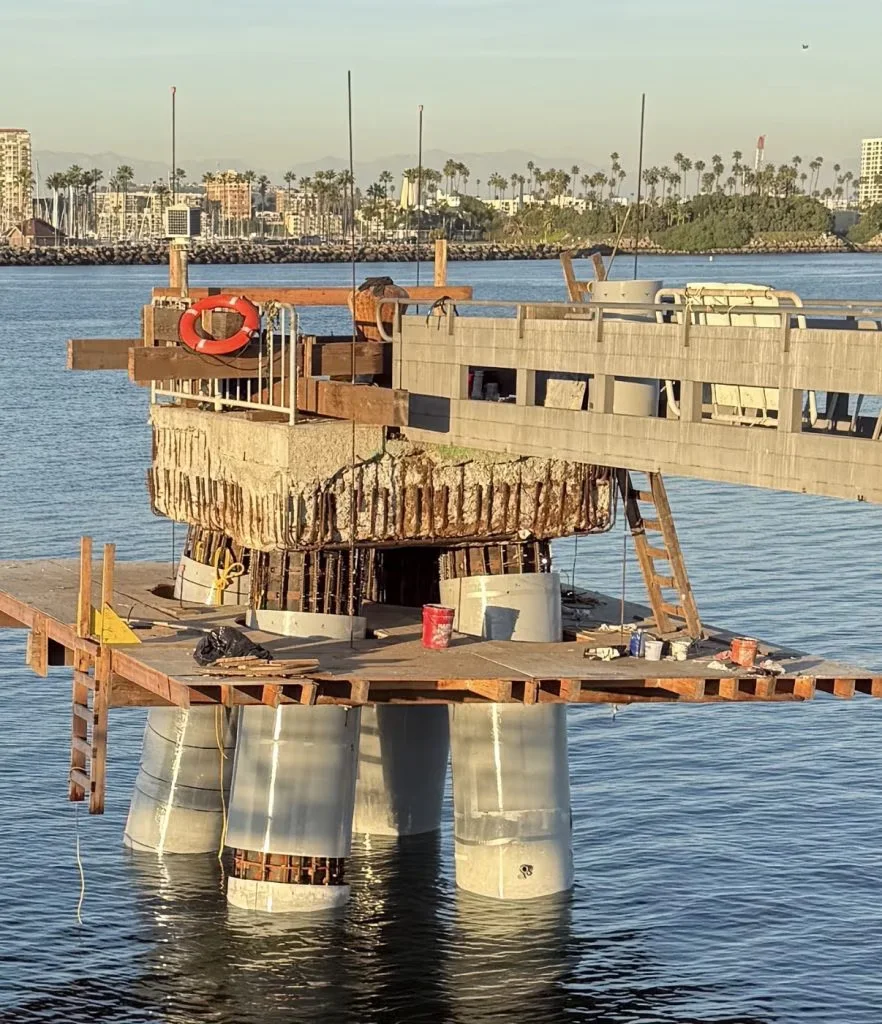
Port of Long Beach, California
Steel pipe piles and pile caps on two cruise ship dolphins reinforced with PileMedic® jackets and SPiRe®+ panels.
View case study -
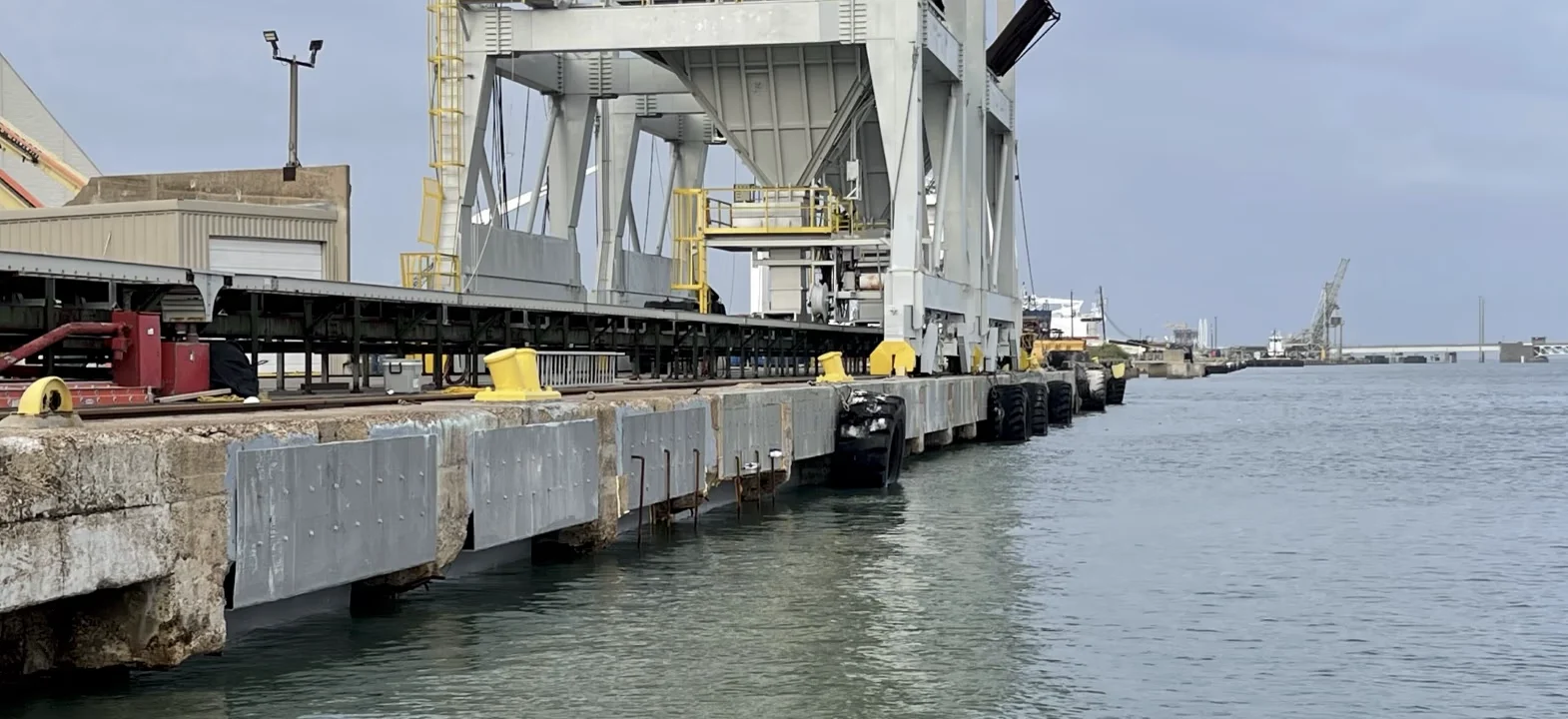
Port of Galveston, Texas
30 corroded beams and 6 piles repaired with custom SPiRe® forms.
View case study


More Resources for Engineers
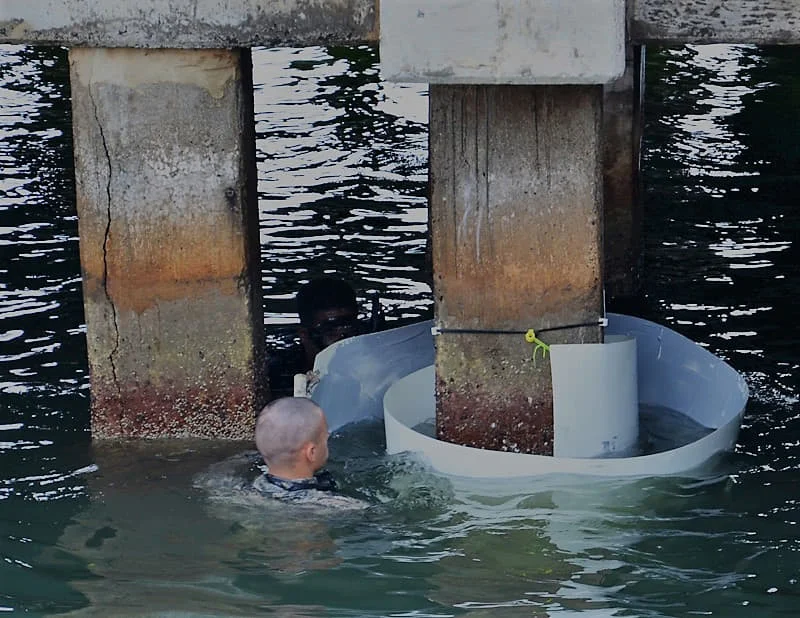
Have Marina Piles or Pile Caps That Need Repair?
Tell us about the structure, its condition and the water depth. Our team will recommend the right QuakeWrap® system and provide specifications for your engineer.