
COLUMNS · METHODS COMPARED
Steel Column Repair Methods Compared: Which Fix Fits Your Column?
Damaged steel columns are repaired with protective coatings, welded or bolted steel plates, bolted steel collars, reinforced concrete jackets, bonded FRP fabric, or a concrete-filled FRP jacket around the damaged length. The right one depends on how much steel is lost, where it is lost, and whether the column must stay in service. See the comparison.
Key takeaways
- Seven options: coatings, plates, collars, concrete jackets, bonded FRP fabric, concrete-filled FRP jackets and replacement.
- Coatings do not restore steel: once there is section loss, the column needs added capacity.
- Collars can hide corrosion: a sealed jacket stops the water and oxygen that cause it.
- Bonded fabric is limited on steel: research shows only moderate gains, and it cannot follow H-shape corners.
- Concrete-filled FRP jackets: restored buckled columns to 69% to 104% of undamaged capacity in lab tests.
Steel column repair methods compared
There are seven common ways to deal with a damaged steel column, from recoating to replacement. Traditional repairs weld or bolt on steel plates or cast a large reinforced concrete jacket around the corroded section (Kaya et al., 2015). FRP systems are the newer alternative.
| Method | How it works | Best for | Watch-outs |
|---|---|---|---|
| Protective coating | Clean the steel and recoat it | Early surface rust with no real section loss | Does not restore lost steel; coatings crack and peel with time |
| Welded or bolted steel plates | Add new steel over, or in place of, the damaged length | Dry, accessible members with moderate loss | Hot work and skilled welders; underwater welding is costly; new steel needs protection |
| Bolted steel collars | Custom-made collars bolted around the damaged zone | Quick local fixes | Heavy and custom for each column; can hide corrosion that keeps going inside |
| Reinforced concrete jacket | Forms, bars and new concrete cast around the column | Adding compression capacity and cover | Adds several inches; formwork and curing time; new rebar can corrode |
| Bonded FRP fabric | Carbon or glass fabric bonded directly to the steel | Round or flat surfaces in dry conditions | Cannot follow H-shape corners; only moderate capacity gains on steel columns in research |
| Concrete-filled FRP jacket | FRP laminate shell, new bars and shear clamps, filled with grout | Heavy or local corrosion, buckled members, wet sites, columns in service | Needs complete filling and careful installation; severe loss needs a load transfer design |
| Replacement | Shore the structure and replace the column | Damage beyond repair | Highest cost, outage and downtime |
Want the cost side of this table? See steel column repair cost, with an estimator for FRP jackets.
What damages steel columns?
Corrosion is the most common cause, but not the only one. Steel piles and columns in bridges, marine structures, industrial plants and warehouses are especially exposed, and their failure can mean partial or total collapse.
- Corrosion: moisture, salt and chemicals eat away flanges and walls, often fastest at the base or on hidden inside faces.
- Physical damage: vehicle or equipment impact and overloading bend, dent or crack the member.
- Fatigue: cyclic loads start micro-cracks that can grow into structural failure.
- Design and load changes: a wrong column location, undersized members or a new use can overload the column.
- Foundation issues: settlement or erosion under the footing shifts load unevenly onto the column.
Signs of damage to look for
Look for rust and pitting, flaking or swelling at the base plate, cracks or broken sections, and any bending or distortion. Visible rust can understate the problem: in one utility project, ultrasonic readings showed most of the wall loss in square tube columns was on the inside near the base, with little visible outside. Measure the remaining thickness before choosing a method. Here is how to assess and repair a damaged column.
How do you choose a steel column repair method?
Match the method to three facts: how much steel is gone, where, and what the site allows. The engineer of record makes the call; this table shows how the facts usually point.
| If the column has… | Usually consider |
|---|---|
| Surface rust, no measurable loss | Clean and recoat, then inspect on a schedule |
| Moderate local loss, dry and easy to reach, welding allowed | Welded or bolted plates, or an FRP jacket |
| Local loss at the base or splash zone | A concrete-filled FRP jacket over that length only |
| Loss above 50% of the section | A concrete-filled FRP jacket with ShearClamp™ or ShearWrap™ load transfer, or replacement |
| A buckled length | A concrete-filled FRP jacket, which restored buckled columns in lab tests |
| An H-shape that must stay in service, near water or with no hot work | A laminate jacket formed around the whole section |
| Damage along most of its height, or no remaining capacity | Replacement, compared against a full-length repair |
Not sure which method fits your column?
Send the section, the measured loss and the loads. Our team will recommend the right QuakeWrap® system and provide specifications for your engineer.
How each steel column repair method works
Protective coatings
Coatings are prevention, not repair. They extend the life of steel that is still sound by shielding it from moisture and chemicals. Once the flange or wall is thinner, a new coat does not give back the lost capacity.
Welded or bolted steel plates
Plates add new steel over, or in place of, the damaged length. They work well on dry, reachable members. The costs are skilled welders, inspection and hot-work permits, and new steel that needs its own corrosion protection. Underwater welding is especially costly, and some projects forbid hot work altogether.
Bolted steel collars
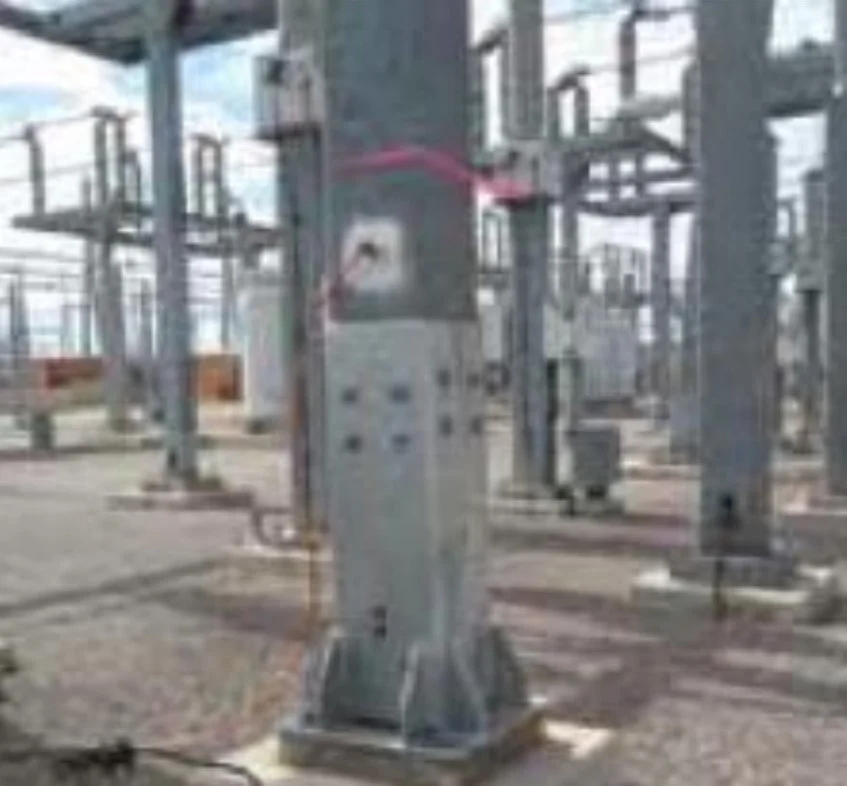
Collars are bolted around the damaged zone. In the 2015 utility paper, they had to be made to fit each column size and its base configuration, were heavy and hard to install, and, worst of all, hid corrosion that kept going inside: a false sense of security.
Reinforced concrete jackets
Forms, bars and new concrete are cast around the column. The jacket adds compression capacity and cover, but it adds several inches all round, needs formwork and curing time, and its new rebar can corrode in the same environment.
Bonded FRP fabric
Carbon or glass fabric can be bonded directly to steel, but on columns it is a limited tool. Earlier research found only moderate capacity gains for steel compression members, with the best results on slender members using stiff carbon (Kaya et al., 2015). Fabric also cannot follow the sharp corners of an H-shape without damaging its fibers (Ehsani, 2025). Learn more in What Is FRP?
Concrete-filled FRP jackets
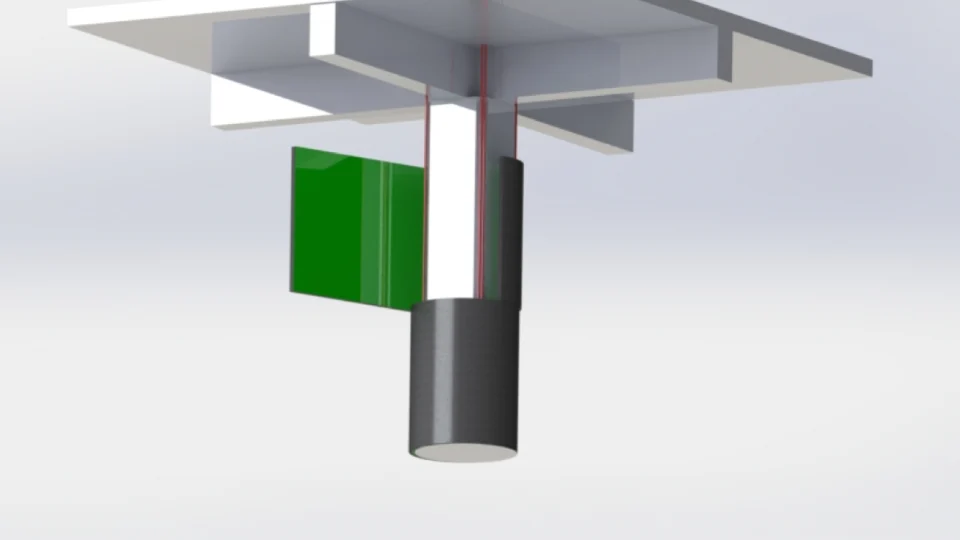
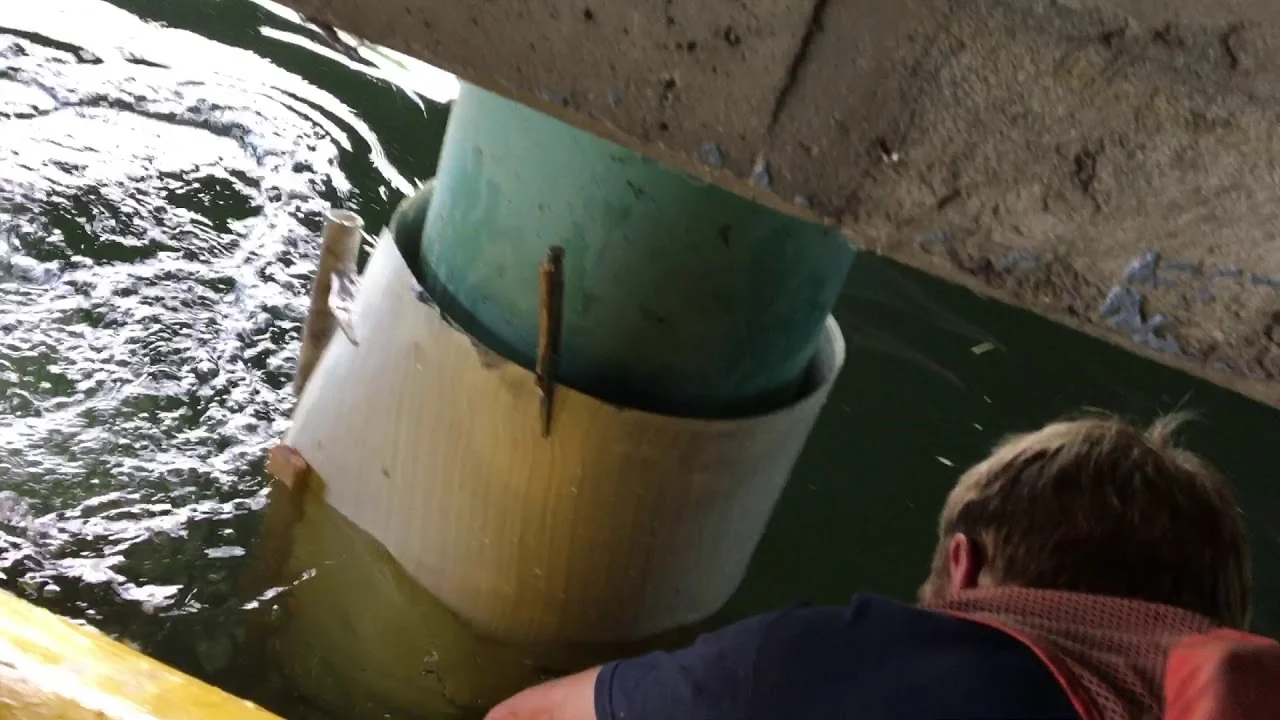
A cylindrical FRP shell is built around the column and filled with cementitious grout or concrete. The core, with or without new bars, stabilizes the steel, and the shell confines the core. It can run the full height or only the deteriorated segment. Because grout does not bond well to steel, bolt-on ShearClamp™ units (H-shapes) or ShearWrap™ (round sections) carry load between them, and the sealed jacket stops the moisture and oxygen that caused the corrosion.
| Layer | What it does |
|---|---|
| Steel column | The damaged member, cleaned of loose rust |
| Shear clamps and bars | Bolted clamps and resin-anchored bars set by the design |
| Grout or concrete core | Fills the annular space and stabilizes the steel |
| PileMedic® laminate shell | Two or more plies that confine the core |
| Seam sealant and coating | Seals the edges and protects the jacket |
Replacement
Replacing a column means shoring the structure, cutting out the old member, setting a new one with new connections, and often shutting down the space or equipment it supports. It is the right answer only when the damage is beyond repair. For more on columns of every material, see column strengthening.
Which steel column repair method has the strongest test results?
For corroded and buckled columns, concrete-filled FRP jackets have the clearest published results. In University of Houston tests, concrete-filled glass FRP jackets restored 13 buckled, corroded steel columns to 69% to 104% of an undamaged column’s capacity (Kaya et al., 2015).
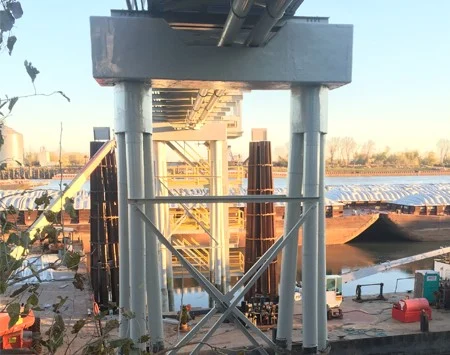
In the field, a Texas DOT study restored capacity in 13 of 14 corroded steel H-piles with FRP jackets, and MoDOT used PileMedic® to repair 49 corroded steel H-piles on four I-270 bridges in St. Louis. At a Tucson utility, FRP jackets replaced bolted steel collars on nearly sixty corroded substation columns with no outage (read the case).
The FRP repairs were completed in just two weeks, improving all 4 bridges to a Satisfactory Condition Rating (NBI rating of 6). All of this was affordable enough to be funded with the region's operations budget and happened on one of the busiest highways in Missouri without causing any delays or distractions to the traveling public.
Plays from YouTube
Should you repair or replace a damaged steel column?
Repair, in most cases. A repair restores the capacity of the existing column, keeps downtime and waste low, and often lets the structure stay in service. Even with upgrades for long life, such as a sealed FRP jacket, it usually costs substantially less than replacement. Our cost estimator gives a quick jacket number.
- Repair when the damage is local, the column can be measured and the load path can be restored.
- Look at replacement when the damage runs most of the height, the member has lost its shape, or repairs keep failing.
- Either way, fix the cause: trapped water, failed drainage or an aggressive environment.
Steel column repair methods FAQs
How do you repair damaged columns?
Assess the extent of damage first, then reinforce or replace the affected length. Options include welded or bolted plates, reinforced concrete jackets and concrete-filled FRP jackets. Timely maintenance and repair prevent further damage.
How do you strengthen steel columns?
Add steel plates, encase the column in reinforced concrete, or build a concrete-filled FRP jacket around it. Carbon fiber sheets bonded directly to steel gave only moderate gains in most tests, so a grout-filled FRP jacket is usually more effective on corroded or buckled columns.
How do you repair damaged steel?
Cracks and breaks can be welded by qualified welders. Corroded or buckled lengths can instead be encased in a cylindrical FRP shell filled with cementitious grout, which needs no welding. Clean the damaged area properly before any repair.
Which method works on steel H-columns?
Welded plates, concrete jackets and concrete-filled FRP jackets. FRP fabric cannot follow the sharp corners of an H-shape, so the jacket is formed around the whole section and bolt-on ShearClamp™ units transfer load from the flanges into the grout core.
Do bolted steel collars work?
They can add capacity, but on one utility project the collars hid corrosion that kept going inside the columns, were heavy to install and had to be custom-made for each column. The owner switched to FRP jackets that seal the steel.
Can a steel column be repaired underwater or in a wet area?
Yes, with a laminate jacket. PileMedic® jackets are installed above or below water, and ShearWrap™ and ShearClamp™ avoid underwater welding.
Sources
- M. Kaya, M. Dawood and B. Gencturk, Repair of Corroded and Buckled Short Steel Columns Using Concrete-Filled GFRP Jackets, Construction and Building Materials 94, 2015.
- M. Dawood et al., Repair Systems for Deteriorated Bridge Piles, FHWA/TX-17/0-6731-1, Texas Department of Transportation, April 2017.
- M. Ehsani and G. McGhee, Repair of Corrosion-Damaged Substation Structures, ASCE Electrical Transmission and Substation Structures Conference, 2015.
- Mo Ehsani, Evolution of FRP Products for Concrete Repair, Concrete International, April 2025.
- Mark Croarkin, PE, MoDOT, quoted on our testimonials page.
Choosing a Repair for a Steel Column?
Tell us about the column and the damage. Our team will recommend the right QuakeWrap® system and provide specifications for your engineer.