
PILES · COST GUIDE
Piling Repair Cost Calculator for Beach Houses and Condos
Piling repair cost comes down to how many piles are damaged, how long the damaged section is, the pile size and how hard the piles are to reach. Enter two numbers, the jacket diameter and the repair length, to get an approximate PileMedic® material cost per pile, then read what else goes into the price. Estimate your cost.
Key takeaways
- Two inputs: jacket diameter (pile + 4 to 6 in.) and repair length give a PileMedic® material estimate per pile.
- Materials are only part of it: grout, labor, diving, permits and freight are priced separately.
- Access is the swing factor: work in the dry, at low tide or underwater prices very differently.
- No reliable national average: general foundation repair averages about $5,175 (Angi, 2026), but coastal piles add marine work.
- Mind the 50% rule: flood-zone repairs costing half the building’s market value or more trigger current flood code.
Estimate your piling repair cost
Measure two things for each pile size: the pile diameter across the damaged section, and the length of pile to be jacketed. Add 4 to 6 in. to the pile diameter for the jacket, because the jacket wraps spacers that hold it off the pile. Run each pile size through the estimator, then multiply by the number of piles.
Pile Repair Cost Estimator
Enter the jacket diameter and the length of pile to repair. The estimator returns an approximate cost for the PileMedic® jacket and epoxy, the spacers and banding, and the GFRP rebar, plus a total for one pile.
Materials only, and approximate. The jacket diameter is typically 4 to 6 in. (100 to 150 mm) larger than the pile. Assumes 6 spacers every 2 ft (600 mm) and 6 GFRP rebars. Grout, bottom seal and ShearWraps are not included, and neither are labor, diving, permits or freight. Your engineer’s design and a site visit set the final number.
Want a detailed breakdown for your piles?
GET AN FRP CONSULTATIONWhat is the average cost of piling repair?
There is no reliable national average for coastal piling repair, because the price swings with the number of piles, water depth and access. The closest published benchmark is general foundation repair: Angi‘s cost guide, updated August 2026, puts the average at about $5,175, with most jobs between $2,225 and $8,133, and pier and beam repairs at $750 to $25,000.
Treat those as a floor, not a quote. They describe mostly inland houses. A beach house or condo on piles in tidal water adds marine access, possibly divers, coastal permits and more piles per building. The earlier version of this guide quoted a 2024 average of $11,480 for foundation repair; we could not find a source for it, so we no longer use it.
| Item | Typical cost | When you need it |
|---|---|---|
| Structural report | $300 to $1,000 | Before any quote: documents the damage and the fix |
| Soil report (geotechnical) | $500 to $3,000 | When settlement or soil is part of the problem |
| Pier and beam foundation repair | $750 to $25,000 | Closest inland comparison to piles |
| Lifting a house | $20,000 to $23,000 | When the structure must be raised for major work |
| Foundation replacement with lifting | $20,000 to $100,000 | When repair is not possible |
Source: Angi, How Much Does Foundation Repair Cost?, updated August 3, 2026. National figures for houses in general, not coastal piles.
What drives piling repair cost?
Every piling repair quote is built from the same handful of factors. Have this information ready and you will get comparable bids.
| Cost driver | Why it matters | What to have ready |
|---|---|---|
| Extent of damage | Minor surface repairs cost far less than restoring structural capacity | Photos and an inspection report |
| Number and size of piles | Material scales with pile diameter, repair length and pile count | Pile count, diameters and damaged lengths |
| Pile material | Timber, concrete and steel need different repairs; steel may need load transfer devices | Pile type and condition |
| Access and water depth | Dry, tidal or submerged work changes the crew, equipment and need for divers | Water depth and tide range at the piles |
| Repair method | Jacketing in place, concrete jacketing and replacement differ in cost and downtime | Your engineer’s recommendation |
| Labor and region | Skilled labor rates vary by region and job complexity | Site location |
| Permits and inspections | Coastal and environmental permits add cost and time | Local permit requirements |
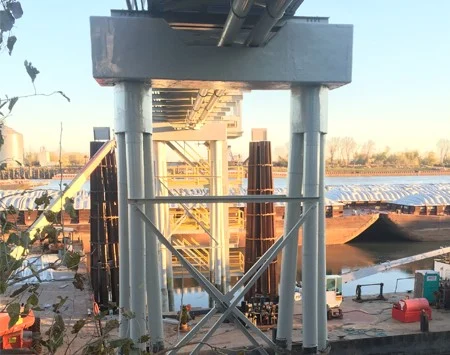
Access is the swing factor. A repair that needs a cofferdam or a full dive team costs far more than one done from a skiff at low tide. PileMedic® jackets install underwater without cofferdams, and are wrapped near the waterline and slid down the pile, often with minimal to no divers. On the Perdue timber pile project, the rebar cage and wrap process significantly reduced diving labor.
Want a real number?
Send the pile count, sizes, repair lengths and site conditions. Our team will recommend the right QuakeWrap® system and give your engineer the specifications to price it.
What the estimator includes and leaves out
| Item | In the estimate? |
|---|---|
| PileMedic® jacket and epoxy | Yes |
| Spacers and banding (6 spacers every 2 ft) | Yes |
| GFRP rebar (6 bars) | Yes |
| Grout to fill the jacket | No |
| Bottom seal | No |
| ShearWrap™ for steel piles | No |
| Labor, diving, permits and freight | No |
The estimate is a material budget for one pile size. Repeat it for each size and add the items above for a full budget.
Should you repair or replace pilings?
Repair is usually the better value when a pile has sound material above and below the damage. Replacing a pile under an existing house means shoring the structure and driving or drilling a new pile in a tight space. A jacket restores the damaged length in place, and a PileMedic® repair reaches full pile capacity within 24 hours.
The advantage was that the broken pile could be repaired and reinstated up to the required bearing capacity and strength value, and no additional piles needed to be installed. This reduced cost and timing in repair method.
How a PileMedic® pile repair works
Knowing what goes into the repair makes the estimate easier to read. A PileMedic® pile jacket uses:
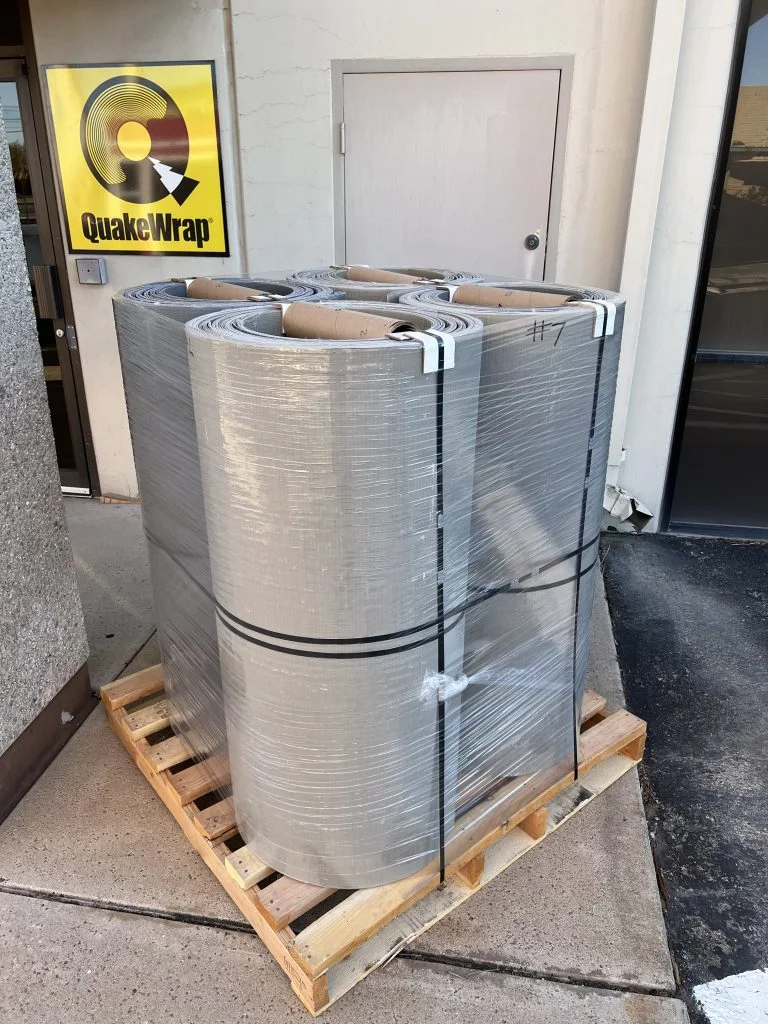
- PileMedic® laminates: high-strength carbon or glass FRP, cut on site from a roll.
- Epoxy: bonds the laminate layers into a seamless jacket.
- Spacers: keep a uniform gap between the pile and the jacket.
- GFRP rebar: non-metallic bars that do not corrode.
- Grout or concrete: fills the space between pile and jacket.
- PrepareAssess the damage, make the area safe and clean marine growth and loose material off the pile.
- Install spacers and barsZip-tie spacers around the pile and snap GFRP bars into them along the repair length.
- WrapCoat the laminate with epoxy and wrap it twice around the spacers plus 8 in. Overlap each new jacket by 4 in.
- GroutPump grout into the gap, keeping the hose in the grout so it does not mix with water. Finish the top to shed water.
- Cure and inspectLet the grout cure as specified, inspect the repair and monitor it over time.
For basic repairs on docks and small structures, Form-A-Tube® PVC forms are a lower-cost option owners can install themselves. They encase a pile in concrete but do not add as much strength as PileMedic®.
How to pay for piling repair
Most owners pay for larger repairs with home equity, a loan or a payment plan. Compare the rate, the term and whether the loan is secured by the house.
- Home equity loan or HELOC. A lump sum with fixed payments, or a line of credit where you pay interest only on what you draw. Both usually cost less than personal loans or credit cards.
- Personal loan. Unsecured and quick from a bank, credit union or online lender, but often at a higher rate.
- HUD Title I Property Improvement loan. HUD insures private lenders on loans for repairs and improvements to single family homes. Apply through an approved lender.
- USDA Section 504 Home Repair program. For very-low-income owner-occupants in eligible rural areas who cannot get affordable credit elsewhere: loans up to $40,000 at a fixed 1% for 20 years, and grants up to $10,000 for homeowners 62 or older to remove health and safety hazards.
- Contractor payment plans or third-party financing, offered by some contractors.
Check insurance before work starts. FEMA states that most homeowners insurance does not cover flood damage, and many policies exclude settling. If a flood leaves the building substantially damaged, NFIP policyholders in high-risk flood areas may receive up to $30,000 of Increased Cost of Compliance coverage. For a condo, check what the association maintains and what its master policy covers.
Signs your pilings need repair
- Cracks in the slab or foundation, or in drywall above windows.
- Sloping floors and sticking doors as piles settle or shift.
- Separating fixtures: cabinets or counters pulling from walls, cracked or bulging siding.
- Soft floors and pests: spongy flooring from rot, and more termites or carpenter ants.
See the full list, and how each pile type is repaired, in our beach house piling repair guide. Not sure what your piles are? Start with beach house piling types.
Piling repair cost FAQs
How much does it cost to repair a piling?
It depends on the pile size, the damaged length, access and labor. The estimator above prices PileMedic® materials for one pile from the jacket diameter and repair length. Grout, labor, diving and permits are extra.
How much does it cost to replace pilings?
Replacement prices vary too much by site for a reliable national figure. Replacing a pile under an existing house means shoring the structure and driving or drilling a new pile, so get quotes after an engineer’s assessment.
How accurate is the calculator?
It is approximate. It prices the main PileMedic® materials from two inputs and fixed assumptions: 6 spacers every 2 ft and 6 GFRP bars. Your design, pile condition and site will change the final number.
Does the estimate include labor?
No. It covers the PileMedic® jacket and epoxy, spacers and banding, and GFRP rebar. Grout, bottom seal, ShearWrap™, labor, diving, permits and freight are not included.
Is there a lower-cost option for basic repairs?
Form-A-Tube® PVC forms suit basic and do-it-yourself repairs on docks and small structures. They encase a pile in concrete but do not add as much strength as PileMedic®.
Are permits required for piling repair in coastal areas?
Usually, yes, to meet local building and environmental rules. Check with your local building department before work starts.
Does insurance pay for piling repair?
Sometimes. FEMA says most homeowners insurance does not cover flood damage, and many policies exclude settling. Flood policyholders whose building is substantially damaged by flood may receive up to $30,000 of Increased Cost of Compliance coverage.
Sources
- Angi, How Much Does Foundation Repair Cost? Updated August 3, 2026.
- FEMA, Home Builder’s Guide to Coastal Construction, FEMA P-499, Technical Fact Sheets 1.7 (Coastal Building Materials), 3.1 (Foundations in Coastal Areas), 3.2 (Pile Design and Installation) and 9.1 (Repairs, Remodeling, Additions and Retrofitting), December 2010.
- FEMA, Flood Insurance, accessed October 2026.
- FEMA, Increased Cost of Compliance Coverage, updated January 12, 2026.
- USDA Rural Development, Single Family Housing Repair Loans & Grants, updated October 1, 2026.
- HUD, Title I Insured Programs, accessed October 2026.
- QuakeWrap, Inc., Perdue AgriBusiness timber pile repair project sheet.
- QuakeWrap, Inc., PileMedic® cost estimator and Beach House and Condo Piling Repair Cost Calculator, November 2024 (original version of this guide).
Ready to Price Your Piling Repair?
Tell us the pile count, sizes and site conditions. Our team will recommend the right QuakeWrap® system and give your engineer the specifications to price it.