
StifPipe® | FRP Pipe System for Pipeline & Culvert Rehabilitation
An Award-winning innovation in infrastructure repair
Aging pipelines and culverts represent one of the largest infrastructure challenges worldwide. Corrosion, soil loads, and decades of service often lead to structural deterioration that can result in pipe collapse, leakage, or costly service disruptions.
To address this growing problem, Professor Mo Ehsani, founder of QuakeWrap®, developed an innovative sandwich construction Fiber Reinforced Polymer (FRP) pipe system, later commercialized as StifPipe®.
This technology was recognized by the American Society of Civil Engineers (ASCE) with its prestigious Innovation Award for introducing the world’s first green and sustainable FRP pipe system.
StifPipe® combines aerospace-inspired sandwich construction with advanced composite materials to create a pipe liner that is extremely lightweight, structurally efficient, and resistant to corrosion.
The Challenge of Aging Pipelines
Thousands of miles of pipelines used for stormwater, wastewater, cooling water, and industrial processes are approaching the end of their service life.
Traditional rehabilitation methods often present serious limitations.
Wet Layup FRP Repairs
One commonly used technique involves installing multiple layers of carbon or glass fabrics saturated with epoxy inside the pipe. Once cured, the fibers create a composite pressure vessel capable of carrying internal loads.
However, when external loads from soil or traffic must be resisted, this method often requires 10 to 12 layers of carbon FRP, which significantly increases cost and installation time.
ASCE_Innovation_Award_Winner_Sa…
Steel Sliplining
Another method involves inserting a steel pipe inside the existing pipeline.
While structurally effective, this method:
- Requires heavy equipment
- Requires welding of pipe sections
- Significantly reduces pipe diameter
- Reduces flow capacity
- Requires extensive construction time
These challenges motivated the development of a more efficient solution.
The StifPipe® Solution
StifPipe® uses sandwich construction, a structural concept widely used in aerospace and marine engineering.
Instead of relying on thick solid walls, sandwich construction separates two strong skins using a lightweight core.
The StifPipe® structure consists of:
- Inner and outer FRP skins made from carbon or glass fiber composites
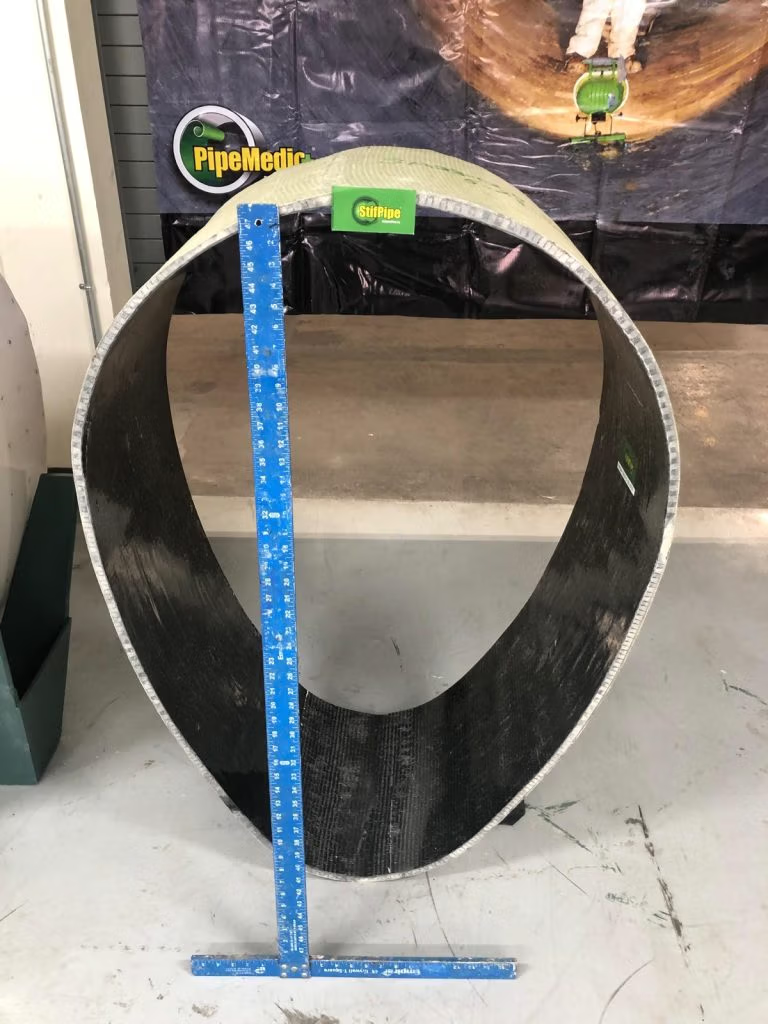
- Lightweight spacer core such as honeycomb or 3D fabric
- Optimized fiber orientations designed to resist pressure and soil loads
By separating the structural skins with a lightweight core, the pipe achieves dramatically higher stiffness without adding significant weight.
Tests have shown that separating two FRP skins with a lightweight core can increase stiffness more than thirty times while only slightly increasing the weight of the structure.
Methods of Installation
StifPipe can be installed in two distinct ways.
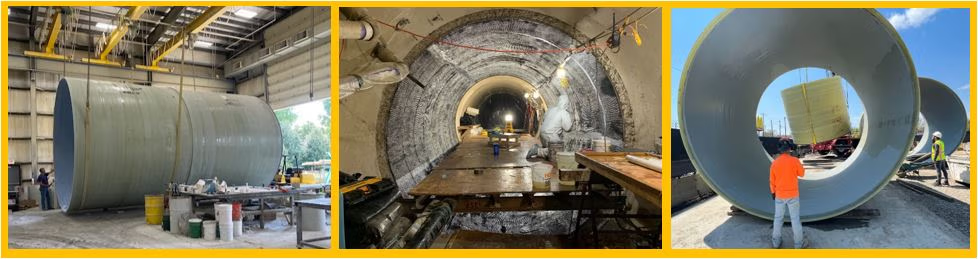
In one case, segments of the pipe are manufactured in advance and transported to the jobsite. They are installed using the slip-lining technique. The joints are connected and the annular space between the host pipe or tunnel and the StifPipe liner is filled with grout.
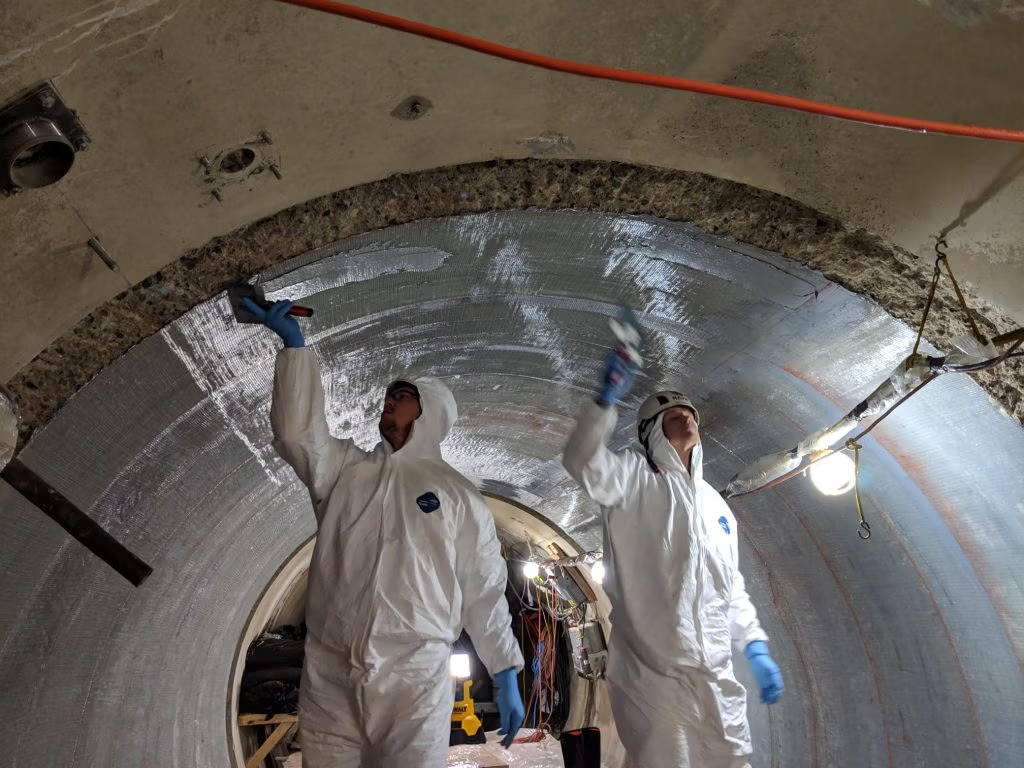
In another approach, when access is limited or the repair length is short, it may be preferred to install the StifPipe using the wet layup technique. In this case, the raw materials are taking inside the pipe and they are applied layer by layer on the surface of the host pipe, using the host pipe or tunnel as the mold. In this case, there is no annular space between StifPipe and the host tunnel.
Key Advantages of StifPipe®
Extremely Lightweight
StifPipe® weighs only about 10–15% of conventional fiberglass pipes, allowing segments to be transported and installed with minimal equipment.
ASCE_Innovation_Award_Winner_Sa…
High Structural Capacity
The sandwich configuration dramatically increases stiffness and allows the pipe to resist both internal pressure and external soil loads.
Custom Diameters
Each pipe is manufactured specifically for the project and can be produced in virtually any diameter, maximizing flow capacity.
Rapid Installation
Lightweight pipe sections can often be installed manually without cranes or heavy machinery, reducing construction costs.
Corrosion Resistance
FRP materials are inherently resistant to corrosion and chemical attack.
Long Service Life
StifPipe® systems are designed to provide 50 years or more of service life with minimal maintenance.
Case Study: Culvert Rehabilitation in Queensland, Australia
One of the earliest field applications of this technology involved the repair of a severely deteriorated corrugated metal culvert in northern Queensland.
The culvert measured:
- 72 inches in diameter
- 85 feet long
- experiencing severe corrosion and deformation
A new 59-inch diameter StifPipe® liner was manufactured and installed inside the existing culvert.
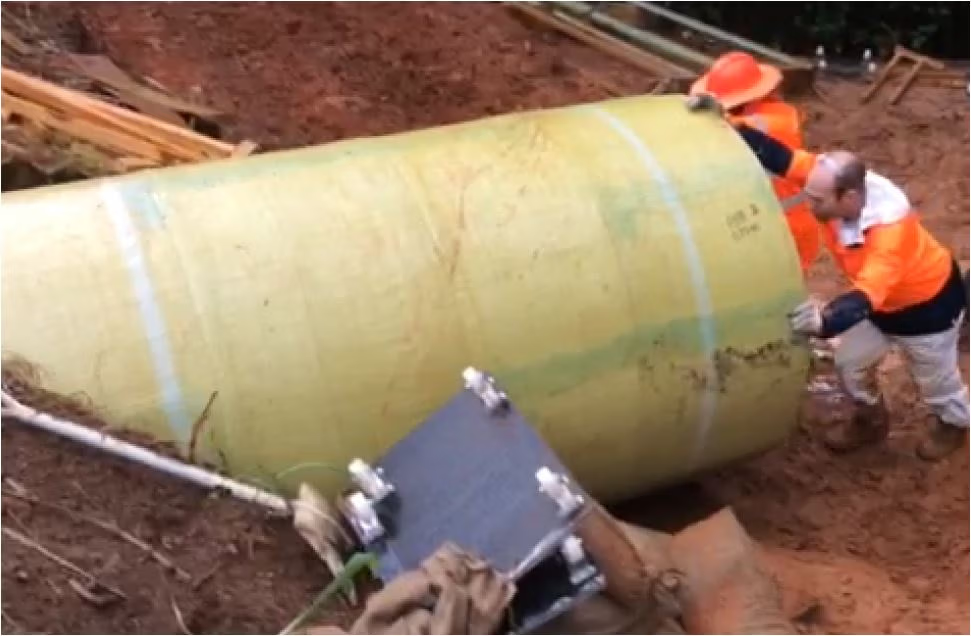
Four pipe segments, each approximately 20 feet long, were delivered to the site. Because each segment weighed only about 1,000 pounds, they could be pushed into place manually without jacking equipment.
ASCE_Innovation_Award_Winner_Sa…
After installation, the annular space between the liner and the host pipe was filled with grout, creating a strong composite structure.
The entire installation was completed in only five days with minimal disruption.
Case Study: Power Plant Pipeline Rehabilitation – Puerto Rico
Another successful application occurred at the Aguirre Power Plant in Puerto Rico, where 29 severely corroded steel pipe risers required repair.
The pipes were:
- 36 inches in diameter
- operating at pressures up to 150 psi
- severely corroded near ground level
Custom sandwich construction carbon FRP liners were designed and installed inside the pipes.
Each liner was capable of resisting internal pressures up to 400 psi, providing a substantial increase in safety and structural capacity.
ASCE_Innovation_Award_Winner_Sa…
Because each liner segment weighed only about 80 pounds, workers were able to install the liners easily by hand.
manufacturing innovation
One of the most unique features of StifPipe® is its flexible manufacturing process.
Pipes are fabricated using a collapsible steel mandrel with adjustable arms, allowing pipes to be manufactured in virtually any diameter.
The manufacturing steps include:
- Wrapping resin-saturated FRP fabrics around the mandrel
- Installing the lightweight spacer core
- Applying additional FRP layers
- Curing the composite structure
Once curing is complete, the mandrel collapses slightly so the finished pipe can be removed.
This technology also allows pipes to be manufactured near the project site using a mobile production unit, reducing transportation costs and logistics challenges.
structural testing
To confirm the structural performance of the system, StifPipe® sections were tested using parallel plate testing in accordance with ASTM D2412.
Testing demonstrated:
- excellent stiffness characteristics
- predictable linear elastic behavior
- consistent structural performance
The results confirmed that sandwich construction pipes provide far greater structural efficiency than conventional FRP liners relying only on multiple fiber layers.
ASCE_Innovation_Award_Winner_Sa…
a sustainable solution for infrastructure
StifPipe® represents a major advancement in pipeline rehabilitation technology.
By combining advanced composite materials with efficient sandwich construction, the system provides:
- Lightweight installation
- Minimal disruption to service
- Exceptional structural performance
- Long service life
- Corrosion resistance
These advantages make StifPipe® an ideal solution for the rehabilitation of aging pipelines, culverts, and industrial piping systems worldwide.