
Wet Layup vs. Dry Layup FRP Systems
Evolution of a Proven Technology
Understanding the Installation Methods
Wet Layup (Traditional Method)
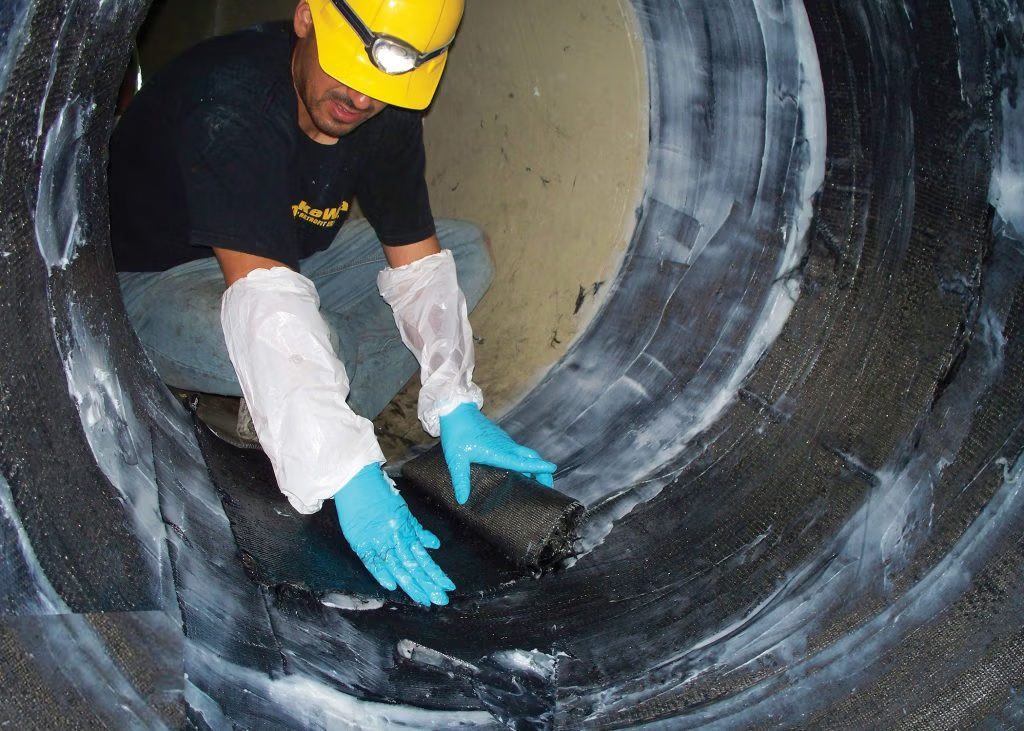
The traditional wet layup process involves saturating the fabric before placing it on the structure. This method has been widely used for decades and formed the foundation of FRP strengthening technology.
Typical Installation Steps:
- Apply a tack coat (epoxy paste) to the prepared surface using a trowel
- Saturate the fabric with resin (often using a saturating machine for large projects)
- Place the pre-saturated (wet) fabric onto the surface
- Use rollers to remove air bubbles and ensure proper bonding
Key Characteristics:
- Excellent control over fiber impregnation
- Proven performance over decades
- More labor-intensive and slower installation

Dry Layup (Modern Method Developed by QuakeWrap®)
The dry layup method represents a significant improvement in constructability and speed, particularly for large-scale projects.
Typical Installation Steps:
- Apply a low-viscosity tack coat using rollers (fast and uniform application)
- Place the dry fabric directly onto the coated surface
- Apply the saturating resin over the fabric using rollers to impregnate it in place
Key Advantages:
- Much faster and easier installation
- Reduced labor effort and equipment needs
- Cleaner and more controlled field application
- Ideal for large structures and vertical surfaces
Proven at Scale:
This method has been successfully used by QuakeWrap® on major projects, including the strengthening of chimneys over 500 ft tall, demonstrating its efficiency and reliability on challenging structures.
Wet vs. Dry Layup: Side-by-Side Comparison
| Criteria | Wet Layup FRP | Dry / Preformed FRP (Panels, Laminates) |
|---|---|---|
| Installation Method | Saturate fabric with resin on-site and apply to surface | Pre-manufactured laminates or panels installed and bonded in place |
| Surface Preparation | Extensive (patching, grinding, drying required) | Minimal (works well on rough or deteriorated surfaces) |
| Underwater Application | Difficult; typically requires cofferdams | Easily applied underwater without cofferdams |
| Quality Control | Field-dependent; variability in resin saturation | Factory-controlled; consistent thickness and properties |
| Structural Capacity | Primarily surface strengthening | Can provide full structural restoration with shell action and grout |
| Durability | Good, but dependent on installation quality | Excellent; impervious barrier to moisture and oxygen |
| Speed of Installation | Moderate to slow (multi-step process) | Fast; minimal prep and rapid installation |
| Best Applications | Dry environments, accessible structures | Marine, submerged, or hard-to-access structures |
Where These Systems Fit
Both wet and dry layup systems are ideal for:
- Beams and girders (flexural strengthening)
- Columns (confinement & seismic upgrade))
- Slabs and walls
- Chimneys and tall structures
- Pipes and tanks
- Force protection (hardening against blast loads)
However, they still share the same inherent limitations:
- Require a sound substrate for bonding
- Need surface preparation
- Not suitable for severe section loss or underwater installation
Strategic Positioning
While wet and dry layup systems remain valuable tools, their limitations led to the development of next-generation solutions such as:
- PileMedic® → for piles with severe or complete section loss
- SPiRe® / SPiRe®+ → for walls, slabs, and marine structures without extensive surface prep
- StifPipe® → for structural pipe rehabilitation
These systems expand capabilities beyond what layup methods can achieve, offering:
- Faster installation
- Minimal surface preparation
- Underwater applicability
- Full structural restoration
Have a Project That Needs Repair?
Send us your drawings or photos and our engineers will recommend the most cost-effective solution for your project.
The Infrastructure Innovators Since 1994
- (520) 791-7000
- (866) QuakeWrap [782-5397]