Advanced Repair Solutions for Concrete, Steel H-Piles and Timber Bridge Piling
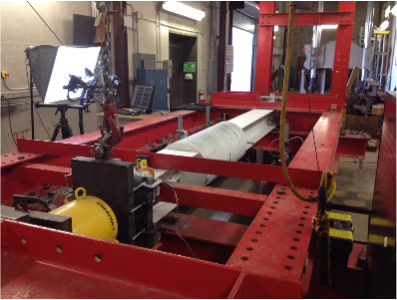
PileMedic® delivers unmatched performance—extensively tested by the US Army Corps of Engineers and deployed across critical infrastructure projects worldwide.
The significance of pilings in bridges
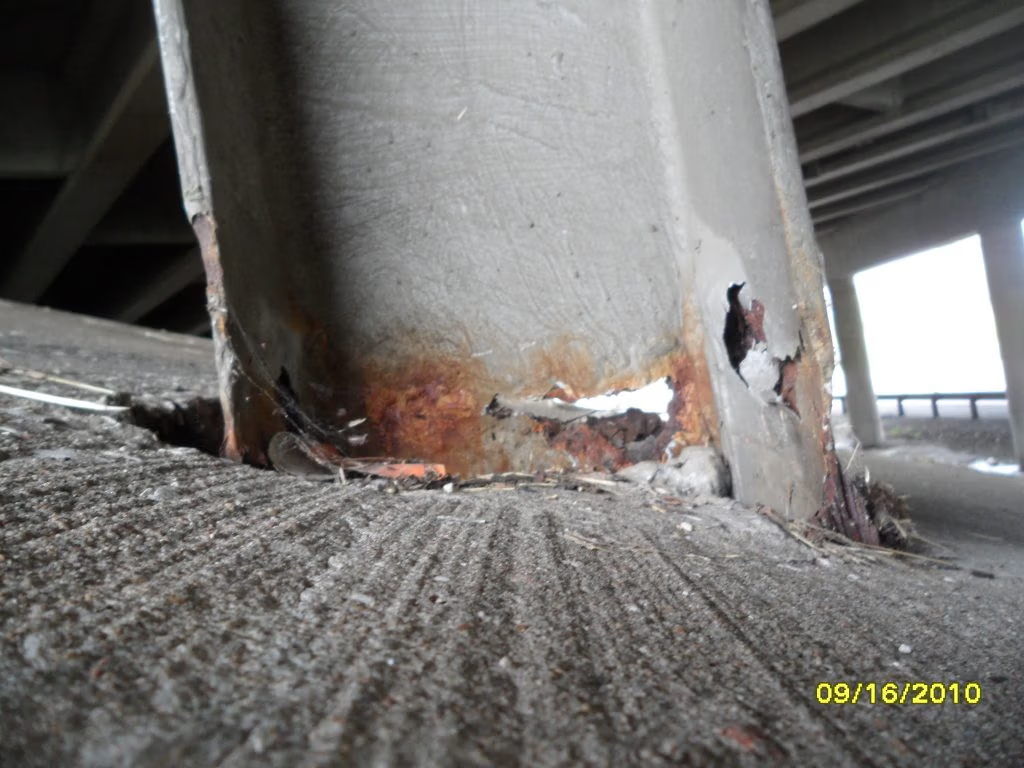
Bridges depend on deep foundation piles to safely transfer loads to the ground, yet these critical elements often deteriorate unseen below the waterline. Corrosion of steel H-piles, decay in timber piles, scour damage, freeze-thaw deterioration, marine borers, chloride attack, and seismic loading can all compromise bridge foundations and threaten public safety.
At QuakeWrap, we offer advanced composite solutions for bridge pile repair, strengthening and protection, led by the patented PileMedic system—an innovative technology used to restore and strengthen concrete bridge piles, steel H-piles, timber piles, and marine bridge foundations, often without cofferdams or interruption to service.
Unlike conventional pile jackets or wet layup wraps, PileMedic® is a complete structural rehabilitation system that can restore lost capacity, add strength beyond the original design, and provide decades of corrosion protection.
Why Bridge Columns Fail
Bridge piling deterioration is often hidden until severe damage occurs. Common causes include:
- Corrosion of steel H-piles and pipe piles
- Section loss in reinforced concrete piles from chloride intrusion
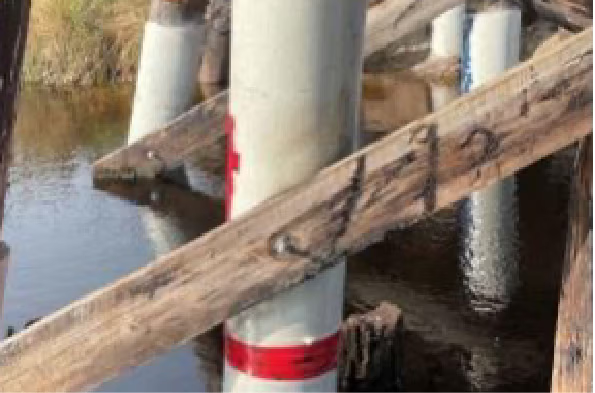
- Rot, splitting and marine borer attack in timber piles
- Impact damage from vessels or debris
- Scour and undermining at foundations
- Seismic deficiencies in older bridge foundations
- Freeze-thaw and sulfate attack
- Deterioration in tidal and splash zones
Whether a pile has moderate deterioration or extensive section loss, early intervention can extend service life dramatically.
PileMedic®: A Better Way to Repair Bridge Piles
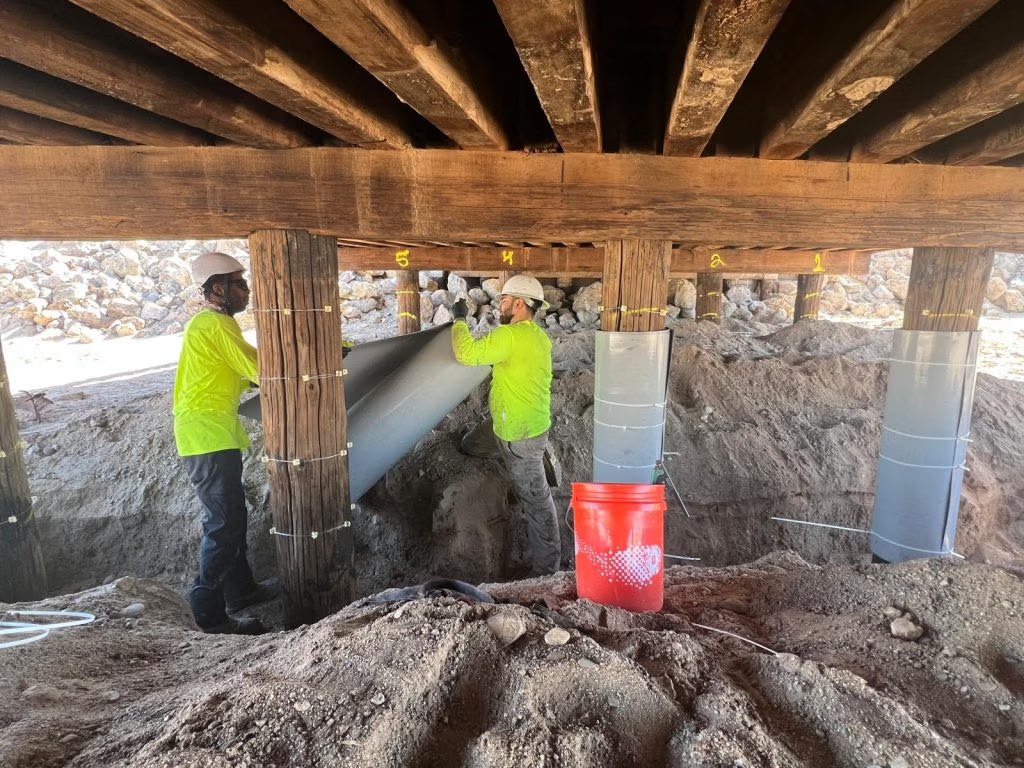
Thin laminates made from glass or carbon fibers in durable vinyl ester resin are manufactured into rolls that can be wrapped around deteriorated piles to form a seamless structural shell. Once filled with grout or resin, the system:
- Restores lost section and load capacity
- Provides confinement and structural strengthening
- Arrests corrosion and blocks moisture intrusion
- Enhances axial, flexural and shear performance
- Creates a long-lasting protective barrier
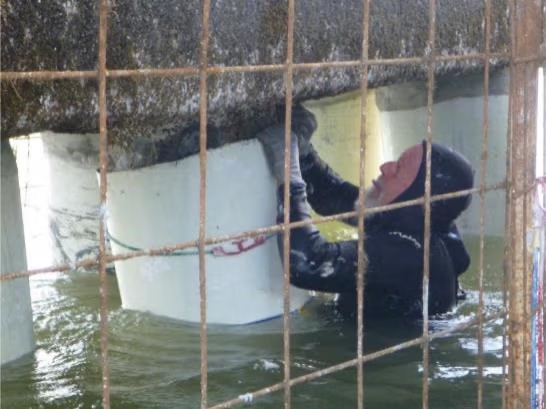
- Can often be installed underwater without cofferdams
Depending on design requirements, repairs can restore piles to original capacity — or strengthen them beyond their original design.
Repair Solutions by Pile Type
Concrete Bridge Pile Repair
For concrete piles suffering from spalling, exposed reinforcement, corrosion or seismic deficiencies, PileMedic® provides:
- Structural restoration of deteriorated piles
- Seismic strengthening of bridge foundations
- Increased confinement and ductility
- Corrosion protection for reinforcing steel
- Repair with minimal increase in pile dimensions
Compared with traditional concrete encasement, repairs are faster, lighter, and often possible without heavy marine construction.
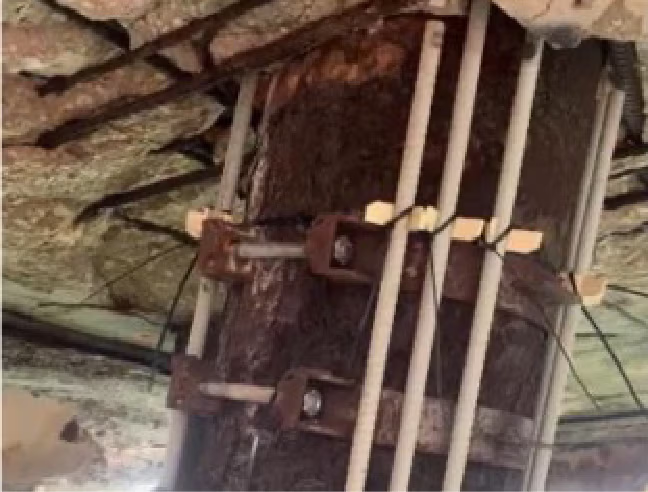
Steel H-Pile and Steel Pipe Pile Repair
Steel H-piles often lose section in splash zones or below mudline where inspection is difficult.
Our systems can:
- Restore corroded section loss
- Strengthen steel H-piles against axial and bending loads
- Protect against future corrosion
- Encapsulate deteriorated steel in a durable composite shell
- Extend service life without pile replacement
- Using SHearWrap (for pipe piles) and ShearClamap (for H piles), eliminate the need for welding
Studies by transportation agencies, including Texas DOT, have demonstrated the effectiveness of composite strengthening for steel bridge piling.
Timber Bridge Pile Repair
Timber piles remain common in older bridges and marine structures, but deterioration from rot and marine organisms can be severe.
PileMedic® offers a practical alternative to replacement:
- Restores deteriorated timber piles
- Increases axial and flexural capacity
- Protects against further biological attack
- Provides long-term encapsulation
- Ideal for submerged or difficult-access bridge foundations
Research, including Nebraska DOT studies, has demonstrated the viability of this approach.